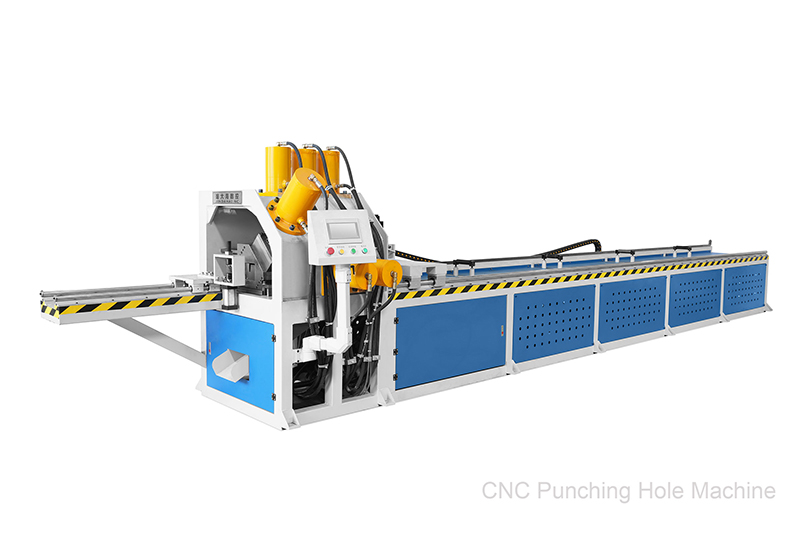
A Practical Automation Upgrade for Tube Punching Operations
In highly competitive manufacturing environments, efficiency and cost control often determine whether a business can continue to grow. This case study presents a CNC tube punching solution developed for a customer in Singapore, operating in the stainless steel tube punching sector.
The project focuses on improving punching efficiency for round stainless steel tubes used in structural and fabrication applications. Rather than investing in complex multi-process equipment, the customer required a dedicated punching solution capable of handling two common tube specifications with stable accuracy and reduced labor input.
Industry Background: Stainless Steel Tube Punching in Singapore
The customer is located in Singapore, where stainless steel tube products are widely used in:
Structural supports
Fabricated assemblies
Industrial and commercial installations
In this market, stainless steel tubes often require precisely punched round holes for fastening, joining, or further processing. Consistency in hole size and positioning is essential, especially when tubes are processed in batches.
For this application, the customer mainly works with medium-diameter round tubes and standardized hole patterns, making punching accuracy and operational efficiency critical.
Production Challenges Before Equipment Upgrade
Before introducing automated equipment, the customer relied on traditional punching methods that required significant manual involvement. As market competition intensified, several challenges became increasingly apparent:
High Labor Costs
Manual or semi-manual punching operations required dedicated operators, increasing labor expenses over time.
Limited Throughput
Processing different tube sizes often involved stopping production to change setups, reducing overall efficiency.
Inconsistent Positioning
Manual alignment could lead to slight deviations in hole placement, affecting downstream assembly.
Scalability Constraints
As order volume fluctuated, the existing process made it difficult to maintain consistent output without adding manpower.
To stay competitive, the customer needed a punching solution that could deliver repeatable accuracy while reducing reliance on manual labor.
Defining the Processing Requirements
After evaluating daily production needs, the customer outlined clear and focused requirements for a new punching system:
The machine should perform punching only, without cutting or secondary operations
Two different tube specifications needed to be processed efficiently
Each tube specification required a dedicated hole size
Production volume was moderate, but stability and consistency were essential
The system needed to reduce operator workload and improve overall efficiency
The priority was not maximum automation, but reliable CNC-controlled punching for standardized tube products.
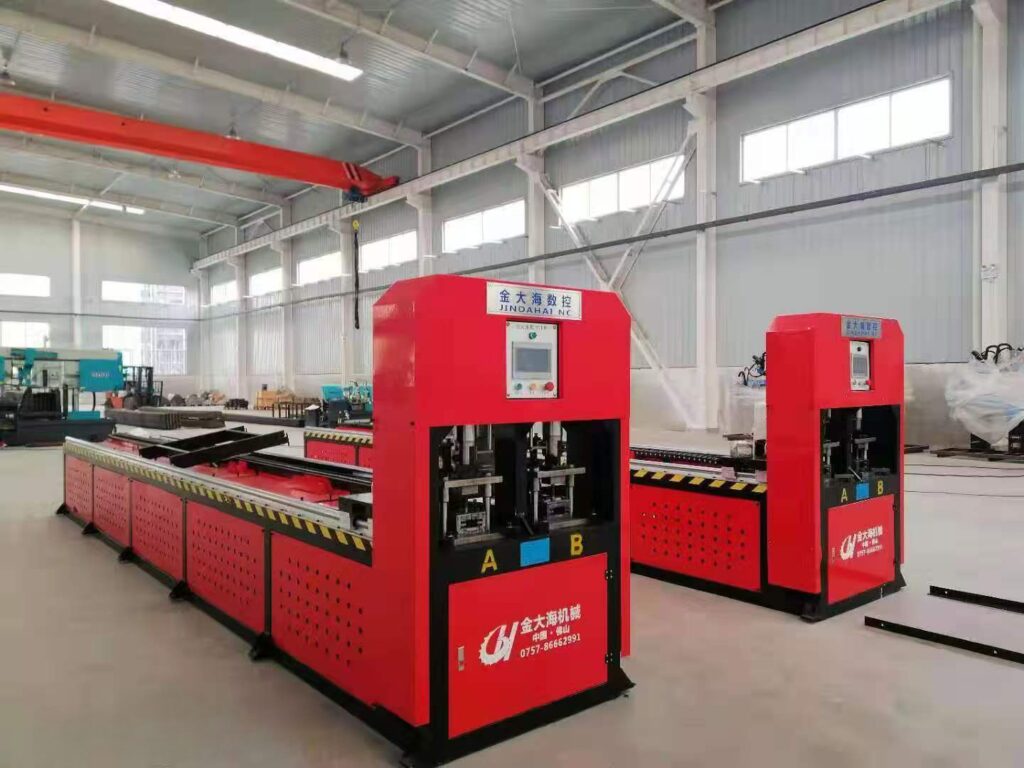
Solution Overview: Dual-Station CNC Tube Punching Configuration
Based on these requirements, we proposed a dual-station CNC tube punching solution designed specifically for stainless steel pipe applications.
Rather than emphasizing detailed technical specifications, the solution was configured around process stability, ease of operation, and consistent punching performance.
Key characteristics of the solution include:
A dual working station layout, allowing different tube sizes to be processed without frequent retooling
Independent punching stations optimized for specific tube diameters
CNC-controlled punching cycles to ensure consistent hole placement
A guided tube handling system supporting long tube lengths
A compact and efficient machine structure suitable for workshop environments
This configuration allows operators to switch between tube specifications smoothly while maintaining consistent output.
How the Punching Process Works
In daily operation, stainless steel tubes are loaded and guided into the punching station. Once positioned, the CNC system controls the punching cycle, ensuring accurate and repeatable hole formation.
Each station is dedicated to a specific tube specification, allowing production to continue without unnecessary adjustments. This setup reduces downtime and simplifies the workflow, especially when processing mixed orders.
The process eliminates manual marking and repetitive measuring, helping maintain a steady production rhythm across batches.
Application Focus: Two Tube Sizes, One Efficient Workflow
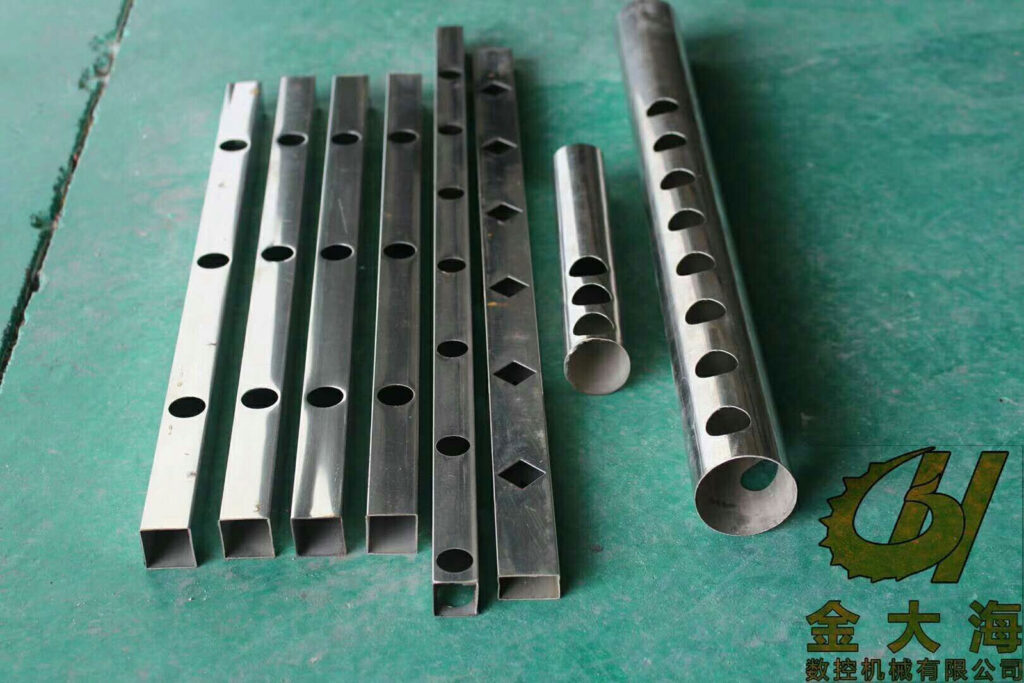
The customer’s main production task involves punching round holes in two commonly used stainless steel tube sizes:
Medium-diameter round tubes for structural use
Standardized hole sizes matching installation requirements
By assigning each specification to its own punching station, the solution ensures:
Stable hole dimensions
Consistent positioning along the tube length
Reduced setup complexity
This approach is particularly effective for businesses handling limited but recurring product variations.
Why Dual-Station CNC Punching Fits This Application
For stainless steel tube punching operations with limited product variations, a dual-station CNC system offers several advantages:
Higher efficiency compared to single-station manual setups
Reduced labor dependency, as one operator can manage the process
Improved consistency through CNC-controlled positioning
Simplified workflow for mixed production batches
Instead of adding more manual stations, the customer adopted a smarter configuration that improves productivity without unnecessary complexity.
Supporting Cost Control and Production Stability
By introducing CNC-controlled punching, the solution addresses key operational challenges:
Labor cost reduction through automation
Improved repeatability across production runs
Lower risk of rework due to inaccurate hole placement
Better utilization of workshop space and manpower
These improvements help stabilize production costs in a competitive market environment.
A Focused Punching Solution for Competitive Manufacturing
This project demonstrates how a purpose-built CNC tube punching solution can improve efficiency in stainless steel pipe processing without introducing excessive automation.
By focusing on the actual punching requirements—two tube sizes, two hole specifications, and consistent output—the solution provides a practical upgrade path for manufacturers seeking better efficiency and cost control.
For stainless steel tube processors facing similar challenges, this approach offers a balanced combination of precision, efficiency, and operational simplicity.