A Practical Automation Story from Vietnam’s Elevator Manufacturing Sector
In Vietnam’s rapidly developing construction and infrastructure market, elevator manufacturers are under increasing pressure to deliver stable quality while controlling production costs. As buildings grow taller and designs become more complex, the demand for precisely processed steel profiles continues to rise.
This case study tells the story of a Vietnamese elevator component manufacturer that transitioned from traditional cutting methods to a semi-automatic laser tube cutting solution, enabling efficient processing of large steel profiles used in elevator structures.
Background: Steel Profiles for Elevator Structures
The customer operates in the elevator industry, specializing in the fabrication of structural components such as brackets, frames, and support parts. These components are commonly produced from various steel profiles, including:
Angle steel
Channel steel
H-beams
Rectangular and square tubes
In this project, the primary materials included multiple sizes of angle steel and structural beams used in elevator installation systems.
For elevator manufacturing, accuracy in hole positioning and cutting length is critical. Even small deviations can cause installation issues on-site, leading to rework or delays.
Challenges Before Automation
Before introducing laser tube cutting technology, the customer relied mainly on conventional punching machines and sawing equipment. As production volumes increased, several limitations became increasingly apparent.
Manual Handling of Large Materials
Some profiles, especially H-beams and large channel steel, were difficult to load and position manually. Feeding materials into traditional machines required significant labor effort and time.
Low Processing Efficiency
Sawing machines could only process one steel beam at a time. When cutting long materials into short sections, overall efficiency was limited, particularly for batch production.
Multi-Step Processing
Punching and cutting were performed as separate operations. Materials had to be moved between machines, increasing handling time and workflow complexity.
Rising Labor Costs
With market competition intensifying, the customer needed a way to reduce labor dependency while maintaining consistent output.
These challenges prompted the search for a more integrated and automated processing solution.
Defining the Production Requirements
After evaluating their workflow, the customer defined clear requirements for a new system:
Semi-automatic chain-type feeding for steel profiles
Capability to process a wide range of profile sizes
Integrated hole cutting and length cutting in a single process
Stable performance on thick materials commonly used in elevator structures
One operator able to supervise multiple machines
The goal was not full automation at any cost, but a balanced solution that improved efficiency while remaining practical for daily production.
The Proposed Solution: Semi-Automatic Laser Tube Cutting System
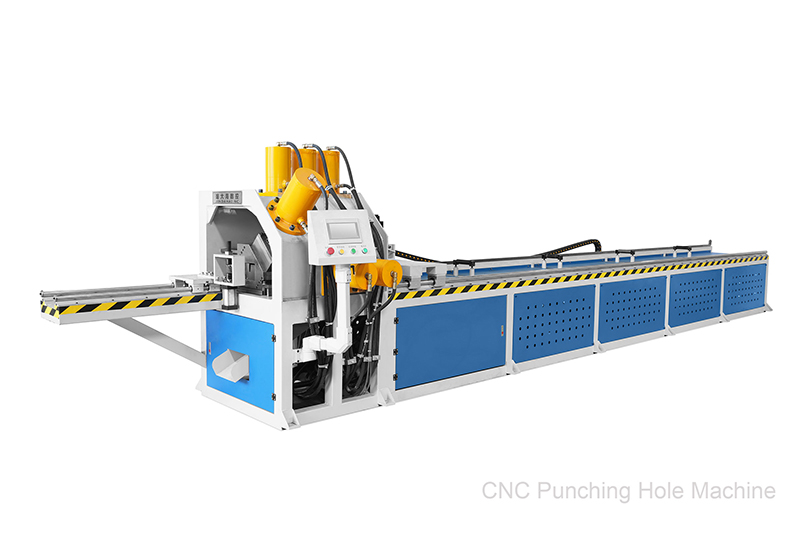
Based on these requirements, we designed a laser tube cutting machine for elevator steel profiles with semi-automatic feeding functionality.
Rather than emphasizing extreme specifications, the configuration focused on stable cutting performance, flexible material handling, and smooth integration into the existing production environment.
Key elements of the solution included:
Semi-automatic chain-type loading system for arranging multiple profiles
Precision clamping system suitable for large and heavy steel sections
Fiber laser cutting unit optimized for structural steel thicknesses
CNC control system enabling integrated hole cutting and cut-off operations
This setup allowed multiple steel profiles to be placed at once, automatically fed into the cutting area, and processed continuously.
How the Processing Workflow Operates
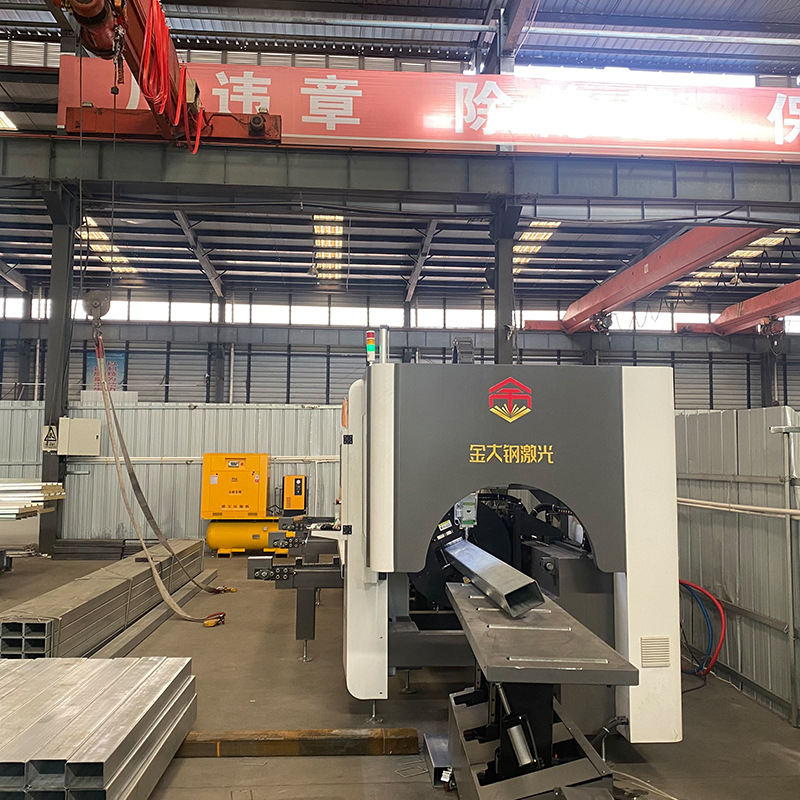
In daily operation, steel profiles are arranged on the loading system in small batches. Once positioned, materials are automatically fed into the cutting zone.
The machine performs hole cutting and length cutting according to pre-set programs, eliminating the need for manual measuring or repositioning between processes.
For large materials such as H-beams, this workflow significantly improves efficiency by replacing single-piece sawing with continuous automated cutting.
Designed for Elevator Industry Applications
Unlike light fabrication industries, elevator manufacturing requires the ability to handle large, heavy, and diverse steel profiles. The laser tube cutting solution was configured with this in mind.
Key advantages for elevator component production include:
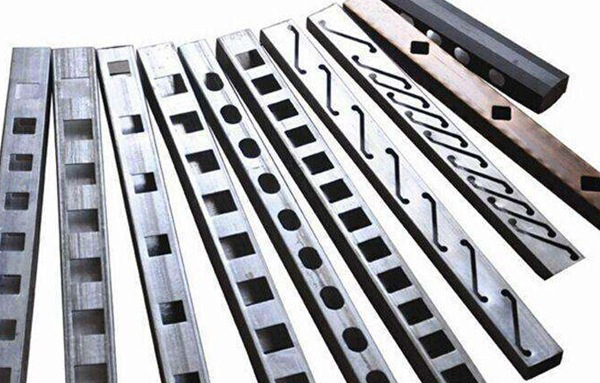
Clean, precise cuts suitable for direct assembly
Accurate hole positioning for standardized elevator brackets
Reduced handling between punching and cutting stages
Improved consistency across different material sizes
By integrating multiple processes into one machine, the production line becomes simpler and more predictable.
Why Laser Tube Cutting Fits Structural Steel Processing
For elevator manufacturers, laser tube cutting offers clear benefits compared to traditional methods:
No mechanical punching force, reducing deformation
Greater flexibility for different hole patterns
Faster changeovers between material types
Lower tool wear and maintenance requirements
In this project, laser cutting for steel profiles provided a practical way to handle both efficiency and quality requirements.
A Scalable Approach for Future Production Growth
This solution was designed not only for current production needs, but also for future expansion.
As product requirements evolve, the system can support:
Additional profile sizes within the same processing range
New cutting programs without mechanical modification
Integration into broader automated production lines
By focusing on adaptable automation rather than overly complex configurations, the customer established a solid foundation for long-term growth.
Conclusion: Practical Automation for Elevator Manufacturing
This case study illustrates how a Vietnamese elevator component manufacturer transitioned from labor-intensive processing to a more efficient and integrated production approach.
By adopting a semi-automatic laser tube cutting solution, the customer streamlined material handling, improved processing efficiency, and reduced reliance on manual operations.
For elevator manufacturers facing similar challenges with large steel profiles, laser tube cutting offers a practical and scalable path toward higher productivity and stable quality—without unnecessary complexity.