Introduction: Why Tube Processing Problems Still Hold Workshops Back
Tube processing plays a critical role in industries such as construction, furniture manufacturing, automotive components, shelving systems, and metal fabrication. Yet for many workshops and factories, traditional tube cutting methods continue to create persistent problems—low accuracy, inconsistent quality, excessive waste, and high labor dependency.
As production demands increase and design requirements become more complex, these limitations are no longer minor inconveniences. They directly affect delivery timelines, cost control, and competitiveness. This is where advanced technology, particularly the laser pipe cutting machine, is rapidly changing the landscape of tube fabrication.
In this article, we will explore the most common problems in tube processing, why they occur, and how laser tube cutting technology provides effective, scalable solutions for modern workshops and manufacturers.
Overview of Common Tube Processing Challenges in Traditional Methods
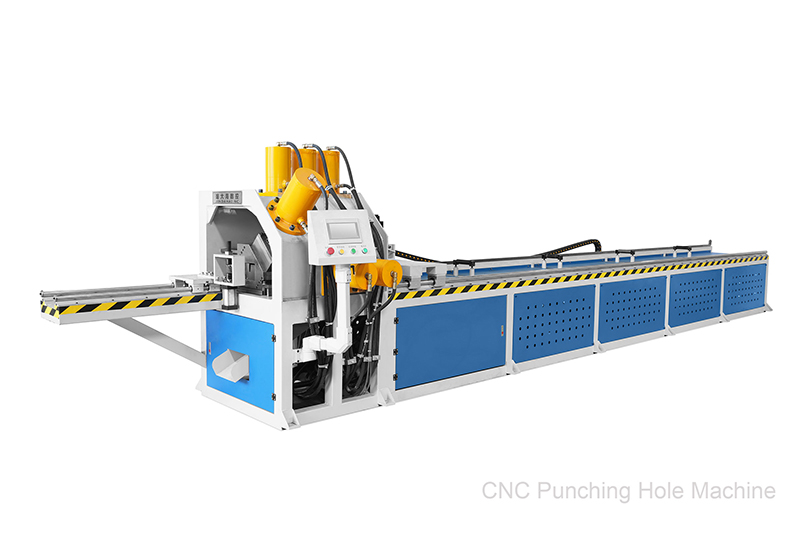
Before understanding the advantages of laser technology, it is important to identify the typical pain points faced when using traditional tube cutting equipment such as band saws, manual cutting machines, drilling machines, or hydraulic punching systems.
Inconsistent Cutting Accuracy and Dimensional Errors
Traditional tube cutting relies heavily on manual measurement, positioning, and operator experience. Even small deviations during marking or clamping can result in inaccurate cuts.
Common accuracy-related issues include:
Uneven cut lengths
Angular deviation
Misaligned holes
Poor repeatability in batch production
These errors become more pronounced when processing complex profiles or when tight tolerances are required.
Secondary Processing Increases Time and Cost
After cutting, traditional tube processing often requires additional steps such as:
Deburring
Grinding
Drilling
Re-alignment
Each extra step increases labor time, tool wear, and overall production cost, while also introducing more opportunities for human error.
Material Waste and Low Utilization Rates
Traditional cutting methods often leave:
Large scrap ends
Inaccurate nesting
Excessive trimming allowances
This results in lower material utilization, which becomes especially costly when processing stainless steel, aluminum, or other high-value materials.
Limited Capability for Complex Tube Designs
Modern product designs frequently require:
Irregular holes
Slots
Bevels
Intersecting cuts
Complex contours
Traditional equipment struggles to handle these requirements efficiently, often forcing manufacturers to simplify designs or outsource complex processing.
Why Traditional Tube Processing Struggles to Meet Modern Demands
The root cause of these problems lies not only in the equipment itself but also in the production model it supports.
Traditional tube processing is typically:
Tool-dependent
Labor-intensive
Mechanically constrained
Difficult to automate fully
As customer expectations evolve toward higher precision, faster delivery, and customized designs, these limitations become increasingly restrictive.
How a Laser Pipe Cutting Machine Transforms Tube Processing
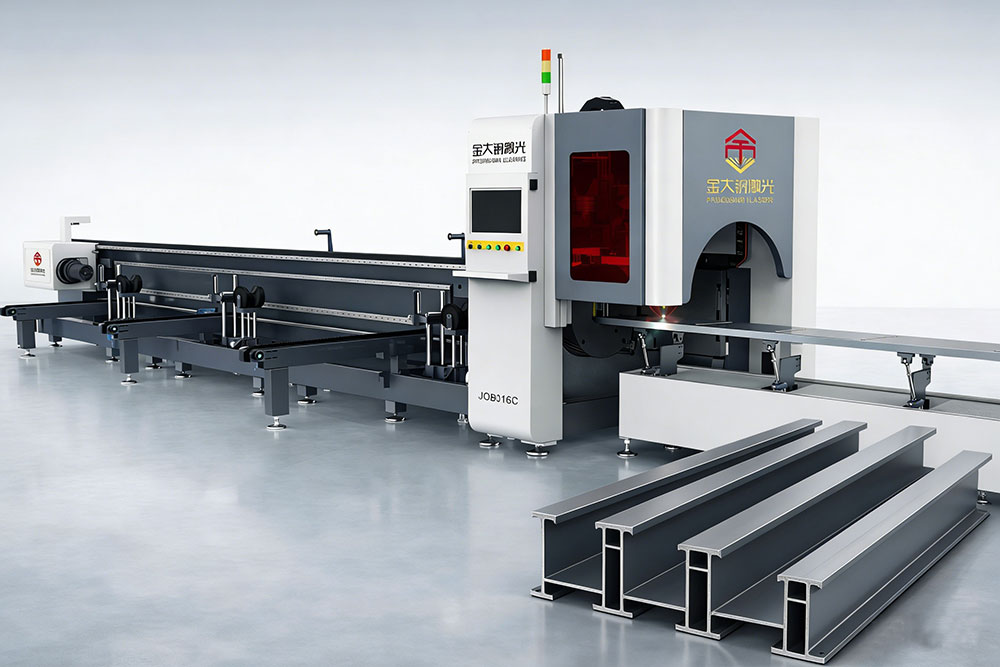
A laser pipe cutting machine uses a high-energy laser beam controlled by CNC systems to cut tubes with extreme precision. Unlike mechanical cutting, laser cutting is a non-contact process, eliminating many of the physical constraints of traditional methods.
Precision Cutting with Minimal Tolerance Deviation
Laser cutting systems can achieve:
High positional accuracy
Clean, burr-free edges
Excellent repeatability across large batches
The CNC control ensures that every tube is processed exactly according to the digital design, reducing dependence on operator skill.
Integrated Cutting, Drilling, and Slotting in One Process
One of the biggest advantages of laser tube cutting is process integration. A single laser pipe cutting machine can perform:
Length cutting
Hole cutting
Slotting
Bevel cutting
Complex contour processing
This eliminates multiple machines and secondary operations, significantly improving workflow efficiency.
Solving Accuracy Problems with Laser Tube Cutting Technology
Accuracy is one of the most critical performance indicators in tube processing. Laser systems address this challenge on multiple levels.
CNC-Controlled Motion Systems
Laser pipe cutting machines use:
High-precision servo motors
Linear guides
Rotary chucks for tube positioning
This ensures consistent movement and accurate synchronization between tube rotation and laser cutting.
Automated Tube Alignment and Clamping
Advanced laser machines automatically:
Detect tube centerlines
Adjust clamping force
Compensate for tube deformation
This reduces setup time and prevents misalignment-related defects.
Eliminating Secondary Processing and Manual Rework
Traditional processing often requires additional finishing steps, but laser cutting significantly reduces or eliminates these needs.
Clean Cut Edges with Minimal Heat-Affected Zone
Modern fiber laser systems generate:
Narrow kerf widths
Smooth cut surfaces
Minimal thermal distortion
As a result, most parts can move directly to welding, bending, or assembly without further treatment.
Consistent Hole Quality for Direct Assembly
Laser-cut holes offer:
Accurate diameters
Clean edges
Precise positioning
This allows components to be assembled without re-drilling or manual correction.
Reducing Material Waste and Improving Yield
Material utilization is a major cost factor in tube processing.
Intelligent Nesting and Cutting Optimization
Laser pipe cutting machines use software to:
Optimize cutting sequences
Minimize scrap lengths
Reduce leftover material
This can significantly improve material yield compared to manual cutting.
Precise Cut Length Control
With laser cutting, each tube is cut to exact specifications, reducing overcutting and unnecessary trimming.
Handling Complex Tube Designs with Ease
As product designs become more sophisticated, processing flexibility becomes essential.
Processing Complex Profiles and Shapes
Laser tube cutting machines can handle:
Round tubes
Square and rectangular tubes
Oval and special-shaped profiles
Angle steel and channel steel (with suitable configurations)
This versatility allows manufacturers to expand their product range without adding multiple machines.
Supporting Customized and Small-Batch Production
Laser cutting is ideal for:
Custom orders
Prototyping
Small to medium batch production
Design changes can be implemented directly in the software without changing physical tools.
Productivity Gains for Workshops and Factories
Beyond solving technical problems, laser tube cutting delivers measurable productivity improvements.
Faster Processing Speeds
Compared to traditional methods, laser cutting offers:
Higher cutting speeds
Reduced setup time
Continuous automated operation
This enables workshops to process more orders within the same timeframe.
Lower Labor Dependency
Laser pipe cutting machines require:
Fewer operators
Less manual intervention
Reduced training time
This is particularly valuable in regions facing skilled labor shortages.
Improved Consistency and Quality Control
Consistency is critical for large-scale production and brand reputation.
Digital Process Control
Laser cutting systems rely on digital files, ensuring:
Uniform output
Stable quality
Easy quality tracking
Reduced Human Error
By automating measurement, positioning, and cutting, laser machines significantly reduce operator-related variability.
Long-Term Cost Benefits of Laser Pipe Cutting Machines
While the initial investment in a laser pipe cutting machine may be higher, the long-term financial benefits are substantial.
Lower Operating Costs
Savings come from:
Reduced material waste
Lower labor costs
Fewer secondary processes
Higher Equipment Utilization
A single laser machine can replace multiple traditional machines, improving floor space efficiency and equipment ROI.
Industries Benefiting Most from Laser Tube Cutting Solutions
Laser tube cutting technology is widely adopted across multiple industries, including:
Construction and structural fabrication
Furniture and shelving manufacturing
Automotive and transportation components
Fitness equipment and sports gear
Agricultural machinery
In each of these sectors, the laser pipe cutting machine addresses accuracy, efficiency, and design flexibility challenges.
Conclusion: From Common Problems to Competitive Advantage
Traditional tube processing methods have long struggled with accuracy issues, high labor dependency, material waste, and limited design flexibility. As manufacturing standards continue to rise, these challenges become increasingly costly.
By adopting a laser pipe cutting machine, workshops and factories can effectively eliminate many of these long-standing problems. Laser technology delivers precision, efficiency, consistency, and flexibility—transforming tube processing from a bottleneck into a competitive advantage.
For manufacturers looking to improve quality, reduce costs, and future-proof their production capabilities, laser tube cutting is no longer just an upgrade—it is a strategic necessity.