Introduction: Why Choosing the Right CNC Tube Punching Machine Matters
In today’s competitive metal fabrication industry, efficiency, consistency, and scalability are no longer optional—they are essential. Whether you are producing furniture frames, structural tubes, racks, or customized metal components, the way you create holes directly impacts productivity and profit. This is where a CNC tube punching machine becomes a critical investment.
Unlike manual or semi-automatic methods, a CNC tube punching machine enables precise, repeatable, and high-speed hole processing across a wide range of tube profiles. However, not all machines are created equal. Choosing the wrong system can lead to underutilization, excessive downtime, or limited processing capability.
This guide will walk you through how to evaluate, compare, and select the right CNC tube punching machine for your fabrication business—based on material types, production volume, hole requirements, automation level, and long-term return on investment.
Understanding What a CNC Tube Punching Machine Is
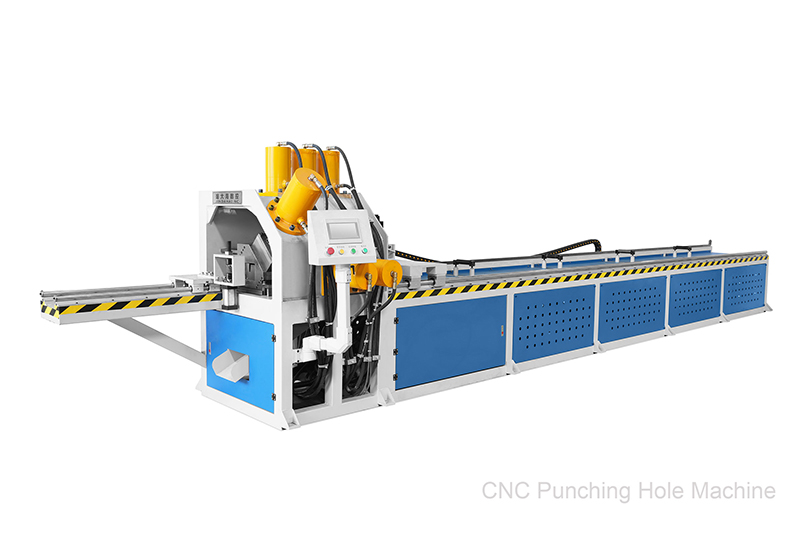
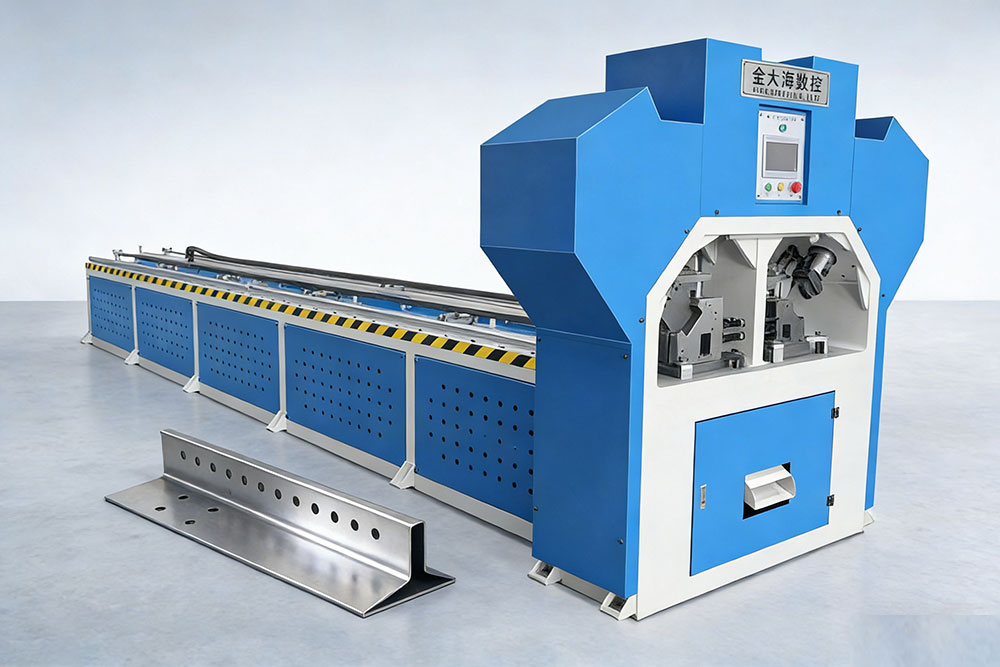
A CNC tube punching machine is a computer-controlled system designed to punch holes, slots, and shapes into metal tubes with high accuracy and repeatability. Unlike flat sheet punching machines, these systems are engineered specifically for round, square, rectangular, and special-shaped tubes.
Core Working Principle of CNC Tube Punching Machines
At its core, a CNC tube punching machine operates through synchronized control of:
Servo-driven feeding systems
CNC-controlled punching axes
High-strength hydraulic or mechanical punching units
Tooling stations with interchangeable dies
The tube is automatically fed into the machine, positioned precisely, and punched according to a pre-programmed design. This automation eliminates human error and ensures consistent hole placement across batches.
Why Fabrication Businesses Are Switching to CNC Tube Punching
Before selecting a machine, it is important to understand why CNC tube punching machines have become standard equipment in modern workshops.
Productivity Gains Over Manual Punching
Manual punching relies heavily on operator skill and physical effort. Output is limited, consistency varies, and fatigue becomes a real issue. In contrast, a CNC tube punching machine can:
Process hundreds or thousands of holes per shift
Maintain identical hole positioning across every tube
Run continuously with minimal supervision
Cost Control and Waste Reduction
Although the initial investment is higher, CNC tube punching machines reduce long-term costs by:
Minimizing material scrap
Reducing rework caused by misaligned holes
Lowering labor dependency
Key Factors to Consider When Choosing a CNC Tube Punching Machine
Selecting the right CNC tube punching machine requires more than comparing price tags. Below are the most critical evaluation criteria.
Tube Material Compatibility and Thickness Range
Different fabrication businesses work with different materials. Your CNC tube punching machine must be compatible with your primary material types.
Common Materials Supported
Most modern CNC tube punching machines support:
Mild steel
Stainless steel
Galvanized steel
Aluminum
However, maximum thickness capability varies. Always confirm:
Maximum punching thickness per material
Die life expectancy with harder metals
Hydraulic force rating
A mismatch here can significantly shorten tool life or limit production.
Tube Shapes and Size Range
Not all CNC tube punching machines support the same tube profiles.
Tube Shapes to Confirm
Ensure the machine can handle:
Round tubes
Square tubes
Rectangular tubes
Oval or custom profiles (if required)
Tube Size Capacity
Key specifications to check:
Minimum and maximum tube diameter
Maximum side length for square/rectangular tubes
Tube length feeding capacity
If your business serves multiple industries, broader compatibility provides long-term flexibility.
Hole Types, Sizes, and Pattern Complexity
The type of holes you need will directly influence machine configuration.
Hole Geometry Capabilities
A capable CNC tube punching machine should support:
Round holes
Square holes
Rectangular slots
Oblong and custom-shaped holes
Multi-Hole and Pattern Processing
For furniture and construction applications, machines that support:
Multi-row punching
Variable spacing
Angle-offset patterns
offer significant efficiency advantages.
Automation Level and Feeding System
Automation is where CNC tube punching machines truly shine.
Manual vs Semi-Automatic vs Fully Automatic Feeding
Manual loading: Lower cost, higher labor input
Semi-automatic feeding: Balanced option for small workshops
Fully automatic feeding: Best for high-volume production
A fully automatic CNC tube punching machine allows one operator to manage multiple machines simultaneously.
Servo Control Accuracy
Look for:
Servo-driven feeding
High-resolution encoders
Stable repeat positioning
These directly impact hole accuracy and repeatability.
CNC Control System and Software Compatibility
The CNC controller acts as the brain of the machine.
User-Friendly CNC Interface
An intuitive CNC system should offer:
Visual programming
Error alarms
Parameter memory for repeat jobs
CAD/CAM and File Import Support
Advanced CNC tube punching machines support:
DXF file import
CAD-based programming
Integration with production management systems
This reduces setup time and operator dependency.
Tooling System and Die Flexibility
Tooling flexibility determines how adaptable your machine is to changing orders.
Quick-Change Tooling Advantages
Quick-change die systems allow:
Faster job changeover
Reduced downtime
Lower labor intensity
Die Availability and Cost
Before purchasing, confirm:
Availability of standard dies
Custom die lead time
Tooling replacement cost
This significantly affects long-term operating expenses.
Machine Structure, Stability, and Build Quality
A CNC tube punching machine is a long-term asset.
Frame Construction and Rigidity
Look for:
Welded steel frames
Stress-relieved structures
Precision-machined guide rails
Rigid construction ensures consistent accuracy over years of use.
Hydraulic vs Mechanical Punching Systems
Hydraulic systems: Flexible, quieter, suitable for variable thickness
Mechanical systems: Faster cycle times, simpler structure
Your application determines which is better.
Production Volume and Scalability
Your current needs may not be your future needs.
Matching Machine Capacity to Output Goals
Ask yourself:
How many tubes per shift?
Single-batch or mass production?
Expected business growth in 2–5 years?
Choosing a CNC tube punching machine with expansion capability avoids premature replacement.
Safety Features and Operator Protection
Modern fabrication workshops prioritize safety.
Key safety features include:
Emergency stop systems
Protective guards
Light curtain sensors
Automatic fault detection
A well-designed CNC tube punching machine improves safety compliance and reduces workplace risk.
After-Sales Support and Technical Service
The machine itself is only part of the investment.
Training and Installation Support
Reliable suppliers offer:
Operator training
Installation guidance
Process optimization support
Spare Parts Availability
Fast access to spare parts minimizes downtime and protects production schedules.
Total Cost of Ownership and ROI Analysis
Price alone should never be the deciding factor.
Hidden Costs to Consider
Tooling replacement
Maintenance frequency
Power consumption
Operator labor savings
A higher-quality CNC tube punching machine often delivers better ROI over its lifecycle.
Conclusion: Choosing the Right CNC Tube Punching Machine for Long-Term Success
Selecting the right CNC tube punching machine is a strategic decision that directly affects productivity, quality, and profitability. By carefully evaluating material compatibility, tube size range, hole complexity, automation level, and long-term operating costs, fabrication businesses can avoid costly mistakes and unlock scalable growth.
A well-matched CNC tube punching machine not only improves efficiency today but also positions your workshop for future expansion, higher-value orders, and consistent output quality. In an industry driven by speed and precision, the right equipment is not just an upgrade—it is a competitive advantage.