A Production Upgrade Story from Moscow’s Construction Equipment Sector
In large construction markets such as Moscow, safety equipment used on building sites must meet strict structural and reliability requirements. One important piece of equipment widely used on high-rise construction projects is the suspended platform, commonly known as a construction gondola.
These systems rely on steel frame structures made from square tubes and other steel profiles. Every structural component must be precisely punched and cut to ensure the stability and safety of the equipment once installed on a building.
This customer case study describes how a construction equipment manufacturer in Moscow improved the production of gondola components by adopting a CNC tube punching and cutting machine, replacing traditional manual processing methods with a more automated solution.
Background: Steel Tube Components in Construction Hoists
The customer operates in the construction formwork and suspended platform industry, producing structural steel parts used in building gondola systems.
These gondola frames are typically fabricated from square steel tubes of different sizes. In this project, the most common materials included:
Square tubes for the main support frame
Secondary structural tubes used for reinforcement
Steel components requiring both hole punching and precise length cutting
Each tube must be processed with accurate hole positions to allow assembly with bolts and connectors during installation.
Because these components support workers operating at height, structural consistency is extremely important.
Production Challenges Before Automation
Before introducing new equipment, the manufacturer relied mainly on traditional punching machines and manual cutting operations.
As production volume increased, several problems became more apparent.
Labor-Intensive Workflow
Workers had to measure tube positions, perform punching operations, and then move materials to another station for cutting. This multi-step process required multiple operators and increased labor costs.
Low Production Efficiency
Because punching and cutting were performed separately, the overall production rhythm was slow. Materials had to be handled repeatedly, which added time to each production cycle.
Safety Concerns
Traditional punching operations required operators to work close to the machine. With higher production pressure, maintaining consistent safety conditions became increasingly challenging.
In a competitive market environment, improving efficiency while reducing labor risks became a priority.
Defining the Equipment Requirements
After reviewing their production workflow, the manufacturer defined several key requirements for a new system.
First, the machine needed to perform both punching and cutting operations on square tubes in one integrated workflow.
Second, the system should support multiple tube specifications used in gondola manufacturing.
Third, automation was important. The company wanted to reduce direct manual involvement during processing and improve overall safety.
Finally, the machine needed to support continuous production with stable performance in an industrial environment.
These requirements led to the design of a customized CNC square tube punching and cutting solution.
The Proposed Solution: Integrated Punching and Cutting System
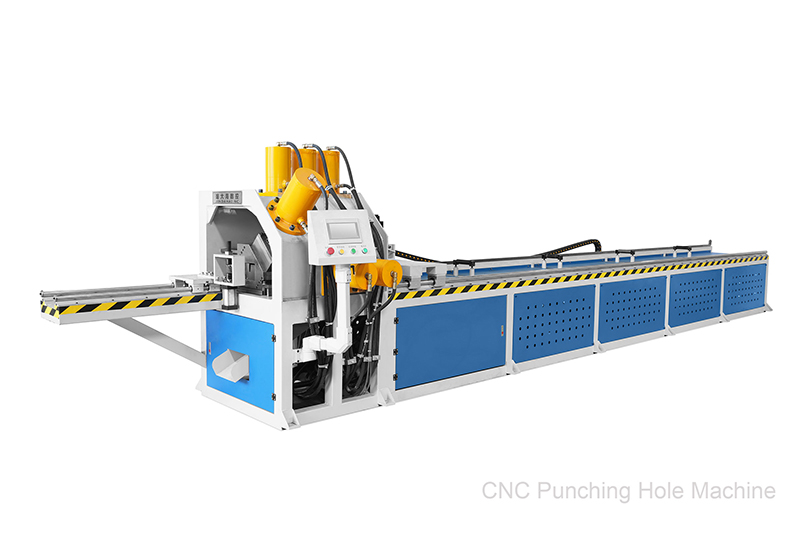
Based on the customer’s needs, we provided a CNC punching and cutting machine for square tube structures.
Instead of separating punching and cutting into different stations, the system integrates both operations within a single machine. This reduces material handling and simplifies the production process.
The machine configuration focuses on practical performance rather than complex specifications. The solution includes:
A multi-cylinder punching and cutting structure
CNC-controlled positioning for accurate hole placement
An automatic feeding mechanism to support continuous processing
A monitoring system that helps operators observe machine operation in real time
This setup allows steel tubes to move through punching and cutting operations in one controlled process.
Efficient Tube Processing Workflow
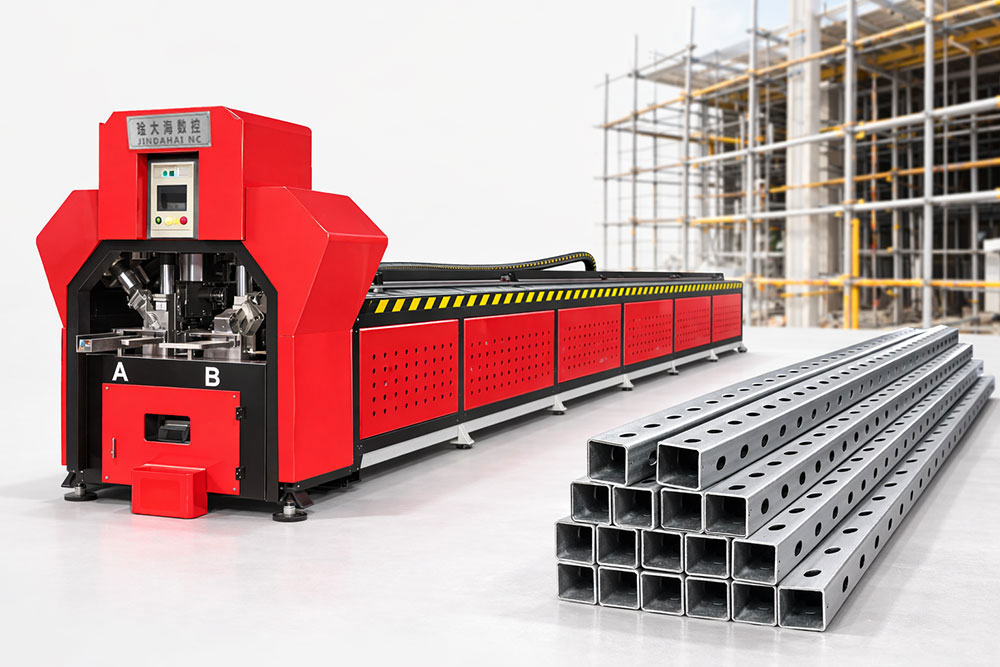
In daily production, square tubes are placed onto the feeding system and automatically positioned for processing.
The machine performs hole punching according to pre-set programs and then cuts the material to the required length. Because both processes occur in the same workflow, production time is significantly reduced.
Operators mainly supervise machine operation and manage material flow, rather than performing manual punching tasks.
This approach improves both efficiency and operational safety.
Designed for Construction Equipment Manufacturing
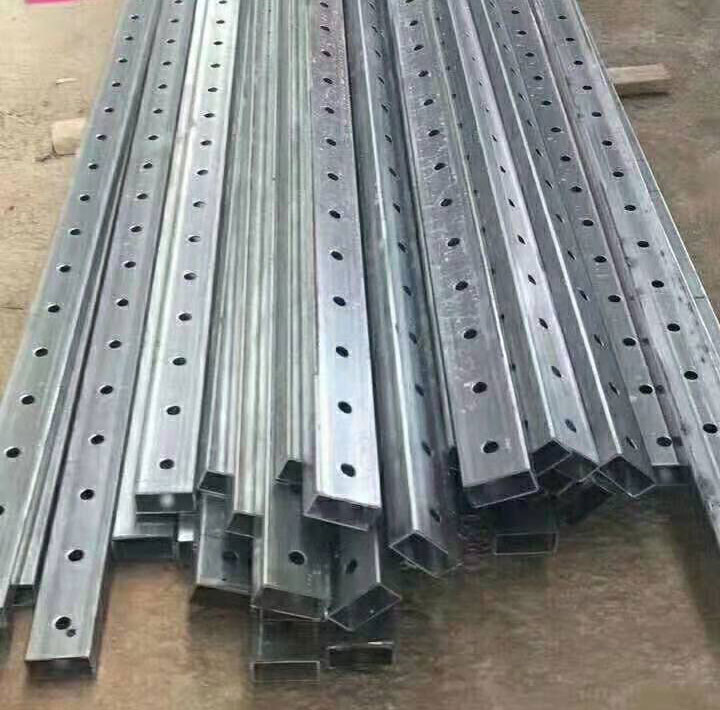
Manufacturers of construction equipment often work with multiple steel tube specifications. The punching and cutting system was therefore designed to support flexible production.
The equipment can process different square tube sizes used in gondola frames and structural components. Tooling can be adjusted according to production drawings, allowing manufacturers to switch between different product models when required.
This flexibility is particularly valuable for companies producing various types of suspended platform equipment.
Improving Safety and Production Stability
One of the important goals of the project was to improve workplace safety.
By separating operators from direct punching operations and using CNC-controlled processing, the machine helps reduce the risks associated with manual punching equipment.
At the same time, the integrated workflow ensures more consistent hole placement and cutting accuracy.
For manufacturers producing structural equipment used on construction sites, consistency and reliability are essential.
Supporting the Construction Equipment Industry
This project demonstrates how modern manufacturing solutions can help construction equipment manufacturers improve productivity.
By adopting an integrated CNC tube punching and cutting solution, the Moscow-based manufacturer streamlined its production process, reduced labor involvement, and improved processing consistency for gondola structural components.
As the construction industry continues to expand, automated steel processing technologies are becoming an increasingly important part of efficient equipment manufacturing.