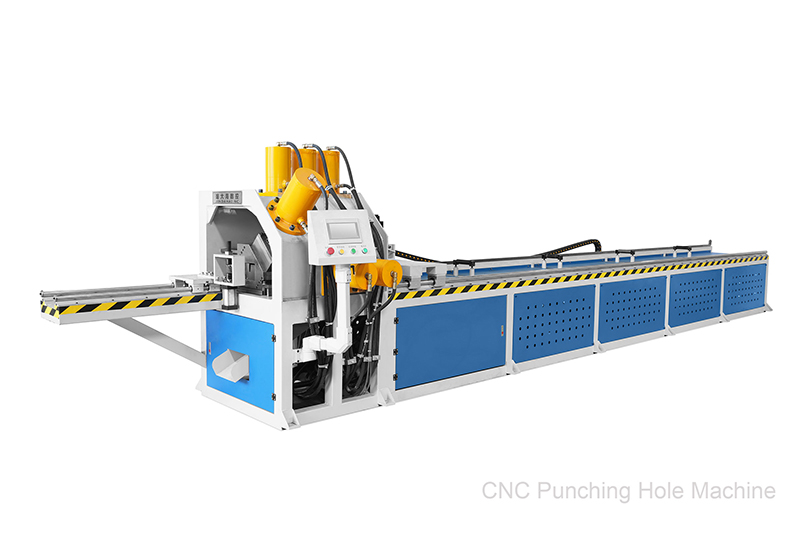
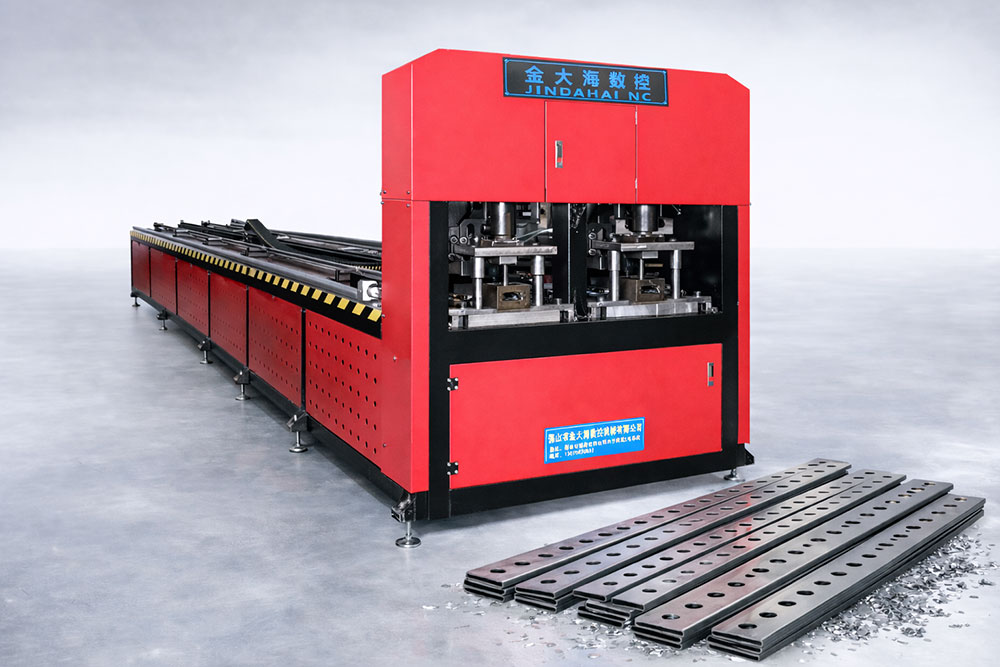
In metal fabrication, efficiency is no longer just an advantage. It has become a requirement. Manufacturers today are expected to deliver consistent quality, shorter lead times, and lower production costs at the same time. This is exactly why the CNC punching machine has become an increasingly important solution in many workshops and factories. From simple hole processing to repeated high-volume production, this type of machine helps manufacturers improve both speed and accuracy in a practical way.
For many businesses, especially those producing metal profiles, brackets, support parts, storage systems, and structural components, manual punching or drilling is no longer efficient enough. Repeated measuring, marking, clamping, and alignment take time, and small human errors can lead to material waste or assembly problems later. By comparison, a CNC-controlled punching system can perform the same operations with better repeatability and much less manual intervention.
This is one reason why more manufacturers are moving toward automation. A CNC punching machine is not only about replacing manual labor. It is also about creating a more stable production process. When the machine is programmed correctly, it can produce consistent parts across larger production runs, help reduce rework, and make workshop planning easier. In this article, we will explain what a CNC punching machine is, how it works, where it is used, how to use it properly, and why it brings real value to industrial manufacturing.
What Is a CNC Punching Machine?
A CNC punching machine is an automated machine designed to punch holes, slots, and shaped openings in metal materials according to programmed instructions. CNC stands for Computer Numerical Control, which means the machine follows digital commands entered by the operator instead of relying only on manual positioning and repeated measurement.
In a traditional punching process, an operator often needs to mark dimensions manually, position the workpiece, align the tooling, and repeat the same tasks for every part. This can work for very small production runs, but once order volumes increase, the process becomes slower and more dependent on operator skill. A CNC punching machine changes that. The operator inputs hole size, spacing, quantity, feeding distance, and processing sequence into the control system. The machine then handles the movement and punching action automatically.
Depending on the model, this kind of equipment may process flat bar, angle steel, channel steel, square tubes, rectangular tubes, round pipes, or other profiles. Some machines focus only on punching, while others also support cutting, notching, or marking. In modern production, it is often seen as a core part of a factory’s automation plan because it can connect more smoothly with downstream fabrication and assembly processes.
What makes this machine especially useful is repeatability. Once the program is tested and confirmed, the machine can produce the same hole pattern again and again with stable quality. For factories that handle medium- to large-volume production, this is a major advantage.
Why More Factories Are Using CNC Punching Machines
The growing popularity of CNC punching machines is closely tied to the changing needs of industrial production. Customers now demand faster delivery, more consistent quality, and better dimensional accuracy. At the same time, manufacturers want to reduce labor costs, improve workshop safety, and lower the risk of mistakes. CNC punching helps solve several of these issues at once.
One of the biggest problems with traditional manual processing is inconsistency. Even skilled workers can make small positioning errors during repetitive work. Over time, this can lead to mismatched holes, unstable quality, or increased scrap rates. When those parts move to welding, coating, or final assembly, the small errors from the punching stage may turn into larger production problems.
With CNC punching, the workflow becomes more standardized. Once the machine receives the correct program, it follows the same instructions every cycle. This means the production result is less dependent on operator concentration and more dependent on the reliability of the setup. For factories trying to standardize quality across shifts or operators, that is a major improvement.
Another reason factories adopt CNC punching is production rhythm. Manual punching or drilling becomes a bottleneck when parts require repeated hole patterns or long profiles with many punching positions. CNC feeding systems and automated control make it much easier to process these jobs quickly. In industries where time and consistency directly affect profit, this matters a great deal.
Where CNC Punching Machines Are Commonly Used
One of the strongest advantages of CNC punching technology is its wide application range. It can be used in many industries because repeated hole processing is common in so many metal products.
Construction and Steel Structure Fabrication
CNC punching machines are widely used in the production of steel brackets, connection members, support parts, and profile components for construction-related manufacturing. In this field, hole accuracy matters because the punched parts often need to fit directly into structural assembly. When a factory is involved in steel structure fabrication or related support systems, consistent hole spacing and alignment help improve installation efficiency and reduce site adjustment.
Shelving, Storage, and Rack Systems
Metal storage products usually require many holes with uniform spacing. Shelf uprights, rack supports, storage frames, and warehouse components are all common examples. These products are ideal for CNC punching because the hole pattern is often repeated across many parts. For manufacturers producing storage rack systems work while keeping each component consistent.
Solar Mounting and Support Structures
Solar support systems usually require standardized hole patterns for connectors and installation hardware. Since these parts are often produced in larger quantities, automated punching is highly suitable. In the production of solar mounting structures, CNC punching helps maintain repeatability and supports faster batch manufacturing.
Tube and Profile Processing
Many factories process square tube, round tube, rectangular tube, angle steel, or channel steel into punched components for different industries. These parts may be used in furniture, fencing, frames, supports, and structural products. When the article discusses tube or profile applications, the most relevant destination is often not a broad product page but a related industry example. That is why tube processing applications are often better connected to a matching case page on your website.
What Materials Can a CNC Punching Machine Process?
A CNC punching machine can work with many common metal materials, but the exact processing range depends on machine design, punching force, tooling type, and material dimensions. In general, the materials most often processed include mild steel, stainless steel, aluminum, galvanized steel, copper, and some alloy materials.
In terms of shape, the machine may handle flat bars, angle steel, channel steel, square tubes, rectangular tubes, and round pipes. Some machines are specifically designed for profile processing, while others are optimized for flat material or sheet-based production. Because of this, manufacturers should never assume all machines can process all materials equally well. The structure of the machine must match the actual products being made.
Material thickness is another key factor. Thin-walled profiles may be processed more easily and at higher speed, while thicker materials require greater punching force and more robust tooling. Tool selection also plays an important role. Clean hole quality depends not only on the machine itself, but also on having a suitable punch and die combination for the material and the required hole size.
This is why machine selection should be based on actual production needs instead of only marketing descriptions. A factory producing structural steel members has different requirements from one producing light furniture frames or storage accessories. Understanding material characteristics helps users get better performance and longer tool life from the equipment.
How a CNC Punching Machine Works
Although different machines may vary in structure, the general working process is similar. A CNC punching machine combines a control system, feeding mechanism, clamping system, punch-and-die tooling, and power system. These parts work together to process the material according to the programmed requirements.
Program Input
The first step is programming. The operator enters the required hole positions, size, quantity, and sequence into the control system. Some machines also allow data import from design files, which saves time and reduces the risk of manual entry errors.
Material Loading
The raw material is loaded onto the machine, either by hand or with an auxiliary feeding system. In larger factories, automatic loading and support devices can improve workflow and reduce physical labor.
Positioning and Feeding
After loading, the material is moved to the correct punching position. Servo-controlled feeding systems are especially valuable when processing long profiles or tubes because they keep the feeding distance more consistent from one punch to the next.
Punching Action
Once the workpiece is positioned, the punch descends into the die and forms the required hole. Depending on the tooling, the machine may create round holes, slots, square holes, or custom shapes. Good alignment and tooling condition are essential for clean hole quality.
Repeated Processing
The machine continues the cycle automatically until the full hole pattern is completed. This is where CNC punching shows its greatest advantage. Instead of repeating every step manually, the operator can rely on the programmed sequence for stable output.
Output to the Next Process
After punching is complete, the material moves to the next stage, such as cutting, welding, bending, or assembly. In many workshops, the speed and consistency of the punching stage have a direct effect on the efficiency of these later operations.
How to Use a CNC Punching Machine Properly
A CNC punching machine delivers good results only when it is used correctly. Automation improves efficiency, but it does not eliminate the need for correct setup, tooling selection, and operator attention.
Review Drawings and Production Data
Before starting a job, the operator should confirm the drawing, material size, hole diameter, hole spacing, orientation, and quantity. A small programming mistake can affect every part in the batch, so preparation matters.
Choose the Right Tooling
The punch and die must match the hole size, material type, and thickness. Incorrect tooling can cause burrs, poor hole shape, rapid tool wear, or dimensional errors. Tool condition should also be checked before batch production starts.
Align and Clamp the Material
Proper alignment is essential. If the material shifts during punching, hole position accuracy will be affected immediately. Long profiles and tubes often require additional support to maintain stability.
Run a Sample Part
A first-piece inspection should always be done before full production. The sample part should be checked for hole size, spacing, position, burrs, and overall dimensional accuracy. This small step can prevent larger losses later.
Monitor the Machine During Production
Even after the program is confirmed, the operator should continue observing the machine. Unusual sound, vibration, feeding errors, or poor hole edges may indicate setup or tooling problems. CNC automation reduces manual labor, but good operators still play an important role in quality control.
Perform Routine Maintenance
Regular cleaning, lubrication, clamp inspection, and tooling maintenance are essential for long-term performance. Factories that keep their machines in good condition usually achieve more stable output and lower downtime.
What Benefits Does a CNC Punching Machine Bring to Industrial Production?
The value of CNC punching is not limited to speed alone. Its real advantage comes from how it improves the entire production system.
Faster Output
Once the machine is programmed, repeated punching operations can be completed much faster than manual marking and drilling. This is especially important in medium- and large-volume orders where cycle time directly affects delivery performance.
Better Hole Accuracy
Because the machine follows digital positioning instead of human estimation, hole location is more consistent. That accuracy becomes even more important when punched parts must match later assembly, welding, or fastening requirements.
Improved Repeatability
In manual work, performance may change with operator fatigue or shifting attention. CNC punching reduces this problem by repeating the same programmed process across the whole batch. Consistency is one of the strongest reasons factories invest in this equipment.
Lower Labor Dependence
Manual punching takes repeated effort in measuring, positioning, and handling. CNC systems reduce those tasks and allow fewer operators to manage more output. For factories facing labor shortages or rising labor costs, this can make a significant difference.
Better Safety
Automation also improves working conditions. Instead of operating directly in the punching zone during every cycle, the operator can supervise the process more safely from the control area. This helps reduce risk in daily production.
Reduced Material Waste
Incorrect hole position or inconsistent spacing can turn a usable part into scrap. CNC punching lowers the chance of these errors when the setup is correct. Over time, fewer mistakes mean lower material waste and better cost control.
How to Choose the Right CNC Punching Machine
Not every CNC punching machine is suitable for every factory. The best choice depends on the parts being made, the materials being used, and the production goals of the business.
The first question to consider is what kind of material is processed most often. A factory handling angle steel and channel steel may need a different machine from one producing square tube parts or flat bar components. Machine structure must match the real shape of the products.
The second factor is production volume. If the business handles repeated batch orders, efficiency and automatic feeding may be a priority. If the business focuses on smaller custom jobs, flexibility and ease of programming may matter more.
The third factor is hole type and material thickness. Different products require different punching force and tooling. A machine that looks attractive on paper may still be the wrong choice if it cannot handle real production conditions.
Software and control usability also matter. A strong machine with a confusing or unstable control system may create problems in daily operation. Good programming logic, clear interface design, and reliable technical support all contribute to long-term value.
Finally, buyers should think beyond purchase price. Spare parts, tooling availability, training support, and service response are important in real production. A machine should not only work on the first day. It should continue supporting the factory’s output over time.
Common Problems and How to Avoid Them
Even good equipment can produce poor results if basic production discipline is ignored.
Burrs around the hole are often caused by worn tooling, poor die clearance, or unsuitable parameters. Regular tool inspection is one of the simplest ways to protect hole quality.
Positioning errors often come from material movement, feeding inaccuracy, or programming mistakes. That is why first-piece inspection is so important. It catches issues before they spread across the batch.
Fast tool wear may be related to hard material, excessive punching frequency, poor lubrication, or unsuitable tooling quality. Good maintenance habits and correct operating conditions help extend tool life.
Production bottlenecks may also appear outside the machine itself. In some workshops, punching is fast, but loading, unloading, or downstream handling is too slow. In those cases, improving the surrounding workflow may create more value than upgrading the machine alone.
Final Thoughts
A CNC punching machine is more than a piece of equipment for making holes. It is a practical production tool that helps manufacturers improve speed, repeatability, labor efficiency, and overall process stability. As industries continue to demand better quality and shorter delivery times, this kind of machine is becoming increasingly important in metal fabrication.
For factories that still rely heavily on manual punching or drilling, upgrading to CNC can reduce repeated labor and make production more predictable. For businesses already moving toward automation, the right punching system can improve workflow even further and support future expansion.
The key is not simply buying a machine. It is understanding how that machine fits the products, materials, and production logic of the factory. When used correctly, a CNC punching machine can become a strong part of a company’s long-term manufacturing strategy.