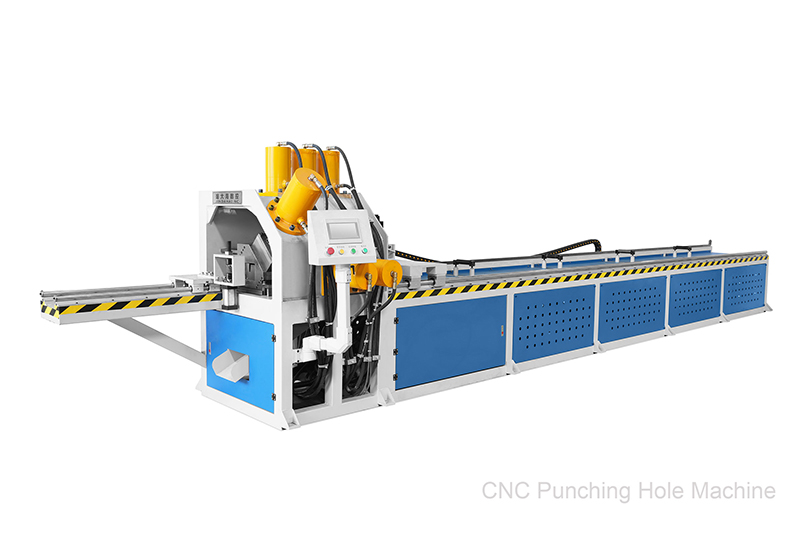
Project Story: Upgrading Steel Processing in Ethiopia
In the growing construction market of Africa, curtain wall systems are becoming a key part of modern commercial buildings. These systems rely heavily on precise steel components such as channel steel connectors and embedded plates, which must be processed with high accuracy and consistency.
This case study tells the story of a curtain wall component manufacturer in Ethiopia who upgraded their production process by adopting a CNC-based laser tube cutting approach. Instead of relying on traditional punching and cutting methods, the customer was looking for a more flexible and efficient solution that could handle multiple material types within one system.
Background: Curtain Wall Steel Component Manufacturing
The customer focuses on producing structural parts used in curtain wall systems, including channel steel connectors, embedded plates (200×200 and 300×300), and other steel components used in installation structures.
These parts require accurate hole positioning and precise cutting to ensure proper installation on construction sites. Because the product range includes different materials such as channel steel, angle steel, and square tubes, the production process must be both flexible and stable.
Challenges with Traditional Processing
Before upgrading, the factory relied on punching machines and manual cutting equipment. As production demand increased, several issues became more obvious.
Frequent mold changes slowed down production because each product required different punching tools.
Tooling costs increased due to wear when processing different materials.
Punching and cutting were performed in separate steps, requiring more labor and time.
Switching between different material types reduced efficiency due to repeated adjustments.
These limitations made it difficult to maintain consistent output as demand increased.
Searching for a More Flexible Solution
To improve efficiency and reduce costs, the customer began evaluating alternative technologies.
Laser processing was identified as a suitable option because it removes the need for physical molds. Through programming, the same system can handle multiple product types without mechanical changes.
This makes laser cutting for channel steel and structural profiles especially useful for manufacturers handling varied components.
At the same time, the customer wanted to reduce manual handling and improve overall workflow efficiency.
Defining the Requirements
After reviewing production needs, the customer defined clear requirements for a new system.
The machine needed to process multiple materials including channel steel, angle steel, and square tubes.
Hole cutting and length cutting had to be completed in one workflow.
The system needed to reduce dependence on molds and manual adjustments.
Semi-automatic loading was required to improve efficiency.
Stable and consistent processing performance was essential.
Solution: Semi-Automatic Laser Tube Cutting System
Based on these requirements, we provided a semi-automatic laser tube cutting solution designed for curtain wall component manufacturing.
The system focuses on practical production needs and includes a loading structure for multiple materials, a stable clamping mechanism, and a CNC-controlled cutting process.
This allows the customer to process different steel profiles in one machine without switching equipment or tooling.
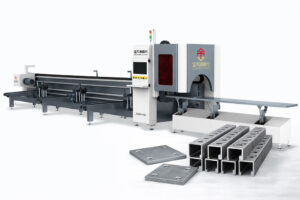
Processing Workflow
In daily production, materials such as channel steel and square tubes are placed onto the loading rack.
The system feeds them into the cutting area automatically. Once positioned, the machine performs hole cutting and length cutting in one continuous process.
This eliminates manual measuring and repositioning, improving consistency and reducing production time.
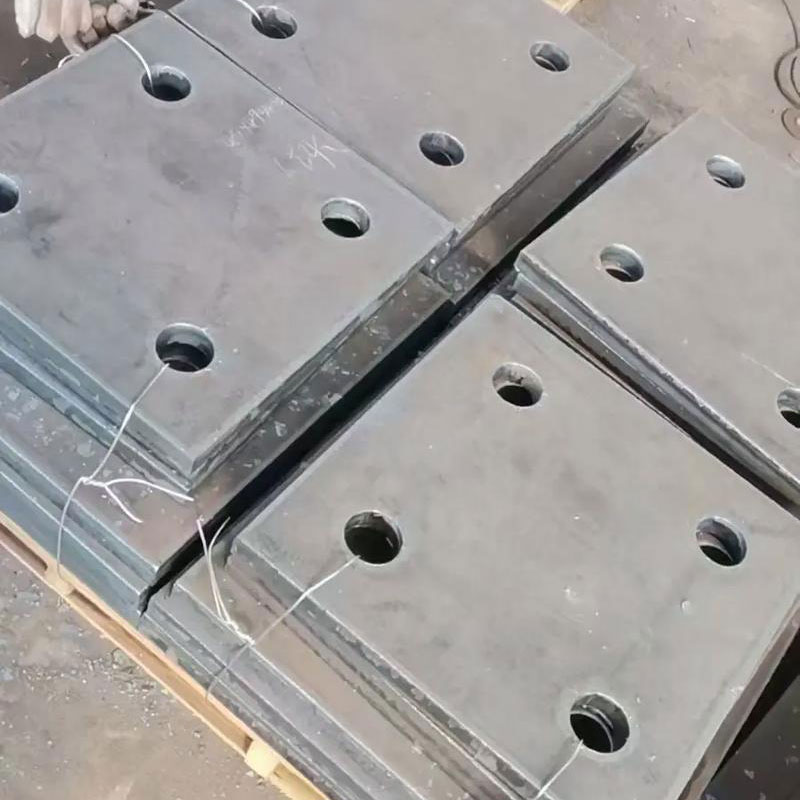
Flexibility Across Multiple Materials
Curtain wall component production requires handling various steel profiles. The system supports channel steel, angle steel, and square tubes within the same workflow.
By using programmable cutting instead of mechanical punching, the manufacturer can switch between products without changing molds.
This flexibility is critical for companies producing multiple types of structural components.
Reducing Costs and Improving Efficiency
Compared with traditional punching methods, this solution reduces tooling costs and minimizes downtime.
There is no need for frequent mold replacement, and production can continue without interruption when switching products.
The integrated workflow also reduces labor requirements and improves overall efficiency.
Supporting Curtain Wall Manufacturing
With automated feeding and integrated processing, the production line becomes more streamlined.
The customer can now complete multiple processing steps within a single system, improving both productivity and operational stability.
Conclusion
This project demonstrates how a curtain wall component manufacturer in Ethiopia improved its production process by adopting a more flexible cutting solution.
By replacing traditional punching with a laser tube cutting solution, the manufacturer achieved higher efficiency, lower costs, and improved production flexibility.
For companies working with multiple steel profiles, this approach provides a practical and scalable path toward modern manufacturing.