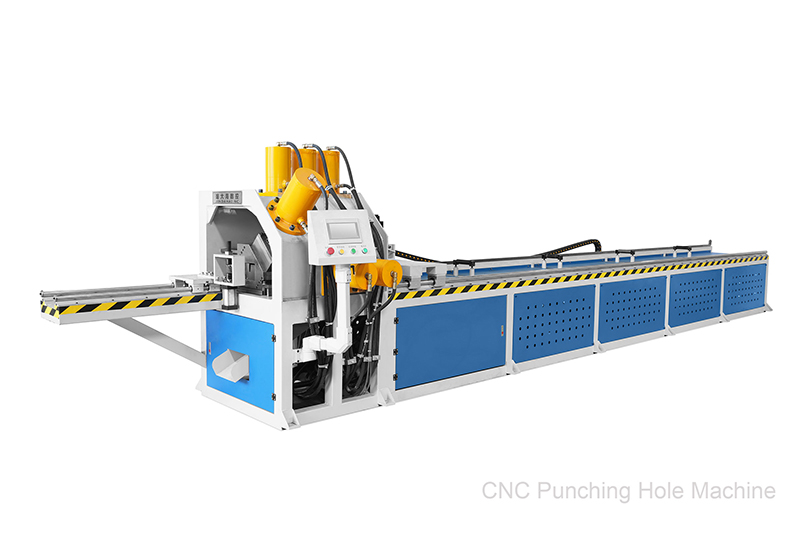
Metal fabrication has changed quickly over the last decade. Buyers expect shorter lead times, tighter tolerances, better product appearance, and more flexible customization than before. At the same time, manufacturers face rising labor costs, more competition, and increasing pressure to reduce waste. In tube and pipe processing, these challenges are especially visible. Traditional workflows often involve cutting, drilling, punching, trimming, and repeated manual positioning across different machines. That kind of production method can still work for simple jobs, but it becomes harder to manage when output, consistency, and speed matter more.
This is why the laser tube cutting machine has become such an important part of modern fabrication. Instead of treating tube processing as a series of separate manual operations, manufacturers can use one digital system to complete many cutting tasks with higher efficiency and better consistency. For companies making steel structures, furniture, transportation parts, industrial frames, display systems, and custom metal products, that shift is not just about buying a more advanced machine. It is about building a more capable production process.
A tube laser machine is also attractive because it sits at the intersection of automation and flexibility. Many types of equipment are efficient only when the product stays the same for a long time. Tube laser cutting is different. It supports repeat production well, but it also allows manufacturers to respond more easily to design changes, batch variation, and customer-specific requirements. That combination is one reason the technology has gained so much attention across different sectors of the market.
This article explains the role of tube laser cutting from a practical point of view. It covers where the machine is used, what kinds of materials and profiles it can handle, how factories use it in real production, and what benefits it brings to industrial work. It also explains why this technology is not only for very large plants. In many cases, it can create strong value for medium-sized and growing manufacturers as well.
What Makes Tube Laser Cutting Different?
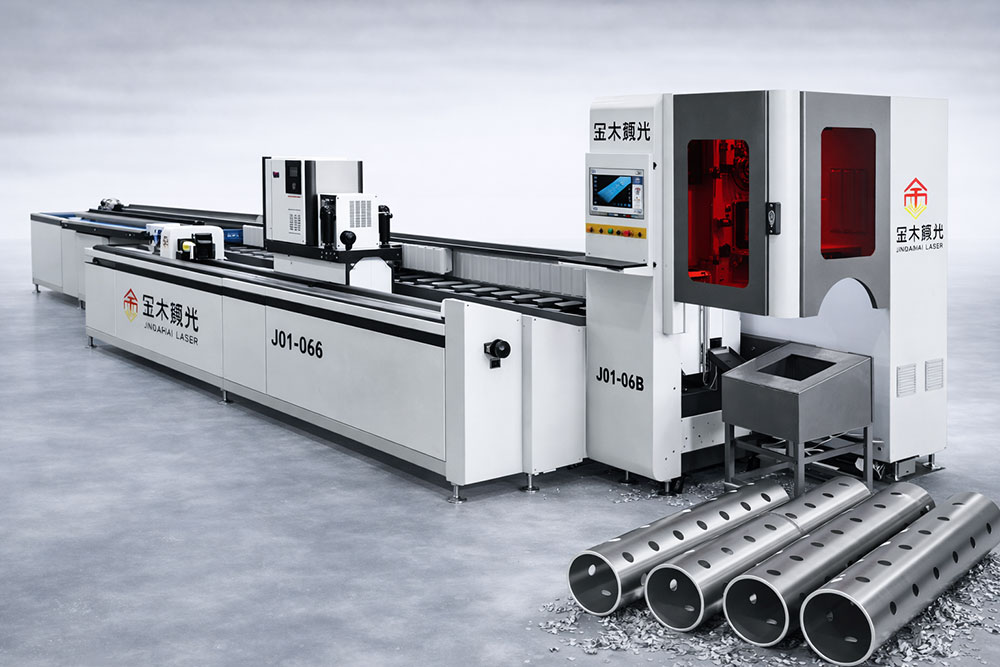
A tube laser cutting machine is designed to cut metal tubes and profiles with a concentrated laser beam controlled by software and a CNC motion system. On the surface, that sounds like a simple explanation, but the real difference lies in what the machine replaces. In a traditional workshop, several steps may be required to create the final part. A tube may first be cut to length, then drilled, then transferred to another station for notching or shaping, and finally checked or reworked by hand. Each movement adds time, labor, and possible error.
Laser cutting changes that logic. Instead of breaking the job into several physical stages, it allows manufacturers to define the part digitally and let the system follow the required geometry with far more consistency. Holes, slots, contours, cut ends, and many complex features can be generated from a single programmed operation. That reduces manual handling and lowers the chance of mismatch between stations.
Another major difference is responsiveness. Many traditional tube-processing methods depend heavily on tooling, fixtures, templates, or repeated setup. That can be acceptable for stable, repetitive products, but it becomes inefficient when customers frequently change dimensions or hole patterns. A laser system is much better suited to variation because the main changes happen in the program rather than in the hardware. For factories that produce multiple part types, that flexibility is often just as valuable as the cutting speed itself.
Most modern systems are built around fiber laser technology, which is why the term fiber laser tube cutting appears often in industrial discussions. Fiber laser systems are widely preferred because they combine strong cutting performance with lower maintenance and efficient energy use. For buyers comparing equipment, this is one of the main reasons fiber-based tube cutting has become the standard direction of the market.
What Materials and Profiles Does It Commonly Process?
One reason the technology is so widely used is that it is not limited to a narrow range of products. In real factory conditions, manufacturers often need to cut more than one material type and more than one profile shape. A practical tube-cutting solution must be able to support that variety without making changeovers too slow or too complicated.
In most applications, the machine is used for carbon steel, stainless steel, and aluminum. These materials appear in everything from industrial brackets and support systems to visible decorative products and consumer-facing equipment. Depending on the machine configuration, production goals, and assist gas settings, the system may also be used for additional metal types. This gives manufacturers a broader working range than they would have with equipment designed for only one narrow task.
In terms of profile shape, the most common categories are round tubes, square tubes, rectangular tubes, and oval tubes. Many factories also want to process angle steel, channel steel, or other metal profiles when the machine design allows it. This matters because many real-world orders are mixed. A single customer may need one project based on round tube frames and another based on square support members. A workshop that can adapt to both gains more commercial flexibility.
That is why terms such as round tube processing and square tube fabrication are useful not only in production, but also for website content structure. These are natural application directions, and they help explain to buyers that the machine is not restricted to one visual form of metal tube. It supports a range of working conditions that reflect how real fabrication businesses operate.
The broader the workable profile range, the easier it is for a factory to take on new projects without rebuilding its production method around every job. This is a major advantage in markets where customers increasingly expect both standard products and semi-custom solutions.
Where Is It Used Across the Market?
The machine is used in far more sectors than many first-time buyers realize. Metal tubes are everywhere in manufacturing because they offer a strong balance of structure, weight, and design flexibility. As a result, any industry that depends on tube-based components may be a suitable application for laser tube cutting.
In construction and structural fabrication, tubes appear in supports, frames, railings, handrails, scaffolding elements, curtain wall components, and architectural metalwork. These products often need accurate lengths, repeatable hole positions, and well-controlled joining surfaces. When production becomes more standardized, it is easier to control welding quality and site installation. That is why tube cutting plays an important role in steel structure components and related building applications.
Furniture manufacturing is another key area. Modern furniture frequently combines design aesthetics with functional strength, and metal tubes are widely used in table legs, shelving units, bed frames, cabinets, office furniture, and seating structures. In this environment, cutting quality is not only a production issue. It also affects coating quality, assembly neatness, and the final look of the product. That makes laser processing highly relevant in metal furniture production and other visible consumer-oriented products.
Transportation and automotive-related supply chains also use a large number of tube-based parts, from supports and mounting frames to structural connectors and formed components. Fitness equipment is another obvious application, because machines and training systems often rely on tubes with multiple holes, angled joints, and shaped ends. Agricultural equipment, warehouse systems, store displays, industrial racks, machine guards, and custom metal products all make use of similar principles.
The important point is that tube laser cutting is not defined by one specific industry. It is defined by a shared production need: accurate, repeatable, and flexible processing of metal tubes and profiles. That is why the technology appears in so many different types of factories, even when the finished products look completely different from one another.
How Does the Machine Work in Practice?
The working principle of tube laser cutting is easier to understand when viewed as a coordinated system rather than a single laser beam. The machine typically includes a laser source, a cutting head, a clamping and rotation mechanism, motion-control components, and software that turns drawings into executable cutting paths. Each part plays a role in producing a clean and accurate result.
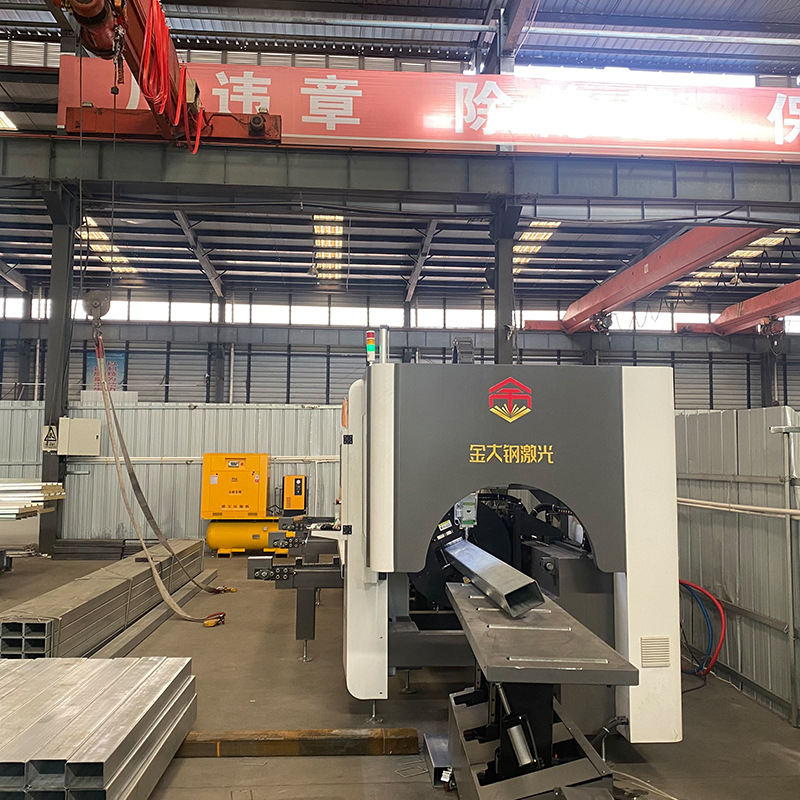
The process begins when raw tubes are loaded into the machine. Depending on the level of automation, loading may be manual or semi-automatic. The tube is then held by a chuck or similar clamping structure, which allows it to rotate during processing. The cutting head moves according to the programmed path while the control system coordinates motion, speed, and timing. The laser focuses a highly concentrated amount of energy onto a small area of metal, causing the material to melt or vaporize at the intended cutting point.
Assist gas then removes the molten material and helps shape the cut edge. While that sounds simple in theory, the real strength of the process lies in synchronization. The system must coordinate tube rotation, head movement, cut sequence, piercing behavior, and dimensional control at every step. That is how it produces holes, slots, end cuts, contours, and other features with repeatable accuracy.
The software side is just as important. Engineers or operators prepare the cutting program by defining the tube size, wall thickness, material type, and desired geometry. Advanced software may also help optimize nesting, reduce remnant waste, and improve the cutting path for productivity. Because the process is digital, design modifications can often be handled much faster than with tooling-heavy methods.
This is one reason laser tube cutting has become so useful for factories that handle both repeat orders and changing specifications. Once the program is saved, the same part can be reproduced again with strong consistency. If the job changes, the manufacturer can often respond through software rather than through a complete physical reset of the process.
How Is It Actually Used in a Factory?
In an actual workshop, the machine is part of a chain rather than a stand-alone device. The workflow normally begins with design or engineering preparation. A drawing is created or imported, the part requirements are checked, and the proper cutting program is selected or generated. This stage is important because material type, wall thickness, and geometry all influence how the cut should be performed.
After programming, raw material is prepared and loaded. At this stage, some factories still use manual loading if output is moderate and tube length variation is manageable. Others prefer automated feeding because it reduces handling time and improves consistency between cycles. Once the tube is positioned and clamped, the machine begins cutting according to the digital plan.
The operator’s role is different from that of a worker using saws or manual drilling equipment. Instead of marking every hole or guiding every cut, the operator supervises machine status, gas supply, feed flow, part quality, and general process stability. This changes the labor structure of the workshop. The job becomes more about process management and less about repeated manual movement.
Once parts are cut, they move to the next downstream stage, which may include welding, fitting, bending, surface treatment, or assembly. Because the laser-cut parts tend to be more consistent, downstream work often becomes easier. Joints fit more reliably, measuring time goes down, and manual correction is reduced. In other words, the machine improves not only the cutting step but also the stages that follow it.
Factories also benefit from saved programs. When repeat orders arrive, the setup process is faster because the part logic already exists in the system. When custom orders need revision, geometry can often be updated with less disruption than in traditional tooling-based methods.
What Convenience Does It Bring to Industrial Production?
The word “convenience” can sound vague, but in industrial production it refers to very specific operational improvements. The first is the reduction of unnecessary process steps. Whenever a part has to be measured again, moved again, or corrected again, the factory pays for that inefficiency through time, labor, and sometimes scrap. Tube laser cutting simplifies production by integrating more work into one process.
The second convenience is consistency. When dimensions remain stable from part to part, the workshop spends less time reacting to mistakes. That reduces internal friction in production. Welders do not need to adjust as much. Assemblers are less likely to discover mismatch late in the process. Supervisors spend less time tracking down the source of avoidable dimensional variation. That kind of consistency is easy to underestimate until it is missing.
Another convenience is production agility. Many workshops are no longer built around only large, repetitive orders. They increasingly face mixed production, smaller batch sizes, and frequent customer changes. Laser tube cutting handles this environment better because software-driven production is easier to adjust than hardware-driven production. For workshops serving several industries at once, that flexibility can be a strong commercial advantage.
The machine also helps improve workspace organization. When fewer steps are spread across fewer independent stations, material flow becomes easier to manage. That may reduce congestion, simplify quality control, and make the workshop easier to supervise. On paper, that may sound less dramatic than cutting speed, but in day-to-day operations it contributes meaningfully to total efficiency.
Finally, there is the convenience of better finished quality. Cleaner cuts and more stable geometry often mean less deburring, less grinding, and fewer adjustments before the part is ready for the next stage. That reduces labor while also supporting a better-looking end product, which matters in both industrial and consumer-facing sectors.
Why Do Modern Factories Value It So Highly?
Factories do not invest in technology simply because it is newer. They do it because the technology solves operational problems. In tube processing, the main problems are usually a lack of speed, too much manual handling, inconsistent quality, and limited flexibility. Laser cutting addresses all four at once, which is why it is so highly valued in modern manufacturing.
Speed matters, but speed alone is not enough. A very fast process is not useful if it creates unstable dimensions or requires constant rework later. Laser cutting is attractive because it combines productivity with repeatability. That balance is especially important in production lines where the cutting result affects welding, assembly, and final appearance.
Factories also value the technology because it supports a more scalable production model. A workshop that depends too heavily on manual marking and repeated setup may find it difficult to grow without proportionally increasing labor. A software-based cutting system makes it easier to scale output while keeping greater control over consistency. This becomes increasingly important as manufacturers try to grow in competitive markets without allowing quality to become unstable.
In many cases, buyers also value laser tube cutting because it allows them to present themselves differently to customers. A company with better process capability can take on more precise projects, quote more confidently, and respond to more complex part requests. That strengthens its commercial position. The machine is therefore not only a production asset, but also a sales and capability asset.
This is particularly true for manufacturers that want to move up from simple fabrication into more specialized or quality-sensitive work. A stronger process often leads to a stronger brand position, even when the customer only sees the final part.
Common Misunderstandings Buyers Often Have
One common misunderstanding is that tube laser cutting is only suitable for very large factories. In reality, the technology is also valuable for medium-sized businesses, especially those that need cleaner quality, faster changeovers, or better control over mixed production. The key issue is not factory size by itself. The key issue is whether the existing workflow is being held back by manual steps, inconsistency, or slow adaptation to design changes.
Another misunderstanding is that buyers should evaluate machines mainly by laser power. Power certainly matters, but it is only one part of the equation. Actual performance also depends on motion stability, clamping accuracy, software quality, ease of use, maintenance reliability, and the supplier’s ability to support the production needs of the buyer. A machine that looks strong on paper may still create problems if the total system is poorly matched to the job.
Some buyers also underestimate the importance of material flow. Even a good cutting machine will not deliver its best value if loading, unloading, collection, and downstream handling are disorganized. The biggest improvements often come when the machine is integrated thoughtfully into the wider production chain.
A final misunderstanding is that laser cutting eliminates the need for skill. It reduces some kinds of manual dependency, but it still requires proper parameter control, maintenance discipline, material awareness, and good workflow management. Like any serious production system, it works best when the factory takes the process seriously.
How Can a Factory Get More Value From It?
Factories that get the most value from tube laser cutting usually do three things well. First, they match the machine to real production needs instead of buying based only on headline specifications. They understand their main tube sizes, material types, part complexity, and production rhythm before making decisions.
Second, they invest in operator understanding. Even though the system is automated, operators still need to know how to monitor quality, manage programs, understand materials, and respond to process variation. Good training helps the factory use the machine as a real production tool rather than just as an expensive cutting device.
Third, they connect the machine to the rest of the workflow. Laser cutting brings the greatest benefit when it improves the whole process, not just one isolated station. That means looking at loading, part collection, downstream fit-up, welding, and inspection as part of one chain. The more smoothly that chain works, the greater the value created by the cutting system.
For factories with high expectations around tolerance and part stability, this is also where precision tube cutting becomes an important topic. Precision is not only about appearance. It affects assembly speed, weld quality, and the consistency of the final product. When manufacturers understand that connection, they usually make better use of the technology.
Conclusion
Tube processing sits at the center of many modern manufacturing sectors, and the demands placed on that process are becoming more serious every year. Customers want better accuracy, faster delivery, cleaner appearance, and more flexible part design. Workshops need to reduce waste, improve labor efficiency, and maintain control over quality. In that environment, tube laser cutting has become one of the most practical upgrades a manufacturer can make.
A laser tube cutting machine helps transform production from a labor-heavy, multi-step workflow into a more integrated digital process. It improves consistency, shortens cycles, reduces unnecessary handling, and makes it easier to respond to changing job requirements. It is used across a wide range of industries not because it is trendy, but because it solves real operational problems.
For manufacturers that work with structural frames, furniture parts, support systems, industrial racks, transportation components, and custom tube products, understanding the value of this technology is increasingly important. Whether the goal is higher throughput, better part quality, lower rework, or stronger flexibility, tube laser cutting offers a clear path toward smarter fabrication.