How a Congo Fence Manufacturer Improved Production Efficiency
The fencing industry continues to grow across many African countries as governments invest in public infrastructure, schools, residential communities, and urban development projects.
In Congo, a manufacturer specializing in school fences, municipal fencing systems, and residential perimeter fencing faced increasing pressure to deliver products faster while maintaining consistent quality.
The company produced multiple fence styles using square steel tubes of different sizes. Some profiles required square holes, some required round holes, and others only required cutting to length.
As project volumes increased, the existing production process began creating bottlenecks throughout the factory.
To remain competitive, the company started looking for a more efficient production solution.
Growing Demand Creates New Challenges
The customer manufactured a wide variety of fencing products for different projects.
Their production requirements included:
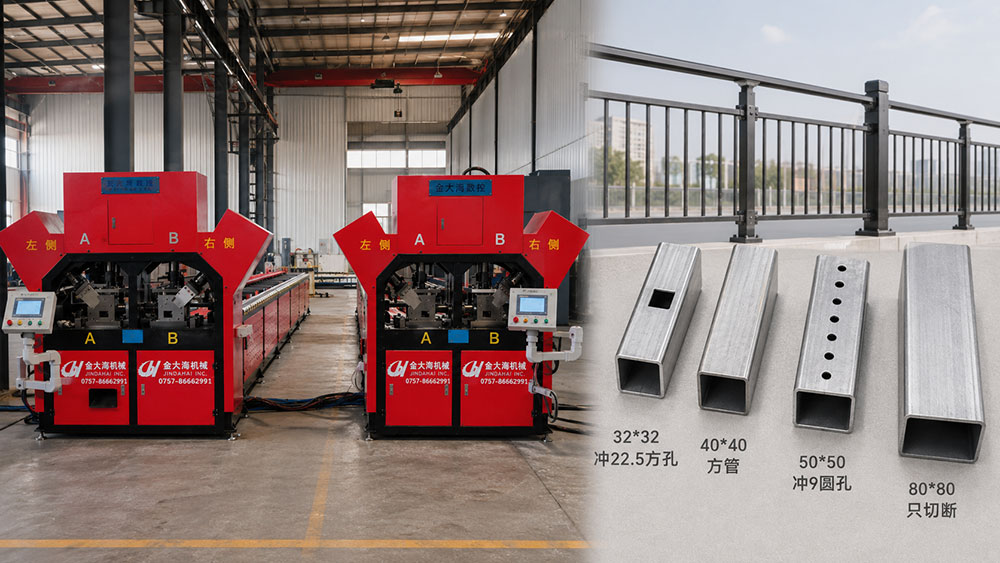
32×32 mm square tubes with square holes
50×50 mm square tubes with round holes
40×40 mm square tubes with processing requirements
80×80 mm square tubes requiring cutting only
Although the products appeared simple, processing multiple tube specifications created significant production challenges.
Traditional production methods required separate operations for punching and cutting. Workers frequently moved materials between stations, increasing handling time and labor requirements.
The factory also faced several common problems:
Multiple processing steps
Frequent material handling
High labor dependency
Production bottlenecks
Material waste from manual positioning
Inconsistent production efficiency
As fencing demand continued increasing, management realized that expanding production with the existing process would require additional labor and floor space.
They needed a smarter solution.
Why Fence Manufacturers Need Automation
Fence production is often considered a high-volume manufacturing industry.
Profitability depends heavily on processing speed, material utilization, and labor efficiency.
When producing thousands of fence components every month, even small improvements can significantly impact operating costs.
For this Congo manufacturer, the main objectives were clear:
Increase production output
Reduce labor requirements
Improve processing consistency
Simplify workflow
Reduce material waste
Support future business growth
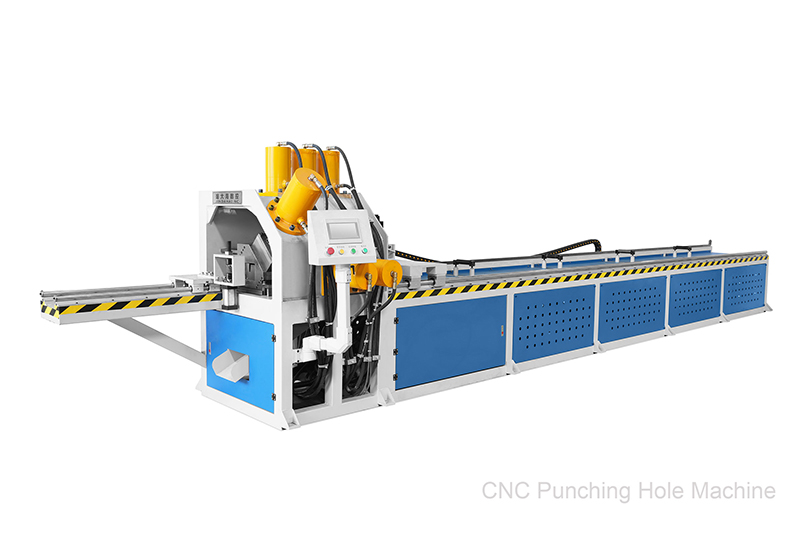
After reviewing the customer’s production requirements, our engineering team proposed a customized CNC punching and cutting machine solution designed specifically for fence manufacturing.
Developing the Right Solution
Instead of using separate punching and cutting stations, we recommended integrating multiple production steps into one automated process.
The machine was configured to handle different square tube specifications used in fence production while allowing punching and cutting operations to be completed within a single workflow.
The proposed solution included:
Multi-position punching capability
Automatic material feeding
Precision length control
Integrated cutting function
Flexible processing for different fence components
The production flow became:
Material Loading → Automatic Feeding → Punching → Cutting → Finished Product Output
This greatly simplified production management while reducing manual intervention.
Advantages for Fence Production
Higher Production Efficiency
One of the biggest improvements came from combining multiple operations into a single workflow.
Instead of transferring materials between different machines, processing could be completed in one production cycle.
This reduced waiting time and increased daily output.
For manufacturers producing school fences, municipal barriers, and residential fencing systems, this improvement directly supports larger production volumes.
Reduced Labor Costs
Traditional fence manufacturing often requires multiple operators for material positioning, punching, cutting, and inspection.
By introducing automation, fewer workers are needed to complete the same production tasks.
This helps manufacturers reduce labor expenses while maintaining production capacity.
As labor costs continue rising globally, automation provides long-term operational advantages.
Consistent Hole Position Accuracy
Fence panels require consistent spacing and alignment.
Poor hole positioning can create assembly difficulties and affect the appearance of finished fencing products.
The automated system ensures repeatable processing accuracy across large production batches.
This is especially important for government projects and commercial developments where product consistency is closely monitored.
Better Material Utilization
Material waste is a hidden cost in many fabrication workshops.
Manual processing often creates errors that result in rejected components or unnecessary scrap.
Automated feeding and positioning help optimize material usage and reduce waste throughout production.
For manufacturers processing large volumes of square tubing every month, this can generate meaningful cost savings.
Improved Workplace Safety
Traditional punching operations often require operators to work close to moving tooling and materials.
Modern automated equipment allows human-machine separation during production.
Operators manage the process through the control system while materials are processed automatically.
This reduces physical workload and helps minimize workplace risks.
Supporting Growth in the Fence Industry
Across Africa, fencing products are increasingly used in:
Schools
Residential communities
Industrial facilities
Municipal infrastructure projects
Public security applications
As project sizes continue growing, manufacturers must balance quality, speed, and production cost.
A modern tube punching machine provides manufacturers with a practical way to increase productivity without significantly increasing workforce requirements.
For this Congo customer, upgrading production equipment was an important step toward improving operational efficiency and supporting future growth.
A More Efficient Manufacturing Process
The project was not simply about purchasing new machinery.
It was about redesigning the production process.
By introducing a customized square tube punching solution, the manufacturer gained:
Faster production cycles
Lower labor requirements
Improved consistency
Better material utilization
Simplified workflow management
Greater production flexibility
These improvements create a stronger foundation for long-term business development.
Why More Fence Manufacturers Are Upgrading
Many fence manufacturers still rely on separate punching and cutting operations.
While this method can work for small production volumes, it becomes increasingly inefficient as order quantities grow.
Integrated punching and cutting technology helps eliminate production bottlenecks while improving productivity and reducing operating costs.
For manufacturers looking to scale operations and remain competitive, automation has become an increasingly important investment.
Conclusion
This project demonstrates how a fencing manufacturer in Congo improved production efficiency through a customized punching and cutting solution.
By combining automatic feeding, punching, and cutting into a streamlined workflow, the company reduced labor dependency, improved consistency, and optimized material utilization.
For manufacturers producing school fences, municipal fencing systems, and residential perimeter fencing, a modern CNC punching machine provides a reliable solution for achieving higher productivity and long-term cost savings.