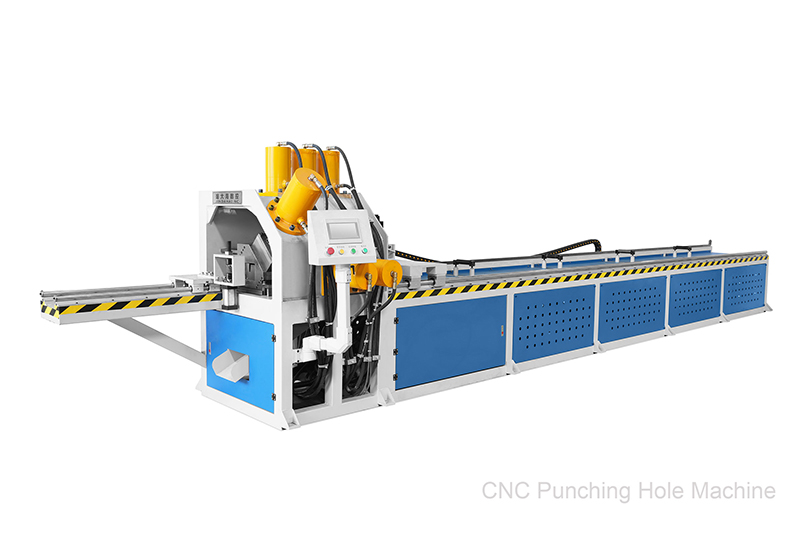
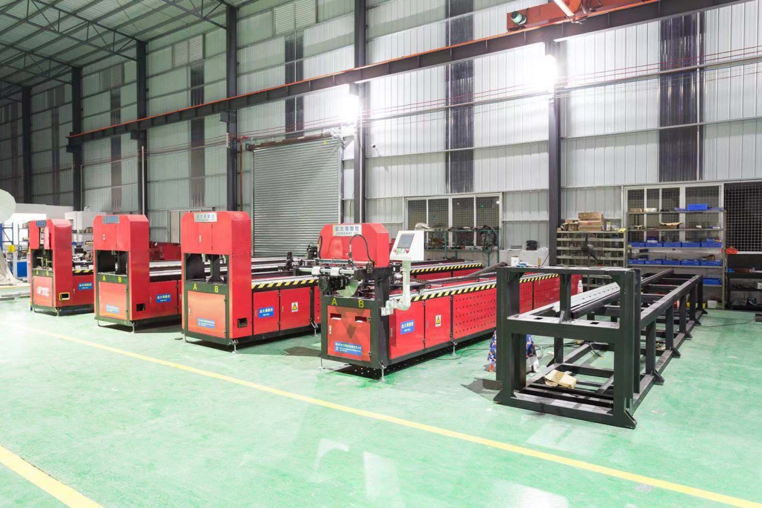
In modern metal fabrication, C-beams, H-beams, and stainless steel tubes are essential components for construction, industrial equipment, and structural frameworks. Understanding how punching hole machines process these materials is critical for fabricators seeking efficiency, precision, and consistent quality. Industrial punching demonstrations provide an invaluable look at real-world machine performance, allowing operators and buyers to assess productivity, accuracy, and reliability.
This article explains how industrial punching demonstrations reveal the capabilities of machines handling complex steel profiles and stainless tubing.
Why Industrial Punching Demonstrations Are Important
Production videos and live demonstrations show far more than brochures or technical specifications:
● Real-time accuracy: Observe how machines maintain hole alignment on long beams and curved tubes.
● Punching speed: Assess cycle times and throughput for high-volume operations.
● Material handling: See how machines stabilize beams and tubing during punching.
● Finish quality: Evaluate burr-free edges, clean holes, and surface integrity.
● Automation effectiveness: Understand how CNC controls and multi-tool systems reduce manual intervention.
These demonstrations help fabricators select machines that meet the requirements of demanding production environments.
Punching C-Beams in Industrial Demonstrations
C-beams require precise punching for assembly and structural applications:
● Continuous hole placement along flanges and webs
● Stable clamping to prevent misalignment
● Multi-hole configurations completed in a single automated run
Videos often show how modern punching machines maintain accuracy and speed on long C-beams, improving productivity and minimizing rework.
Punching H-Beams for Heavy-Duty Fabrication
H-beams demand higher punching force due to thick flanges and webs:
● Hydraulic or servo-driven systems provide consistent pressure
● CNC-controlled positioning ensures holes remain aligned along the beam length
● Demonstrations show smooth operation even with large structural profiles
These industrial videos highlight the ability to maintain clean, burr-free holes while handling heavy materials safely.
Stainless Steel Tube Processing
Punching stainless steel tubing presents unique challenges:
● Hollow profiles can deform if clamping or force is inadequate
● Multi-face punching capabilities allow holes on different surfaces without repositioning
● Video demonstrations reveal how precise clamping and CNC control prevent deformation and ensure smooth, consistent holes
Stainless tubing is widely used in industrial equipment, chemical processing, and structural applications, making high-precision punching essential.
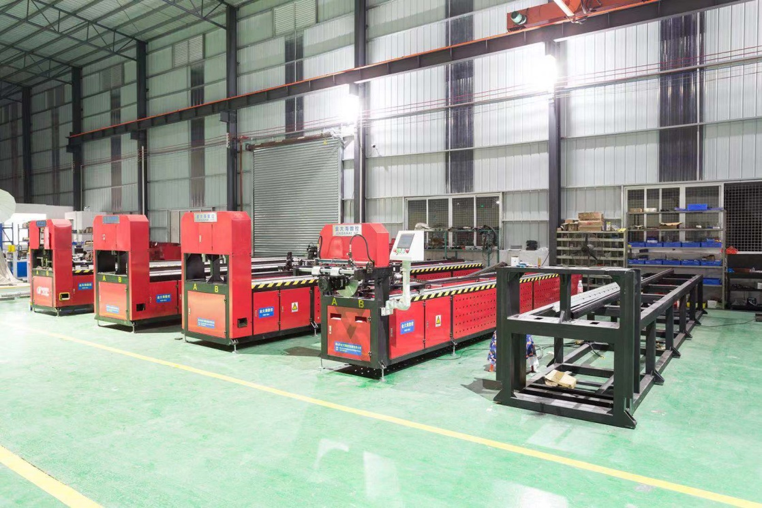
Key Insights from Punching Demonstrations
- Cycle Efficiency: Machines maintain rapid, continuous punching for multiple profiles.
- Precision: Holes remain uniform across long beams and curved tubing.
- Material Flexibility: Demonstrates ability to handle C-beams, H-beams, and stainless tubing without setup changes.
- Automation: CNC programming, multi-tool setups, and automated feeding reduce manual labor.
- Quality Assurance: Finished pieces show clean edges and consistent hole placement.
These insights help fabricators choose machines that maximize output, minimize errors, and maintain high standards across diverse materials.
Industrial punching demonstrations offer a clear and detailed look at how modern punching hole machines process C-beams, H-beams, and stainless steel tubing. By observing real-world operation, fabricators can evaluate productivity, accuracy, and automation effectiveness. Investing in advanced punching technology not only enhances efficiency but also ensures consistent quality for structural steel and tube fabrication.