Project Story: Improving Angle Steel Processing in Vietnam
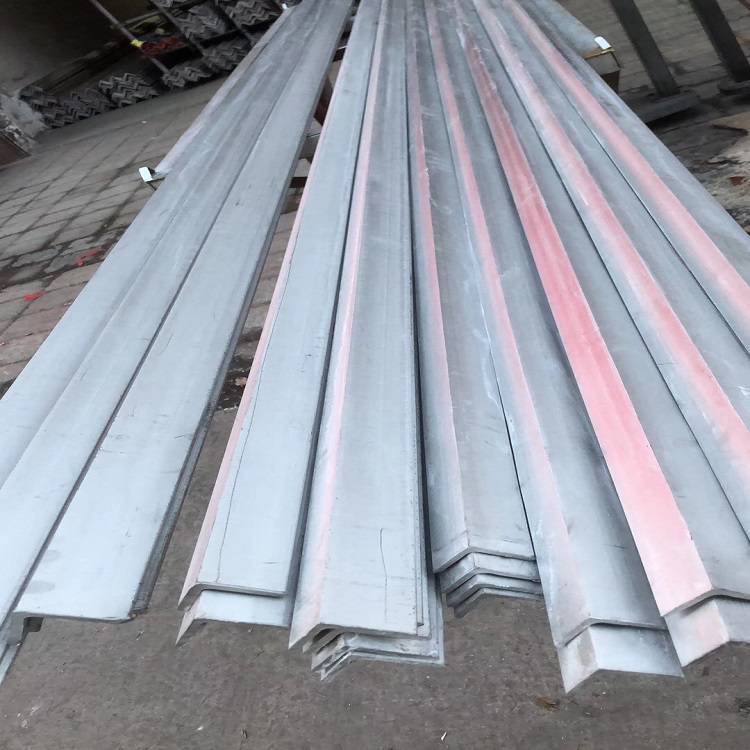
In the shipbuilding and marine equipment industry, structural components must meet strict requirements for strength, precision, and durability. Angle iron is widely used in ship components, serving as brackets, supports, and reinforcement structures.
In Vietnam, a manufacturer specializing in ship component production faced increasing pressure to improve production efficiency while maintaining consistent quality. Their process involved punching, angle cutting, and cutting angle iron into precise lengths.
This case study explains how the company upgraded its workflow by adopting a CNC angle iron punching and cutting machine, transforming a labor-intensive process into a more efficient and controlled production system.
Background: Angle Iron in Ship Component Manufacturing
The customer produces structural parts used in marine equipment and shipbuilding applications. These parts are typically made from angle iron in common sizes and require multiple processing steps.
Each workpiece must undergo:
Hole punching on one side
Angle cutting on another side
Final length cutting from long materials
Because these components are used in structural assemblies, accurate positioning and consistent dimensions are essential.
Challenges with Traditional Processing
Before introducing new equipment, the manufacturer relied on conventional punching machines combined with manual cutting.
As production demand increased, several problems became evident.
Multiple operations required repeated repositioning of materials, slowing production speed.
Manual handling increased labor costs and reduced efficiency.
Maintaining consistent angle cutting and hole alignment across batches was difficult.
Material waste occurred due to tail cutting limitations.
With increasing competition, the existing process could no longer meet efficiency and cost requirements.
Defining the Requirements
To improve production, the customer defined several key requirements.
The system needed to perform punching and angle cutting on different sides of the angle iron.
Cutting functionality had to be integrated, allowing long materials to be processed into shorter sections.
The machine needed to support continuous production with minimal manual intervention.
Reducing material waste was also an important objective.
The goal was to achieve a more efficient and stable production workflow.
The Proposed Solution: Integrated CNC Punching and Cutting System
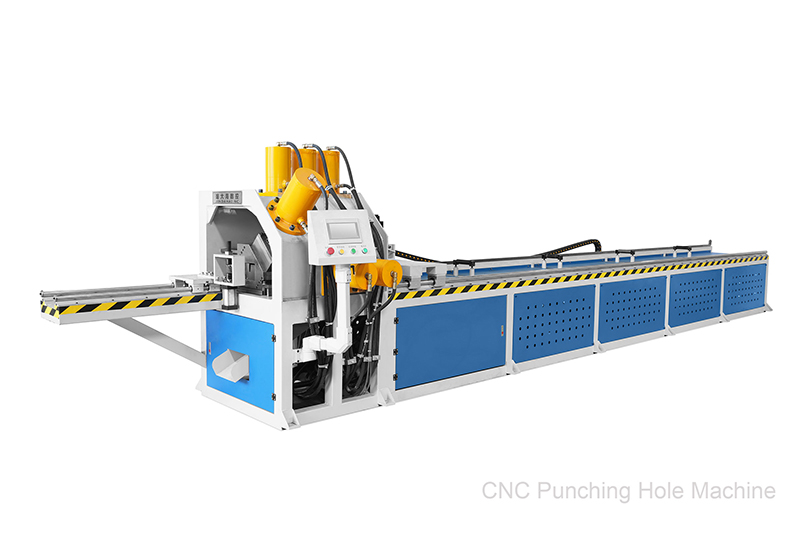
Based on these requirements, we provided a CNC angle iron processing solution designed for multi-function operations.
The system integrates punching, angle cutting, and length cutting into a single machine.
Instead of focusing on detailed specifications, the configuration emphasizes reliability, structural stability, and consistent processing.
Key features include:
Multi-cylinder structure for simultaneous operations
Integrated punching and cutting workflow
CNC positioning for accurate hole and angle processing
Continuous feeding system for long materials
This allows angle iron to be processed from raw material to finished parts in one operation.
Streamlined Production Workflow
In daily production, angle iron is loaded onto the feeding system and positioned automatically.
The machine performs hole punching on one side and angle cutting on the other side according to programmed parameters, followed by length cutting.
This eliminates the need for manual repositioning and reduces production time.
Multi-Function Processing in One Setup
One of the key advantages of this solution is its ability to complete multiple operations in one setup.
Punching, angle cutting, and cutting are all performed within a single workflow.
This reduces process complexity and improves consistency across batches.
Reducing Waste and Improving Efficiency
Compared with traditional methods, the new system provides several improvements.
Material waste is reduced through optimized cutting.
Production efficiency increases due to fewer processing steps.
Labor requirements decrease as operators focus on supervision rather than manual work.
Consistency improves due to CNC-controlled positioning.
Supporting Ship Component Manufacturing
For manufacturers in the shipbuilding industry, structural components must meet strict standards.
By adopting an integrated processing solution, the customer achieved a more stable and efficient production system.
The ability to process angle iron in a single workflow supports both quality control and production scalability.
Conclusion
This project demonstrates how a ship component manufacturer in Vietnam improved its production process through equipment upgrading.
By implementing a CNC angle iron punching and cutting solution, the manufacturer achieved higher efficiency, reduced waste, and improved consistency.
For companies working with structural steel components, this approach offers a practical path toward modern production.