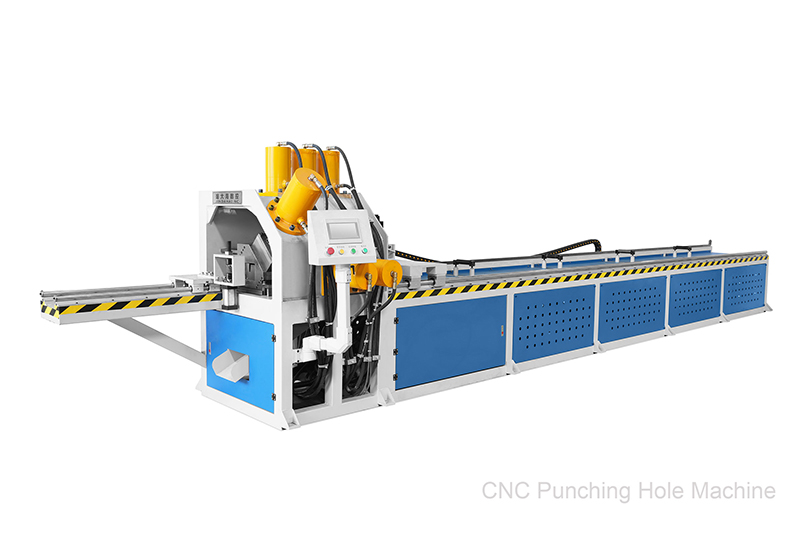
A One-Step Automation Story from Turkey’s Shelf Industry
In Turkey’s growing retail and logistics market, shelf manufacturers face increasing pressure to deliver large volumes of standardized products while keeping production costs under control. Supermarket shelves and warehouse racking systems rely heavily on square and rectangular steel tubes, which must be cut and perforated accurately to ensure fast assembly and structural consistency.
This customer case study tells the story of a Turkish shelf manufacturer who upgraded from multi-step manual processing to an automatic laser tube cutting solution designed specifically for square tube production in the shelf industry.
Background: Steel Tubes for Supermarket and Warehouse Shelving
The customer operates in the shelf manufacturing industry, supplying metal components for:
Supermarket shelving systems
Warehouse storage racks
Light-duty and medium-duty logistics shelves
Their products are mainly fabricated from square and rectangular steel tubes in various common sizes, used as vertical posts, beams, and support structures.
In this type of production, cutting accuracy and hole consistency are critical. Any deviation can affect shelf alignment, load capacity, and on-site installation efficiency.
Production Challenges Before the Upgrade
Before introducing laser tube cutting technology, the customer relied on a traditional workflow that separated cutting and punching into different processes.
Multiple Processing Steps
Steel tubes were first cut to length using conventional cutting equipment. After cutting, materials were transferred to punching machines for hole processing. This multi-step workflow increased handling time and reduced overall efficiency.
High Labor Dependency
Each process required operators to manually load, unload, and reposition materials. As production volume increased, labor costs became a significant burden.
Limited Scalability
Because each operation was independent, expanding output meant adding more workers and machines rather than improving process efficiency.
To stay competitive, the customer needed a solution that could combine cutting and hole processing into a single automated workflow.
Defining the Equipment Requirements
After reviewing daily production needs, the customer defined clear expectations for a new machine:
Fully automatic loading for square and rectangular tubes
Batch feeding of bundled materials
Support for common tube sizes used in shelf manufacturing
Integrated hole cutting and length cutting
Stable cutting performance on thin-wall steel tubes
One operator capable of supervising multiple machines
The objective was to achieve one-step processing without introducing unnecessary complexity.
The Proposed Solution: Automatic Laser Tube Cutting Configuration
Based on these requirements, we provided a fully automatic laser tube cutting machine for shelf production with a side-mounted automatic loading system.
Instead of focusing on detailed specifications, the solution emphasized production stability, material adaptability, and ease of operation in a factory environment.
The core configuration included:
An automatic loading rack capable of feeding bundled square tubes
A precision clamping system suitable for a wide range of tube sizes
A fiber laser cutting unit optimized for thin to medium wall thickness
CNC control enabling integrated hole cutting and cut-off in one cycle
This configuration allowed cutting and perforation to be completed without secondary handling.
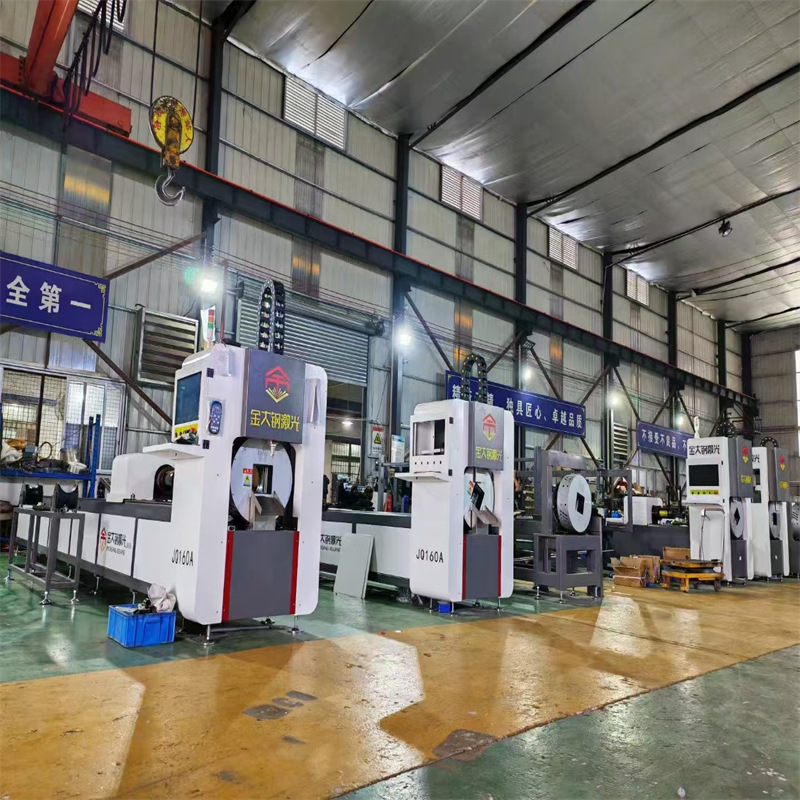
How the One-Step Processing Workflow Operates
In daily production, square and rectangular tubes are placed onto the automatic loading rack in bundles. Once aligned, the system feeds materials into the cutting area automatically.
Each tube is clamped, processed for holes, and cut to length according to pre-set programs. Finished parts are then discharged automatically, ready for downstream assembly or packaging.
This workflow eliminates manual measuring, repositioning, and secondary punching operations.
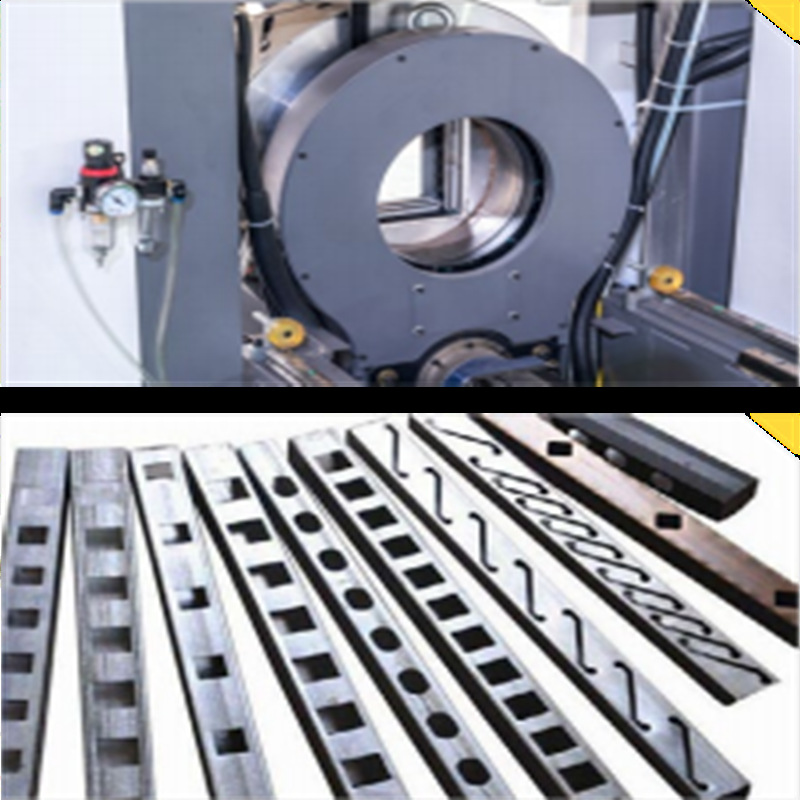
Designed Specifically for Shelf Manufacturing
Shelf production requires a balance between speed, consistency, and flexibility. The laser tube cutting solution was configured with these priorities in mind.
Key advantages for shelf manufacturers include:
Uniform hole spacing for standardized shelf components
Clean cutting edges suitable for direct assembly
Fast switching between different tube sizes
Reduced manpower requirements on the production line
By integrating multiple processes into one machine, production becomes easier to manage and more predictable.
Why Laser Tube Cutting Fits the Shelf Industry
Compared with traditional cutting and punching methods, laser tube cutting for shelving systems offers several clear advantages:
No mechanical punching force, reducing deformation on thin tubes
Flexible hole patterns without changing physical tooling
Faster setup for different product variants
Lower maintenance compared with mechanical punching lines
For this project, laser tube cutting provided the ideal balance between efficiency and manufacturing flexibility.
Supporting High-Efficiency Production with Fewer Operators
One of the key goals of this project was labor optimization. With automatic loading and CNC-controlled processing, a single operator can supervise multiple machines simultaneously.
This operational model allows the manufacturer to scale output without proportionally increasing labor costs, which is critical in competitive shelf markets.
A Scalable Automation Path for Future Growth
The selected solution was not designed as a fixed, single-purpose machine. Instead, it supports future production expansion by allowing:
Additional tube sizes within the same processing range
New cutting programs without mechanical modification
Integration into automated production lines or MES systems
This flexibility ensures the equipment remains relevant as product lines evolve.
Conclusion: One-Step Processing for Competitive Shelf Manufacturing
This customer case study demonstrates how a Turkish shelf manufacturer transformed a labor-intensive, multi-step workflow into an efficient, automated production process.
By adopting an automatic laser tube cutting solution, the manufacturer achieved:
Integrated hole cutting and cut-off in one operation
Reduced material handling and labor dependency
Consistent quality across multiple tube sizes
A scalable production setup suitable for long-term growth
For shelf and rack manufacturers facing similar efficiency challenges, laser tube cutting offers a practical and proven path toward modern, competitive production.