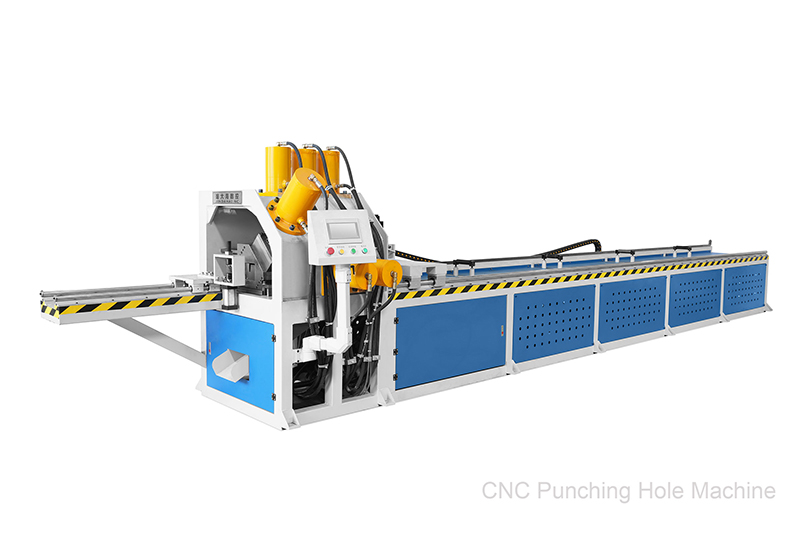
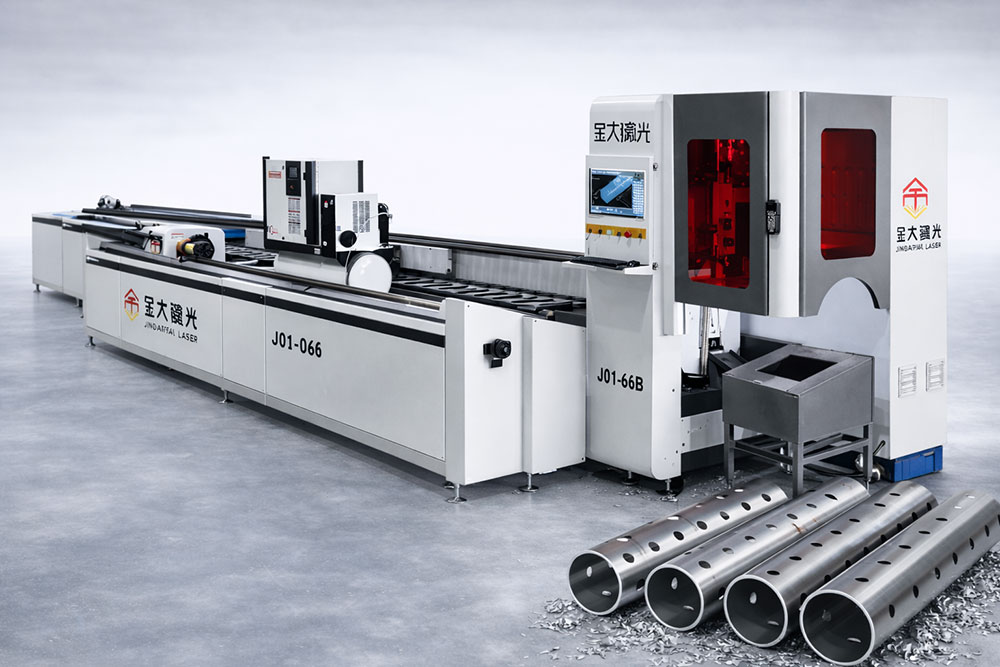
In modern manufacturing, efficiency and precision are no longer optional. Fabricators across many industries are under pressure to deliver better products in less time while keeping labor costs, material waste, and production errors under control. This challenge is especially clear in tube and pipe processing, where traditional methods often require several separate steps and a high level of manual work. As industrial production becomes more competitive, more companies are turning to the laser tube cutting machine as a practical solution for improving both speed and quality.
A laser tube cutting machine is widely used in metal fabrication because it can process different tube shapes with high accuracy, clean cutting results, and strong flexibility. Instead of relying on sawing, drilling, punching, and manual marking across multiple stations, manufacturers can complete many tasks on one CNC-controlled machine. This makes the technology attractive to factories producing construction parts, furniture frames, automotive components, fitness equipment, storage systems, agricultural machinery, and many other tube-based products.
This article explains what a laser tube cutting machine is, what materials and industries it applies to, how it works in real production, how factories use it day to day, and what benefits it brings to industrial manufacturing. For potential buyers and industry readers, understanding the basic value of this equipment is the first step toward understanding why laser processing has become such an important part of modern fabrication.
What Is a Laser Tube Cutting Machine?
A laser tube cutting machine is a CNC-controlled system designed to cut metal tubes and profiles with a focused laser beam. Most modern systems use fiber laser technology, which is known for energy efficiency, stable performance, fine cutting quality, and relatively low maintenance requirements compared with older cutting methods.
The key function of this machine is to process metal tubes accurately and efficiently. It can cut straight lines, holes, slots, contours, bevels, notches, and shaped ends directly on the surface of the tube. This is a major improvement over basic mechanical cutting methods, which may only handle simple cuts and often require several additional operations to reach the final part shape.
A laser tube cutting machine is not just about cutting faster. It also changes the way production is organized. Instead of dividing the work into multiple manual stages, manufacturers can rely on software-based programming and automated motion control to complete more of the process in one setup. This reduces handling time, improves dimensional consistency, and allows the same design to be repeated more reliably across large production runs.
In short, the machine transforms raw tubes into ready-to-weld or ready-to-assemble parts with fewer manual steps. That is one reason why more companies now see tube laser cutting not as a premium option, but as a practical production upgrade.
What Materials and Tube Shapes Can It Process?
One of the biggest reasons the technology has become popular is its flexibility. A laser tube cutting machine can process a wide range of metals, which makes it suitable for many manufacturing sectors with different product requirements.
Common materials include carbon steel, stainless steel, aluminum, and sometimes galvanized steel, depending on the machine configuration and cutting parameters. This flexibility matters because not every factory works with the same material from project to project. Some businesses produce decorative stainless steel items, while others focus on carbon steel structural parts or lightweight aluminum assemblies.
In terms of tube shape, the machine is commonly used for round tubes, square tubes, rectangular tubes, and oval tubes. Some models can also handle angle steel, channel steel, and other metal profiles. This broad shape compatibility is especially useful for workshops that serve multiple industries and need to switch between different products without relying on different machines for each one.
Manufacturers that specialize in round tube cutting often work in fields such as furniture, fitness equipment, transportation parts, and display systems. Businesses that depend more on square tube cutting are often active in construction supports, steel structures, guardrails, racks, storage systems, and frame-based products.
Because of this wide material and shape range, a laser tube cutting machine helps factories build a more flexible production system. They do not need to limit themselves to one narrow product type. Instead, they can take on a broader mix of jobs while keeping good control over precision and output quality.
Where Is It Used in the Market?
The market application of laser tube cutting is much broader than many people expect. Metal tubes are one of the most common structural materials in manufacturing, so any industry that depends on tube-based design may benefit from this type of equipment.
Construction and Steel Structure Fabrication
In construction-related production, tubes are often used for support structures, railings, frames, scaffold components, guardrail systems, curtain wall structures, and architectural metal products. These applications require not only strength, but also consistent dimensions so that parts fit together correctly during fabrication and installation.
This is why laser cutting has become increasingly important in construction metal fabrication. Accurate cuts reduce fitting problems, improve welding efficiency, and support better consistency across batches.
Furniture and Decorative Metal Products
Modern furniture manufacturing uses many metal tubes in visible structural parts. Chair frames, table legs, bed frames, shelving units, cabinets, display racks, and office furniture all rely on clean tube processing. In this sector, product appearance matters as much as structural performance.
A poorly cut tube can affect joint alignment, coating quality, and the overall visual finish of the product. Laser cutting helps manufacturers improve both functional accuracy and product appearance. This is especially valuable in metal furniture manufacturing, where consumers often expect smooth, attractive finished products.
Automotive and Transportation Components
Tube-based metal components are also common in transportation products. Exhaust systems, seat supports, frame elements, mounting brackets, and structural connectors often require repeatable accuracy and clean geometry. When production involves tight tolerances and large volumes, laser cutting becomes an efficient and reliable solution.
Fitness Equipment and Sports Products
Fitness equipment is another important application area. Many exercise machines use round or shaped tubes with multiple holes, angled joints, and custom cut ends. The visible nature of the product also means the cut quality must support both performance and appearance. Laser cutting is especially useful here because it supports complex designs without requiring repeated manual layout work.
Agricultural, Industrial, and Storage Equipment
Agricultural machinery, industrial frames, warehouse storage systems, material racks, mechanical supports, and shop display products all use metal tubes in one form or another. These industries often care about production efficiency, stable quality, and cost control. A laser tube cutting machine fits these needs by reducing extra handling steps and helping manufacturers standardize production.
Because it serves so many industries, the machine is no longer limited to a small group of advanced factories. It is now a practical tool for a wide range of fabrication businesses.
How Does a Laser Tube Cutting Machine Work?
Although the machine looks highly technical, its core working principle is straightforward. A laser tube cutting machine combines a laser source, a cutting head, a clamping and rotating system, motion control components, and software that translates drawings into cutting programs.
The process begins when a tube is loaded into the machine. The clamping system holds the tube in position and rotates it as needed. At the same time, the cutting head moves along the programmed path. The laser beam is focused into a very small point on the metal surface, where the concentrated energy melts or vaporizes the material.
Assist gas is then used to blow away molten material and form a clean cutting edge. The CNC system coordinates the motion of the tube and the cutting head so that the machine can produce straight cuts, holes, slots, and shaped contours with a high level of consistency.
This digital coordination is one of the machine’s biggest strengths. Once the correct program is prepared, the same cutting pattern can be repeated over and over with minimal variation. This gives manufacturers more control over quality than many traditional manual or semi-manual methods.
Software also plays a very important role. Engineers or operators can import drawings, adjust tube parameters, optimize the cutting path, reduce waste, and quickly update part dimensions when customer requirements change. This is one reason laser systems are especially suitable for both repeat production and custom manufacturing.
How Is It Used in Daily Production?
In daily production, the machine is typically part of a broader workflow that begins long before the cutting starts. First, the part drawing is created or imported into the software. Then the operator selects the material type, wall thickness, tube dimensions, and cutting parameters based on the job requirements.
Next comes the loading stage. Depending on the factory size and production style, tubes may be loaded manually or through an automated feeding system. Once the tube is clamped, the machine checks the position and begins the cutting process according to the digital program.
During operation, the role of the operator is different from that of a worker using traditional cutting equipment. The operator is usually monitoring the machine rather than manually guiding each cut. This includes checking gas supply, part quality, cutting stability, and production flow. Because the process is more automated, one trained operator can often manage a large number of parts more efficiently than with conventional methods.
After cutting, the parts move to the next stage of production. This may include welding, bending, fitting, surface finishing, coating, or final assembly. Because the parts are more accurate and consistent, downstream processes often become easier and faster. Weld joints align better, assembly errors decrease, and the need for manual correction is reduced.
For factories handling repeat orders, saved programs make production restart much easier. For customized orders, design adjustments can often be handled through software changes rather than mechanical tooling changes. This gives the machine an important advantage in today’s manufacturing environment, where flexibility is becoming more valuable every year.
What Benefits Does It Bring to Industrial Production?
The value of a laser tube cutting machine becomes clearer when we look at how it changes day-to-day manufacturing performance. Its advantages are not limited to cutting speed alone. In many cases, the real benefit comes from how the machine improves the whole production chain.
Higher Production Efficiency
Traditional tube processing often involves several separate steps, such as sawing, drilling, punching, trimming, and repositioning. Each step takes time and increases the chance of alignment errors. Laser cutting combines much of this work into one continuous process, which shortens the production cycle and improves throughput.
For manufacturers dealing with tight delivery deadlines, this can make a major difference. Faster processing at the cutting stage usually leads to better flow in welding, assembly, and final inspection.
Lower Dependence on Manual Labor
Labor shortages and rising wages are common concerns in manufacturing. A laser tube cutting machine reduces the need for repeated manual measurement, marking, and handling. Instead of needing several operators at several machines, one trained operator can often supervise the cutting process more efficiently.
This makes the machine especially attractive for companies trying to reduce labor intensity and improve workshop productivity.
Better Accuracy and Repeatability
One of the strongest advantages of laser processing is consistency. When parts need to fit together accurately, repeatable cutting results are extremely important. Holes, cut lengths, slots, and angles must remain stable from part to part. If they do not, welding and assembly become slower and more error-prone.
That is why many manufacturers see laser cutting as an important step toward better overall production control. In applications that demand high dimensional stability, precision tube cutting can significantly improve both process quality and final product reliability.
Cleaner Cuts and Less Secondary Work
Laser cutting usually creates cleaner edges and more controlled geometry than many conventional methods. This reduces the amount of deburring, grinding, re-drilling, or fitting work needed after cutting. Even a small reduction in secondary processing can save significant labor time when production volume is large.
Greater Flexibility
Modern manufacturing is increasingly shaped by small-batch orders, custom specifications, and frequent design changes. Equipment that depends heavily on fixtures or dedicated tooling can struggle in this environment. Laser cutting, by contrast, adapts more easily because much of the process is controlled by software.
This makes it easier to respond to customer requests, revise dimensions, and introduce new product designs without rebuilding the production method from the ground up.
Why Is It Better Than Traditional Tube Processing?
Traditional tube processing methods such as saw cutting, drilling, punching, and manual layout still exist, and they may still be acceptable for very simple or low-volume work. However, once product complexity and quality requirements increase, their limitations become more obvious.
Saw cutting is useful for straight cuts, but it does not easily support holes or complex contours. Drilling and punching may solve part of the problem, but they add more process steps and more positioning work. Manual layout depends heavily on worker experience, which makes repeatability harder to control.
By contrast, a fiber laser tube cutting machine provides a more integrated and digitally controlled solution. It reduces the number of process steps, lowers handling time, and supports more consistent results. This does not only improve the cutting area. It also benefits downstream work such as welding, fitting, inspection, and assembly.
Another major difference is flexibility. Traditional methods often require jigs, fixtures, or dedicated tooling when part designs change. Laser cutting usually handles design changes through software adjustments. In a market where customization and shorter lead times are becoming standard, that flexibility is a major advantage.
How Should a Factory Use It Effectively?
Getting good results from a laser tube cutting machine depends not only on the machine itself, but also on how the factory uses it. Proper parameter settings are important. Operators need to match the cutting speed, power, gas, and focus settings to the material type, thickness, and tube geometry.
Material quality also matters. Bent tubes, poor surface condition, inconsistent wall thickness, or unstable raw material supply can reduce cutting quality and production stability. Good machine performance depends partly on good material preparation.
Routine maintenance is another key factor. The cutting head, lenses, clamping system, gas supply, and moving parts all require regular inspection and servicing. A well-maintained machine delivers better long-term stability than one that is neglected.
Factories should also think about process integration. The machine creates the most value when it is connected smoothly with loading, unloading, part collection, welding, and assembly. In other words, the best results come when laser cutting is treated as part of a whole production system, not just as an isolated machine.
How to Choose the Right Machine
When companies compare machine models, many buyers immediately focus on laser power. Power is important, but it should not be the only consideration. A more practical approach is to begin with actual production needs.
The first factor is tube size and profile range. Buyers should think about the tube diameters, shapes, wall thicknesses, and materials they process most often. The machine should fit real daily production, not just theoretical future demand.
The second factor is production style. Some workshops can work efficiently with manual loading, while others need greater automation to keep up with order volume. A growing factory may need to think not only about current output, but also about how production will change over the next few years.
The third factor is software usability and technical support. Strong machine hardware is important, but if the software is difficult to use or service support is weak, daily production may still become inefficient. Ease of programming, operator training, and after-sales response all matter in practical use.
Finally, buyers should review supplier experience and application fit. Case studies related to round tube parts, square tube structures, furniture products, or steel construction components can help buyers judge whether the machine is well suited to their industry.
Conclusion
A laser tube cutting machine has become one of the most practical technologies in modern metal fabrication because it combines speed, precision, flexibility, and automation in one solution. It is used across a wide range of industries, from construction and furniture to transportation, fitness equipment, industrial frames, and storage systems.
Compared with traditional tube processing methods, laser cutting helps manufacturers reduce manual work, improve consistency, shorten production cycles, and support more flexible product design. It also improves downstream efficiency by producing cleaner and more accurate parts for welding and assembly.
For companies looking to stay competitive in modern manufacturing, understanding the value of laser tube cutting is increasingly important. Whether the goal is better quality, faster delivery, lower labor dependence, or stronger customization capability, this technology offers clear practical advantages. As fabrication continues to become more digital and more efficiency-focused, laser tube cutting is likely to play an even more important role in industrial production.