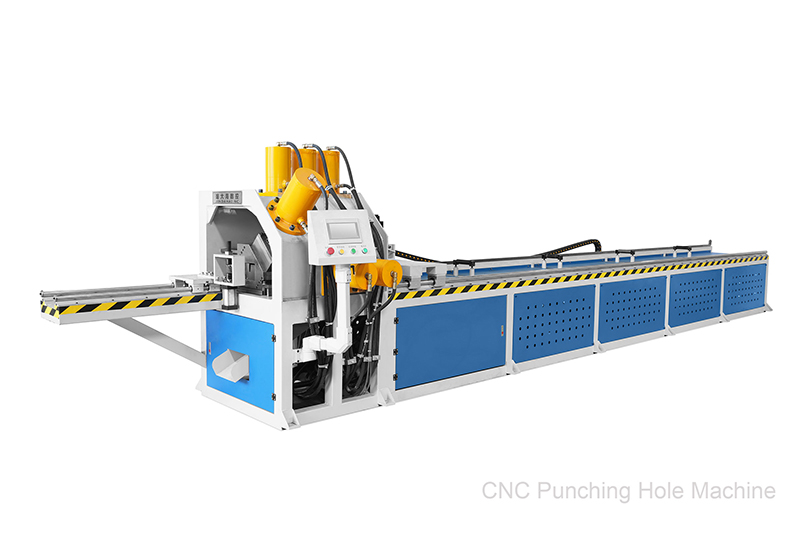
Project Story: Improving Connection Part Processing in Thailand Environmental Equipment Industry
In the environmental equipment manufacturing industry, the quality of structural components plays a critical role in the reliability of final products. Components such as angle steel, flat steel, and channel steel connectors are widely used in assembling equipment frames, support structures, and installation systems.
In Thailand, a manufacturer specializing in environmental equipment components faced growing challenges in processing these connection parts. Their existing production methods were no longer able to meet the increasing demands for accuracy, efficiency, and stable production.
This case study explains how the company improved its production workflow by adopting a metal cutting solution for structural connectors, achieving better precision and more efficient processing.
Background: Structural Components in Environmental Equipment
The customer produces a variety of connection components used in environmental equipment systems. These include:
Angle steel connectors
Flat steel components
Channel steel structural parts
These components are essential for assembling equipment frames and supporting structures.
Because these parts must fit precisely during installation, cutting accuracy directly affects assembly efficiency and product quality.
Challenges with Traditional Cutting Methods
Before upgrading, the manufacturer relied on conventional cutting equipment.
Over time, several issues became increasingly significant.
Cutting accuracy was inconsistent, leading to dimensional deviations.
Uneven cutting surfaces caused fitting problems during assembly.
Additional manual adjustments were required, increasing labor time.
Material waste increased due to rejected or reworked parts.
Equipment noise levels were high, affecting the working environment.
Frequent machine breakdowns caused production interruptions.
These challenges not only reduced production efficiency but also increased overall operating costs.
Defining the Requirements
To improve production stability, the customer defined several key requirements.
The machine needed to handle different types of structural steel components.
Manual feeding was acceptable due to moderate production volume.
The system had to provide stable and precise cutting results.
The equipment needed to reduce noise and improve working conditions.
The solution had to minimize rework and material waste.
The goal was to achieve consistent cutting quality while simplifying the production process.
The Proposed Solution: Semi-Automatic Cutting System
Based on these requirements, we provided a hydraulic cutting solution for metal profiles designed for structural component processing.
The system focuses on reliability, stability, and ease of operation rather than complex automation.
Key features include:
Single-station cutting system suitable for various steel profiles
Hydraulic-driven cutting structure for stable performance
Simple manual feeding workflow for flexible operation
Durable tooling designed for consistent cutting results
Reinforced machine structure for long-term stability
This configuration allows the customer to process multiple types of components using one machine.
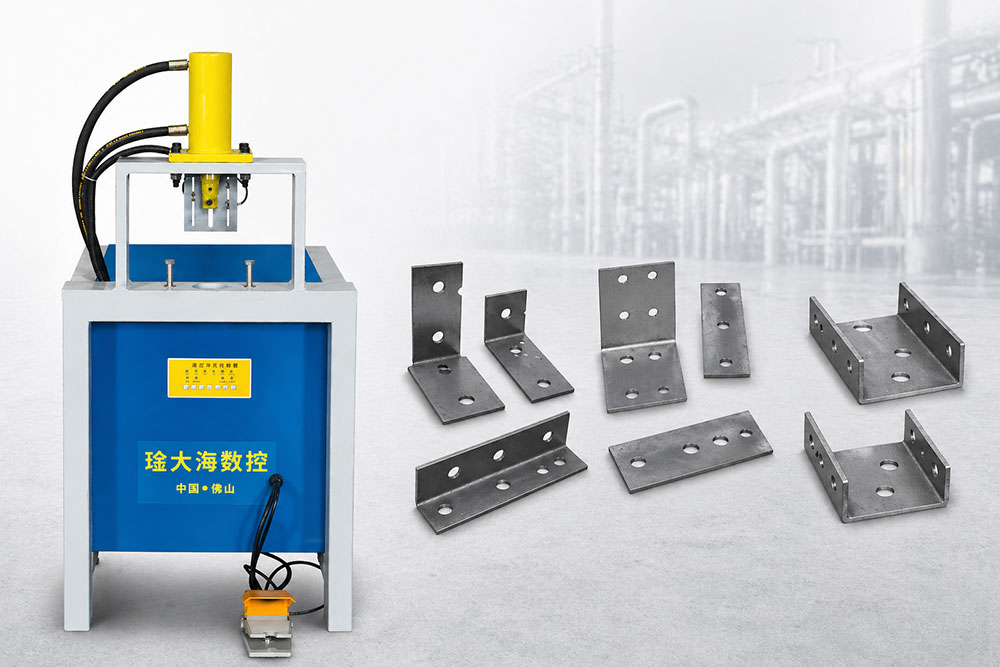
Simplified Workflow for Daily Production
In daily operation, materials such as angle steel and channel steel are manually positioned and fed into the machine.
The cutting process is completed in a single action, producing clean and consistent component lengths.
Compared with traditional methods, this reduces the number of processing steps and improves workflow efficiency.
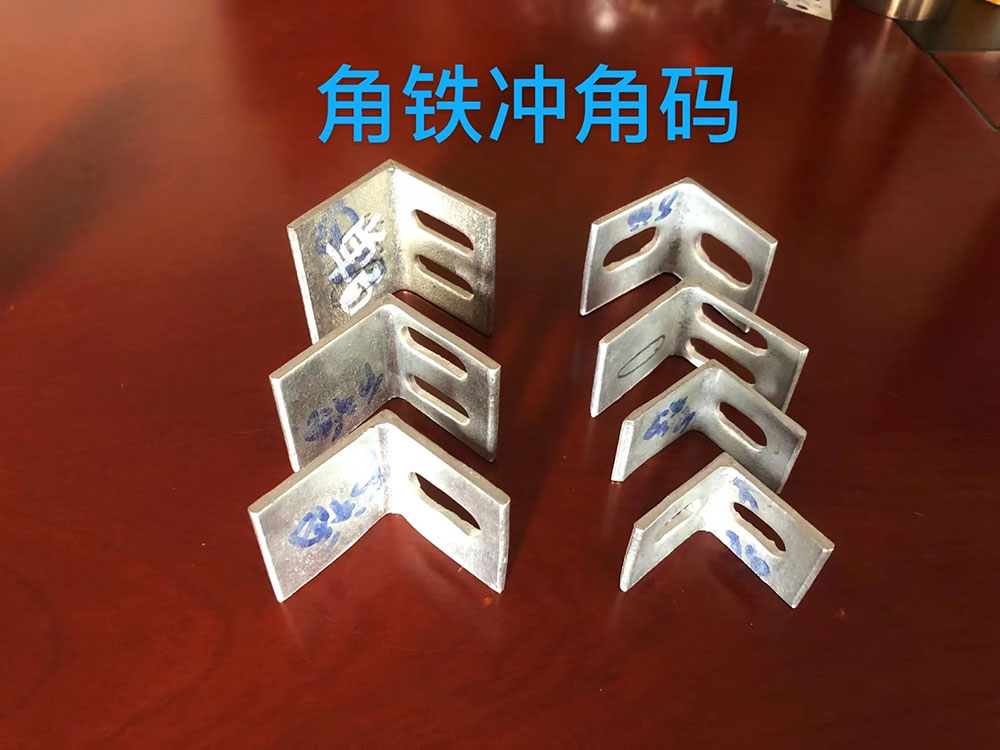
Designed for Precision and Stability
For environmental equipment manufacturers, dimensional accuracy is critical.
This solution improves precision by:
Ensuring consistent cutting lengths
Reducing deformation during cutting
Providing stable positioning for each operation
As a result, components can be directly used in assembly without additional adjustment.
Key Advantages for Environmental Equipment Manufacturing
Compared with traditional cutting equipment, this solution offers several important advantages.
Cutting precision improves, reducing assembly errors.
Production efficiency increases due to simplified processing.
Labor costs decrease as fewer manual adjustments are required.
Material waste is reduced through consistent cutting quality.
Equipment stability improves, reducing downtime.
Working conditions are enhanced with lower noise and smoother operation.
These improvements directly support the production of high-quality environmental equipment systems.
Supporting Reliable and Scalable Production
As environmental equipment projects continue to grow in complexity, manufacturers must ensure stable and reliable component production.
By upgrading to a more efficient cutting system, the customer established a workflow capable of delivering consistent results while reducing operational risks.
The system also allows flexibility in handling different component types without major adjustments.
Conclusion
This project demonstrates how an environmental equipment manufacturer in Thailand improved its production process by adopting a more reliable cutting solution.
By implementing a metal profile cutting system, the company enhanced cutting precision, reduced material waste, and improved overall production efficiency.
For manufacturers working with structural steel components, this approach provides a practical and cost-effective solution for achieving stable and high-quality production.