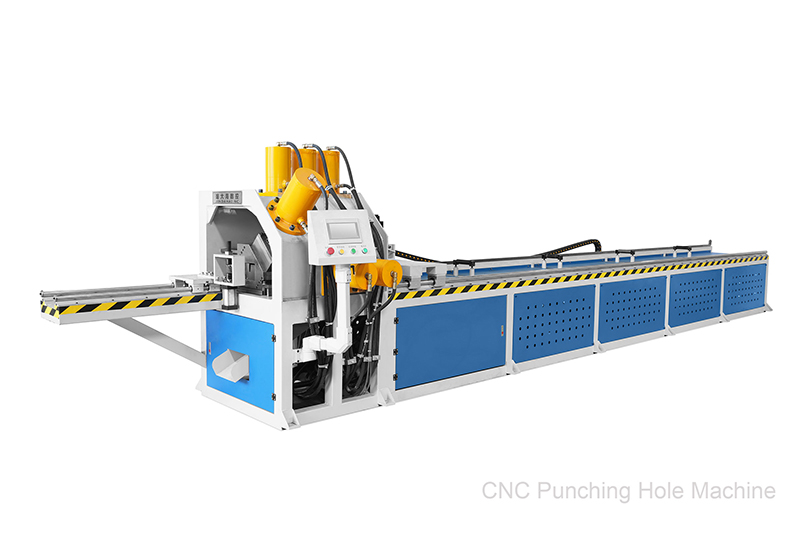
Project Story: Improving U Channel Processing in Myanmar Formwork Industry
In the construction and formwork manufacturing industry, precision and efficiency are essential for maintaining product quality and meeting project deadlines. Components such as U-shaped channels are widely used in high-strength formwork systems, where dimensional accuracy and surface quality directly affect structural performance.
In Myanmar, a manufacturer specializing in aluminum formwork and high-strength alloy steel template systems faced growing challenges in processing U-channel components. Their production relied on traditional cutting methods that struggled to meet modern efficiency and quality demands.
This case study explains how the company upgraded its workflow by adopting a laser cutting solution for formwork U channel processing, transforming its production efficiency and product quality.
Background: U Channel Processing in Formwork Manufacturing
The customer produces U-shaped channel components used in construction formwork systems. These components are typically processed after cold roll forming and require precise cutting to meet assembly standards.
The production involves:
Cutting wide U-shaped profiles
Maintaining clean edges for structural fitting
Ensuring consistent dimensions across batches
Because these components are used in large-scale construction projects, both quality and consistency are critical.
Challenges with Traditional Saw Cutting
Before upgrading, the manufacturer relied on conventional saw cutting methods.
While functional, this approach created several significant issues.
Cutting surfaces were rough and required additional grinding.
Burr formation increased post-processing workload.
Tool wear was high, leading to frequent blade replacement.
Production efficiency was limited due to multi-step operations.
Labor costs increased due to manual finishing processes.
These limitations made it difficult for the company to maintain competitiveness in a market with rising quality standards.
Defining the Requirements
To address these challenges, the customer defined several key requirements.
The system needed to process U-shaped channels with stable cutting quality.
Semi-automatic loading was required to improve material handling efficiency.
The machine had to support wide profile dimensions within a flexible range.
Cutting quality needed to eliminate secondary grinding processes.
The solution needed to reduce both labor cost and consumable cost.
The goal was to achieve a cleaner, faster, and more cost-efficient production process.
The Proposed Solution: Laser Cutting System for U Channel
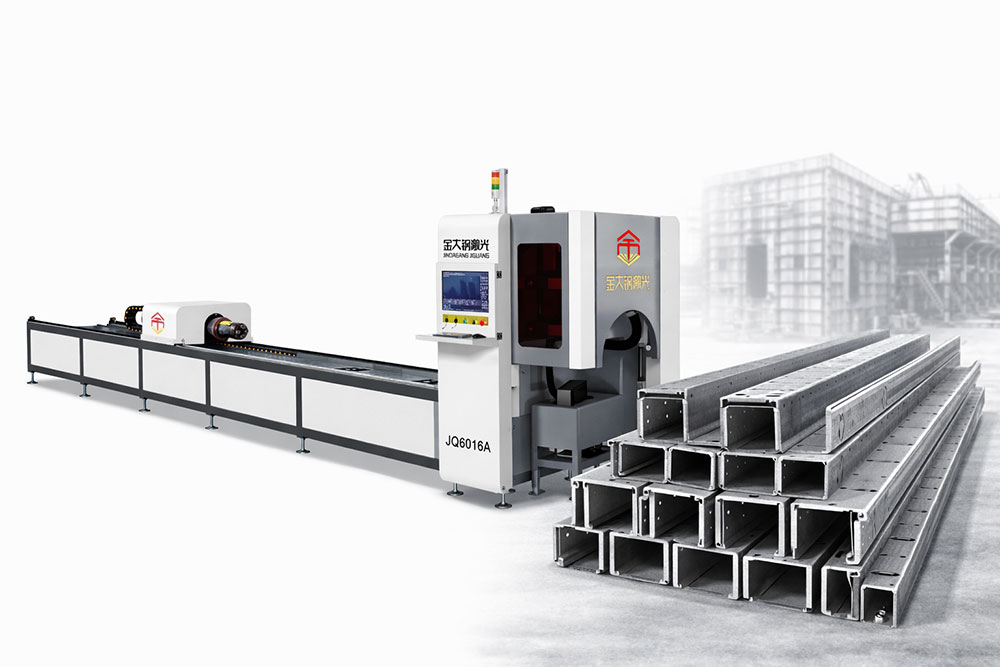
Based on these requirements, we provided a laser cutting machine for U channel metal profiles tailored for formwork production.
Instead of focusing on detailed specifications, the system is designed for stable performance, clean cutting results, and efficient workflow integration.
Key features include:
Semi-automatic feeding system for arranged material loading
Stable clamping structure for large U-channel profiles
Laser cutting unit optimized for medium-thickness materials
CNC control system ensuring consistent cutting accuracy
Clean cutting process that reduces or eliminates burr formation
This configuration allows the customer to replace traditional saw cutting with a more advanced and efficient process.
From Rough Cutting to Precision Processing
In daily production, U-shaped channels are arranged on the loading system and fed into the cutting area.
The laser cutting system processes each piece with a clean and consistent cutting path, producing finished components ready for direct use.
This eliminates the need for secondary grinding and reduces overall processing time.
Designed for Formwork Industry Efficiency
Formwork production requires large quantities of components with consistent quality.
This solution is designed to support such requirements by:
Providing clean cutting edges suitable for direct use
Reducing dependence on manual finishing processes
Maintaining consistent dimensions across batches
The system ensures that every component meets construction quality standards without additional processing steps.
Key Advantages Over Traditional Methods
Compared with conventional saw cutting, the laser solution offers several critical advantages.
Cutting surfaces are smooth, eliminating the need for grinding.
Production efficiency increases due to reduced process steps.
Consumable costs decrease as cutting tools are no longer frequently replaced.
Labor requirements are reduced due to automation.
Consistency improves through CNC-controlled processing.
These advantages significantly reduce overall production cost while improving product quality.
Supporting Scalable Formwork Production
As demand for high-quality formwork systems continues to grow, manufacturers need more efficient production solutions.
By adopting a laser cutting system, the customer established a workflow that supports large-scale production while maintaining stable quality.
The system also allows for future expansion by adapting to different profile sizes and production requirements.
Conclusion
This project demonstrates how a formwork manufacturer in Myanmar improved its production process by upgrading from traditional saw cutting to a more advanced solution.
By adopting a laser cutting solution for U channel processing, the company achieved cleaner cutting, reduced labor costs, and improved production efficiency.
For manufacturers working with U-shaped profiles and structural components, this approach provides a practical and scalable solution for modern production.