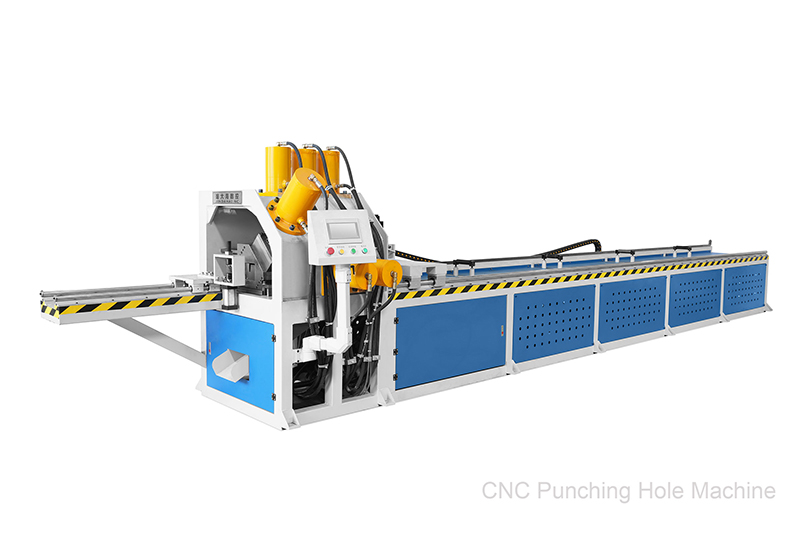
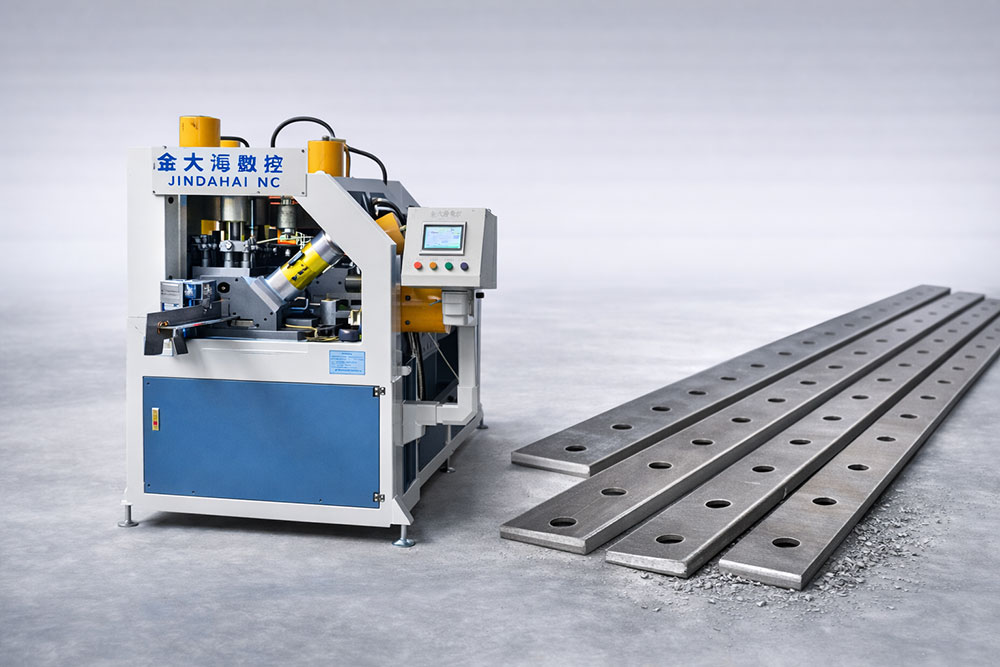
Modern factories are under pressure from every direction. Customers expect fast delivery, reliable quality, competitive pricing, and products that fit perfectly during assembly. At the same time, manufacturers need to reduce waste, improve labor efficiency, and keep production stable even when order requirements change. In this environment, equipment is judged not only by what it can do, but by how much it improves the whole manufacturing process. That is one reason why the CNC punching machine has become an increasingly important part of metal fabrication.
For many people outside the industry, punching may sound like a small step. A hole is made, the material moves on, and the job continues. But anyone involved in production knows that this stage affects much more than one feature on a metal part. Hole position affects whether brackets align during assembly. Repeated spacing affects whether storage frames and support rails fit together smoothly. Poor punching accuracy can create downstream problems in welding, coating, bolting, packaging, and even final installation. In other words, punching is not a minor process. It is a control point for the quality of everything that follows.
This is why factories have become more serious about how they handle repeated hole-making. Traditional manual marking, drilling, and simple punching methods still have their place in low-volume work, but they often become inefficient when parts are repeated daily or weekly. Measuring by hand takes time. Rechecking positions slows the operator down. Different workers may handle the same drawing slightly differently. Over time, those small differences become hidden costs. They appear as scrap, delays, rework, or unstable delivery schedules.
CNC punching offers a more controlled solution. Once the required hole positions, spacing, quantity, and sequence are entered into the control system, the machine can repeat the process with much higher consistency. That is why its value is not limited to one operation or one machine cycle. It improves the overall behavior of the production line. It helps factories turn repeated work into repeatable output, and that is one of the foundations of smarter manufacturing.
Why Repeated Hole Processing Becomes a Bottleneck
In many workshops, one of the biggest hidden problems is not cutting speed or welding capacity. It is the time and inconsistency involved in repeated hole processing. When the same family of parts must be made again and again, operators often spend a surprising amount of time on positioning, measuring, marking, aligning, and double-checking. Each of those actions may seem small on its own, but together they can slow the entire line.
This is especially true when parts are long, when hole spacing must remain uniform, or when a product family includes multiple sizes with similar processing logic. Under these conditions, a manual approach becomes difficult to scale. One skilled worker may keep quality stable for a while, but over longer runs fatigue begins to matter. Shift changes matter. Small measuring differences matter. A process that looks acceptable in low volume may become unreliable in medium- or high-volume production.
Factories often notice this problem only after downstream issues start appearing. Assembly workers may report that holes do not line up smoothly. Welders may need to adjust positioning more than expected. Production planners may see that lead times become harder to predict even though the equipment itself is not obviously failing. In many cases, the root problem is not dramatic. It is simply that repeated hole-making has become too dependent on repeated manual judgment.
CNC punching helps remove that bottleneck. Instead of re-creating the same hole pattern by hand each time, the machine repeats a confirmed program. This gives the factory a more stable foundation. The operator is still important, but the operator no longer needs to build the whole process from scratch for every part. This is why CNC punching often improves far more than punching speed alone. It improves production rhythm, output confidence, and downstream consistency.
What a CNC Punching Machine Actually Controls
A CNC punching machine is more than a machine that pushes a punch through metal. In real production, it is a system that controls movement, spacing, sequence, and repeatability. CNC stands for Computer Numerical Control, which means the machine follows programmed instructions rather than relying only on manual positioning. The practical meaning of that is very important. It means the factory can convert a drawing requirement into a repeated production pattern.
When the operator enters hole positions, spacing, and sequence into the control system, the machine takes responsibility for repeating those instructions accurately across each workpiece. This is where the difference between manual and CNC processing becomes clear. In a manual process, the worker repeatedly decides where the next hole should be. In a CNC process, that decision is made once during setup, then repeated automatically through the run.
Different machines are designed for different material forms. Some are built for flat material, while others are more suitable for angle steel, channel steel, square tube, round pipe, rectangular sections, or flat bar. Some machines only punch holes. Others combine punching with cutting or related operations. But regardless of the machine style, what the factory is really buying is control over repetition.
That control matters because industrial value comes from consistency, not from isolated success. A machine that produces one acceptable part is not enough. The real question is whether it can produce the same acceptable part across a full batch, then reproduce that result again the next week, the next month, or the next customer order. This is where CNC punching proves its value. It turns good output from something occasional into something repeatable.
Where CNC Punching Fits in Today’s Industries
CNC punching is used in many sectors because repeated hole patterns are common in many types of fabricated products. One major application area is structural support fabrication. Brackets, connectors, support members, and installation parts often require accurate hole positions so that they can be bolted or assembled without time-consuming correction. This is why manufacturers producing steel support frames often benefit from CNC punching technology.
Another common field is warehouse storage and logistics equipment. Rack systems, shelf uprights, support beams, and connector members frequently require consistent spacing across large batches. In this type of production, even a small difference in hole position can affect assembly compatibility. For factories making rack upright parts, CNC punching helps maintain product uniformity and improve overall throughput.
The solar industry is another strong example. Solar support systems usually depend on repeated punched holes for fasteners, connectors, and installation hardware. Since these products are often produced in repeated sizes and repeated patterns, they are especially suitable for automated processing. That is why solar support brackets are one of the practical applications where CNC punching delivers clear value.
Tube and profile fabrication also relies heavily on punched processing. Square tube, round pipe, rectangular tube, angle steel, and channels are used in equipment frames, metal furniture, industrial supports, fencing systems, and structural assemblies. When an article refers to square and round tube processing, the most natural destination is often a related case page that shows the actual profile application rather than only a general equipment page.
In addition to these industries, CNC punching may also be used for enclosure structures, transport accessories, agricultural supports, machinery components, and custom fabricated metal products. The end market may differ, but the production requirement is similar: repeated hole-making with consistent position, stable quality, and improved productivity.
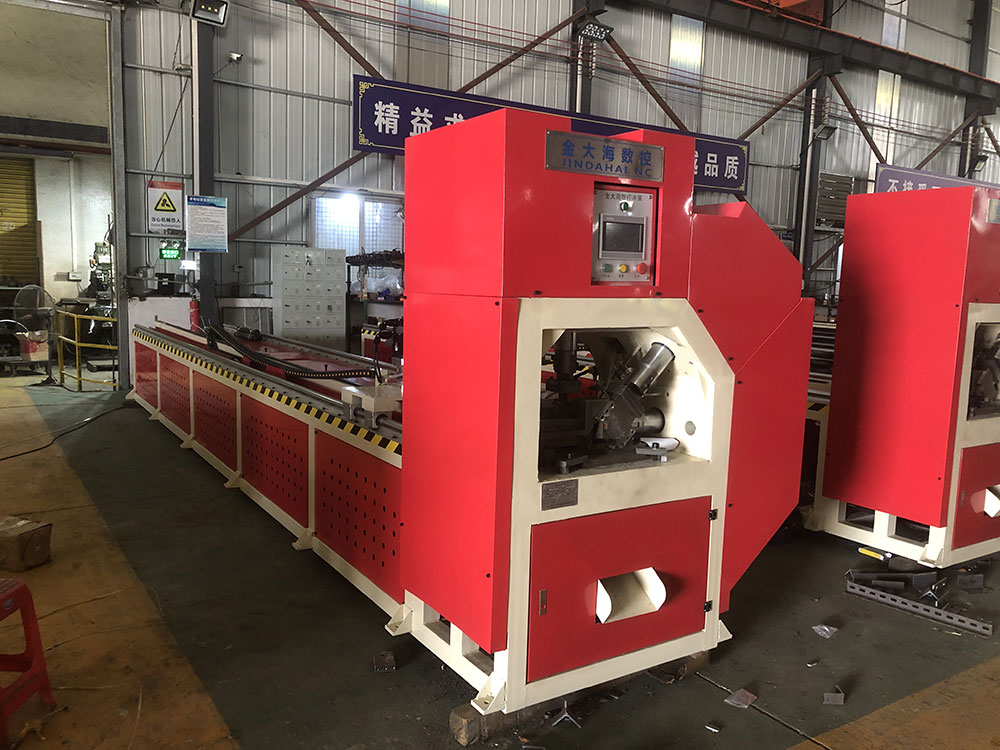
How the Workflow Looks on the Shop Floor
The value of CNC punching becomes clearer when we look at the real production workflow. The process usually begins with part review. The operator or programmer checks the drawing, confirms the material type, and identifies the hole diameter, spacing, quantity, and sequence required for the job. Once the production information is clear, the punching pattern is entered into the control system.
After programming, the material is loaded onto the machine. In some workshops this is done manually. In others, loading assistance or feeding systems may be used. For long profiles, support structures are often important because unstable material handling can reduce punching accuracy. A good CNC system depends not only on the control program but also on keeping the material in a stable condition throughout the process.
The feeding system then moves the material into the correct position. This positioning stage is one of the most important parts of the workflow because hole accuracy starts with feed accuracy. Many machines use servo-controlled feeding for this reason. Once the workpiece reaches the programmed point, the punch descends through the material and the hole is formed. The machine then moves to the next location and repeats the cycle according to the program.
This repeated cycle is where CNC punching shows its true strength. Manual processes can also produce acceptable holes, but they usually need repeated attention and repeated measuring. CNC punching reduces that repetition. The confirmed logic is built into the production cycle itself. As a result, the operator is less burdened by repeated positioning and can focus more on supervision and quality control.
After punching, the component usually proceeds to cutting, welding, bending, coating, or assembly. That is why the punching stage should never be judged in isolation. If punched parts enter the next process in a more consistent condition, then the value of CNC punching spreads through the rest of the factory.
What Materials and Shapes Can Be Processed
The exact range of materials depends on the design of the machine and the tooling used, but in general CNC punching machines are widely applied to mild steel, stainless steel, aluminum, galvanized steel, and certain alloy materials. Thickness capacity varies with machine structure, punch force, frame rigidity, and tooling selection, so a factory should always match the machine to its actual production needs rather than relying on generic claims.
Shape is just as important as material. Many CNC punching machines are used for flat bar, angle steel, channel steel, square tube, round pipe, and rectangular sections. Some machines are optimized for heavier structural work, while others are better suited to lighter or smaller profiles. This is why machine selection should always begin with the parts the factory actually produces most often.
Tooling also plays a major role in performance. Even if the machine has enough punching force, poor punch-and-die matching can create burrs, inaccurate edges, unstable hole size, or excessive wear. Factories that get the best results typically treat punching as a complete system made up of machine structure, material handling, tooling setup, and process discipline.
This point is important because buyers sometimes focus only on headline machine specifications. In reality, the real production result depends on how well the machine, material, tooling, and operator practices work together. A strong machine alone does not guarantee a stable process. The whole system has to be matched correctly.
How to Use a CNC Punching Machine Well
A CNC punching machine can make production much more efficient, but only if it is used correctly. Automation improves speed and consistency, yet it also means that mistakes can be repeated very quickly if preparation is weak. That is why good operating habits are essential.
The first habit is drawing confirmation. Before the job starts, the operator should check hole size, spacing, orientation, material dimensions, and quantity carefully. A wrong input at the beginning can affect a full production run. Taking a little more time during preparation usually saves much more time later.
The second habit is proper tooling selection. The punch and die need to match the material type, thickness, and hole shape. Incorrect tooling may lead to rough hole edges, burr formation, faster wear, or inconsistent results. Tool condition matters as well. Even the correct tooling will give poor results if it is worn or damaged.
The third habit is secure clamping and good support. If the workpiece shifts during punching, the result will no longer match the programmed coordinates. Long tubes and profiles often need additional supports to keep feeding stable from start to finish. Many positioning problems come from the way the material is handled rather than from the program itself.
The fourth habit is first-piece inspection. Before a full batch begins, the operator should inspect a sample part carefully. Hole location, spacing, edge quality, and overall dimensions should all be checked. This simple practice is one of the best ways to reduce scrap and protect batch quality.
The fifth habit is monitoring the process. CNC punching reduces repetitive manual work, but the operator still needs to pay attention to noise, vibration, surface marks, and feed behavior. Small warning signs often appear before bigger problems do.
Finally, routine maintenance should never be ignored. Cleaning, lubrication, clamp inspection, and tooling care all contribute to more stable output and longer machine life. A well-maintained CNC punching machine is not only more reliable. It is also more predictable, and predictability is one of the biggest advantages in modern production.
What Benefits It Brings to Industrial Production
Factories do not invest in CNC punching only because it looks modern. They invest because it improves practical production performance in several different ways.
The first benefit is higher throughput. Once the program is ready, repeated hole patterns can be produced much faster than with manual measuring and drilling. This is especially valuable in medium- and large-batch jobs where cycle time strongly affects delivery performance.
The second benefit is better repeatability. When the machine follows programmed positions instead of repeated human judgment, the same hole pattern can be reproduced more consistently across the entire run. This reduces assembly issues later and improves the overall compatibility of parts.
The third benefit is more efficient use of labor. Manual hole processing requires repeated measuring, handling, and alignment. CNC punching reduces those repetitive tasks. Operators can spend more time supervising the process and less time repeating low-value positioning work.
The fourth benefit is lower waste. Incorrect hole positions often turn useful material into scrap or force extra rework. A more stable punching process reduces this kind of loss. Over time, that has a meaningful effect on cost control.
The fifth benefit is stronger production planning. If a factory knows that its punching stage is stable and repeatable, it can schedule downstream processes more confidently. Better predictability improves delivery planning, communication, and internal coordination.
The sixth benefit is overall process stability. This is often overlooked, but it may be the most important one. A correctly punched part is easier to cut, weld, fit, coat, and assemble. In this sense, CNC punching strengthens the entire production chain.
How CNC Punching Supports Smarter Manufacturing
Smarter manufacturing is not just about buying more advanced machines. It is about using machines that make the whole system more controlled, more measurable, and more repeatable. CNC punching fits this goal very well because it turns one of the most repetition-heavy workshop tasks into a more standardized process.
In a smarter factory, managers want to know how long a job should take, what level of output should be expected, and how stable the result will be from one batch to the next. Manual methods can make those questions difficult to answer. CNC punching makes them easier because the process is built around programmed repetition rather than repeated estimation.
This is also why CNC punching supports both efficiency and flexibility. A factory may produce several related product families rather than one identical part. Even so, many of those products still rely on repeated hole logic. CNC control allows the operator to adjust the program while keeping the production system fundamentally organized. That balance between repeatability and adaptability is a major reason why smarter factories continue to adopt CNC punching.
How to Think About Machine Selection
Choosing the right CNC punching machine should begin with the factory’s actual products. A company working mainly with angle steel supports has different needs from one focused on square tubes or lighter profiles. Material shape, material thickness, hole pattern complexity, and production volume all affect what kind of machine is appropriate.
Production rhythm also matters. A workshop running repeated batch orders may care more about speed, feed stability, and long-run consistency. A workshop serving more customized work may care more about setup flexibility and ease of programming. The best machine is not the one with the biggest headline number. It is the one that fits the real workflow of the business.
After-sales support is another important factor. Tooling availability, operator training, spare parts, and service response all shape long-term value. A machine should not be evaluated only on installation day. It should be evaluated by how reliably it supports production month after month.
For website content structure, the same logic is useful. Broad machine terms should usually guide readers to the main product page, while specific application phrases should guide them to case pages that show how the machine is used in a real industry scenario. This makes your internal linking more natural and more useful.
Final Thoughts
The value of CNC punching is not limited to making holes faster. Its real value lies in improving repetition, reducing unnecessary manual effort, supporting more stable quality, and helping the whole production line run more smoothly. In industries where metal profiles and repeated punched parts are common, these improvements directly affect productivity and profitability.
For factories that want better consistency, stronger workflow control, and greater confidence in repeated production, CNC punching is more than an equipment choice. It is a process improvement. It helps move the workshop from repeated manual action toward a more organized and reliable manufacturing system.
As customer expectations continue to rise and competition becomes more intense, factories need solutions that deliver both efficiency and consistency. That is exactly why CNC punching remains such a valuable part of modern metal fabrication.