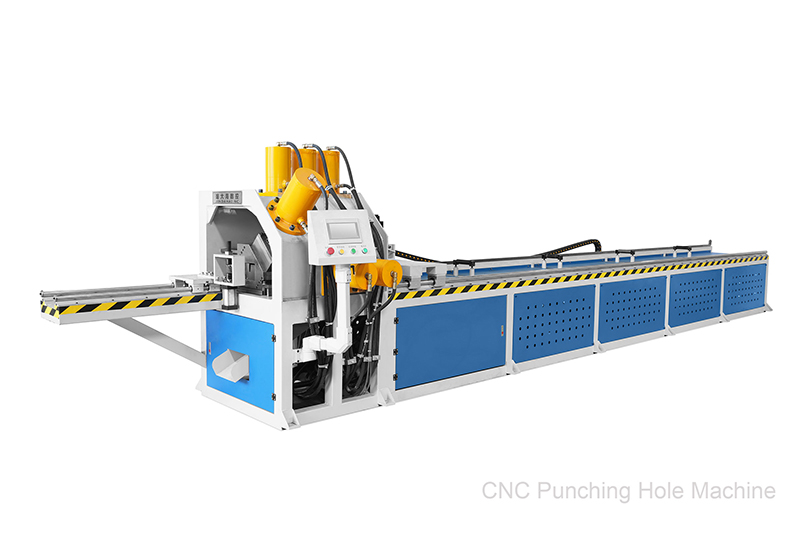
Project Story: Upgrading Multi-Profile Processing in Kazakhstan
In the curtain wall and embedded component industry, precision steel parts play a critical role in ensuring structural stability and installation efficiency. As construction standards continue to rise, manufacturers are under increasing pressure to deliver consistent quality while improving production speed.
In Kazakhstan, a manufacturer specializing in curtain wall materials and embedded components faced growing demand for channel steel connectors, angle brackets, and embedded steel plates. Their production required multi-side punching and cutting across different steel profiles.
This case study explains how the company improved its production workflow by adopting a CNC channel steel and angle iron punching solution, enabling multi-process operations within a single system.
Background: Multi-Profile Steel Components
The customer produces structural parts used in curtain wall systems and construction installations. These include:
Channel steel connectors
Angle brackets and corner fittings
Embedded steel plates
Each component requires precise hole positioning to ensure alignment during assembly. The production process involves different materials such as channel steel and angle steel, each with unique processing requirements.
Because of the variety of products, the manufacturer needed a system capable of handling multiple profiles without frequent adjustments.
Challenges with Traditional Processing
Before upgrading, the customer relied on conventional punching machines and separate cutting equipment.
As production demand increased, several issues became more significant.
Processing different materials required frequent mold changes, which slowed down production.
Punching and cutting were performed separately, increasing handling time.
Manual adjustments reduced consistency, especially for multi-side punching operations.
Labor costs increased due to the need for multiple operators.
These limitations made it difficult to maintain stable output in a competitive market.
Defining the Requirements
To improve production efficiency, the customer outlined several key requirements.
The machine needed to process both channel steel and angle steel within one system.
Multi-side punching had to be completed in a single setup.
Cutting functionality needed to be integrated for continuous processing.
The system had to support high-efficiency feeding with minimal manual intervention.
Consistency and accuracy were essential for structural components.
The goal was to simplify production while increasing output.
The Proposed Solution: Dual-Drive CNC Punching System
Based on these requirements, we provided a CNC punching and cutting solution for structural steel components.
The system integrates multiple operations into one machine, allowing channel steel and angle steel to be processed without switching equipment.
Instead of focusing on detailed specifications, the configuration emphasizes stability, efficiency, and ease of operation.
Key features include:
Dual-drive feeding system for continuous material movement
Multi-station punching structure for different hole patterns
Integrated cutting function for complete processing
CNC control for accurate positioning
This allows different steel profiles to be processed within one workflow.
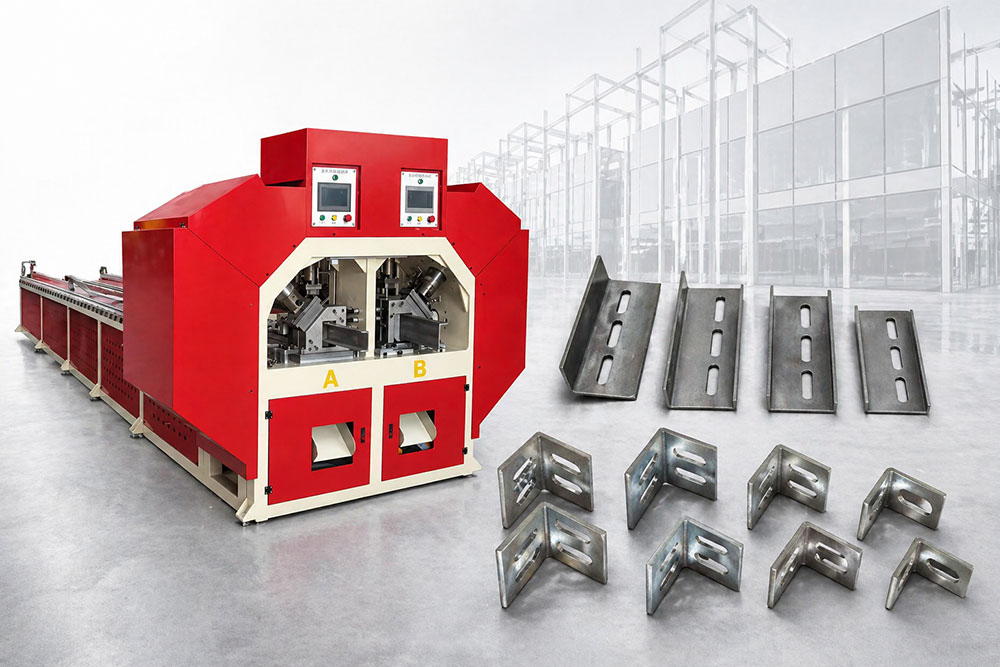
Streamlined Workflow for Mixed Material Processing
In daily production, channel steel and angle steel are loaded onto the feeding system and aligned automatically.
The machine performs punching operations on multiple surfaces according to programmed settings, followed by cutting into required lengths.
This eliminates repeated setups and reduces production time.
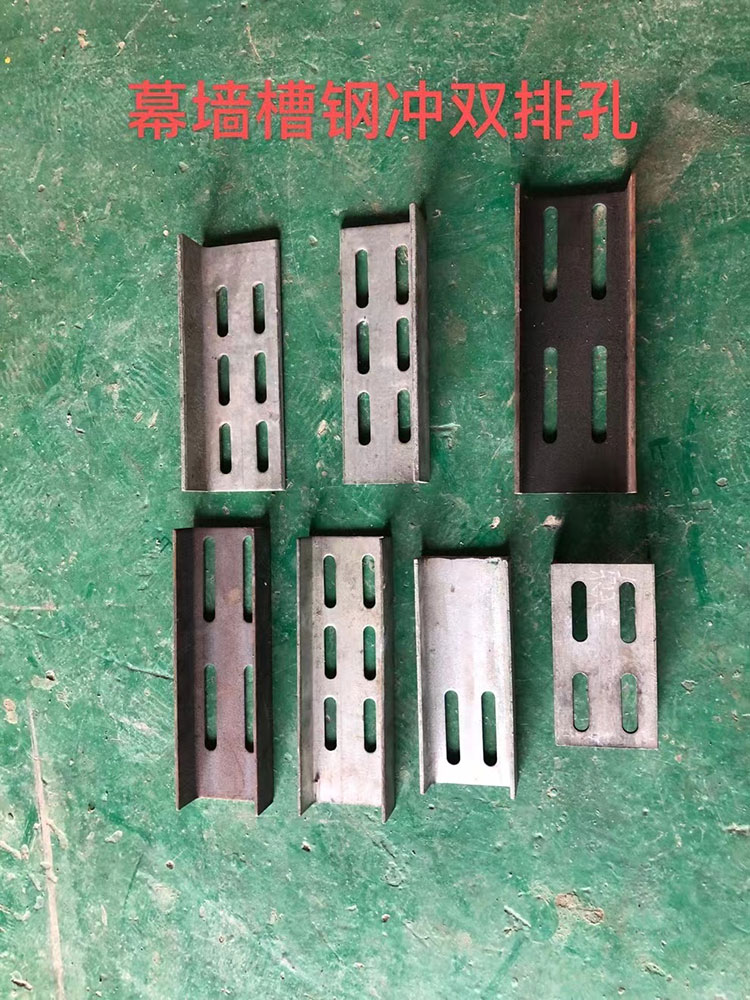
Multi-Side and Multi-Profile Capability
One of the key advantages of this solution is its ability to process different materials and multiple surfaces in one setup.
Channel steel can be processed with slot holes and cut-off operations, while angle steel can be punched on both sides without repositioning.
This capability significantly improves efficiency and reduces process complexity.
Improving Productivity and Reducing Labor
Compared with traditional methods, the CNC system provides several benefits.
Production speed increases due to continuous processing.
Labor requirements decrease as operators focus on monitoring rather than manual work.
Hole positioning becomes more consistent across all products.
Overall production stability improves, which is essential for construction component manufacturing.
Supporting Curtain Wall and Embedded Component Production
For manufacturers in the curtain wall industry, precision and efficiency are equally important.
By adopting an integrated punching and cutting solution, the customer established a more reliable and scalable production process.
The ability to process multiple profiles within one system provides a strong advantage in competitive markets.
Conclusion
This project demonstrates how a curtain wall material manufacturer in Kazakhstan improved its production workflow through equipment upgrading.
By implementing a CNC structural steel punching and cutting solution, the company achieved higher efficiency, reduced labor dependency, and improved consistency.
For manufacturers handling multi-profile steel components, this solution offers a practical and scalable approach to modern production.