In many factories, tube processing is where production either becomes efficient or starts to slow down. A raw tube may look simple, but a finished tube part rarely is. The part may need an exact cut length, several holes in different positions, a special end profile, a slot for assembly, or an angled cut that must match another component perfectly. When any one of those features is off, the problem usually does not stop at the cutting stage. It shows up again in welding, fitting, inspection, coating, or final assembly. That is why tube processing has become one of the most important steps in modern metal fabrication.
This is also why the laser tube cutting machine has become such an important production tool. Instead of treating tube work as several separate operations performed on several different machines, manufacturers can complete much more of the geometry in one digitally controlled process. For many workshops, that means faster production, more stable quality, fewer correction steps, and a cleaner workflow from raw material to finished part.
The value of tube laser cutting is not limited to one type of factory. It matters in small workshops that need more flexibility, in growing companies that want to reduce dependence on manual labor, and in larger plants that need higher output with tighter consistency. In all of these cases, the challenge is similar: how to process metal tubes more accurately and more efficiently without turning every change of size, hole pattern, or end shape into a major interruption.
At the same time, customer expectations are changing. Buyers want shorter delivery times, cleaner finished parts, and more flexibility in dimensions or product design. Manufacturers therefore need production methods that help them respond quickly without losing control of quality. Traditional cutting, drilling, and shaping methods can still be useful, but when production becomes more complex, they often create bottlenecks. Tube laser cutting solves many of those problems by combining digital control with real manufacturing practicality.
This article explains laser tube cutting from the perspective of real production. It looks at what the machine does, what materials and profile shapes it commonly handles, where it is used in the market, how it fits into daily factory work, and why it can make such a difference to industrial efficiency. The goal is not simply to describe the equipment, but to explain what this technology changes on the shop floor.
Why Tube Processing Is Harder Than It Looks
A tube may seem easier to fabricate than more complex-looking metal parts, but in practice it often creates its own challenges. A sheet part can be laid flat and measured from one plane. A tube, by contrast, may need features on multiple faces or around a curved surface. Once the part requires exact relationships between holes, slots, end cuts, and mounting positions, the process becomes more demanding than it first appears.
Traditional production usually handles this by separating the work. One machine cuts the tube to length. Another drills holes. Another performs end shaping or notching. A worker may measure the part between steps and make manual corrections when something shifts. This method can still work, especially for simple or low-volume jobs, but it also creates repeated handling and repeated setup. Every time the tube is moved and clamped again, another chance for dimensional variation appears.
This matters because most tube parts are not independent pieces. They are structural members, connectors, supports, or visible frame components that must fit other parts precisely. If a hole is slightly off location, welding takes longer. If the end shape is inaccurate, assembly becomes harder. If the cut edge is rough, more grinding may be needed later. Small inaccuracies in tube processing often create bigger costs once the part moves into downstream work.
Mixed production makes the challenge even greater. Many modern manufacturers do not produce one identical item all week. They may switch between tube sizes, material types, and customer-specific drawings every day. In that environment, a workflow that depends heavily on repeated manual alignment slows down quickly. The factory may still complete the order, but it often spends more time adjusting the process than actually building stable output.
Laser tube cutting changes this by moving more of the complexity into the program rather than into repeated manual action. Instead of treating every part as a series of isolated tasks, the system treats the geometry as a complete digital instruction. That approach reduces interruptions, lowers the chance of drift between operations, and makes the process easier to repeat.
What a Tube Laser Cutting Machine Actually Does
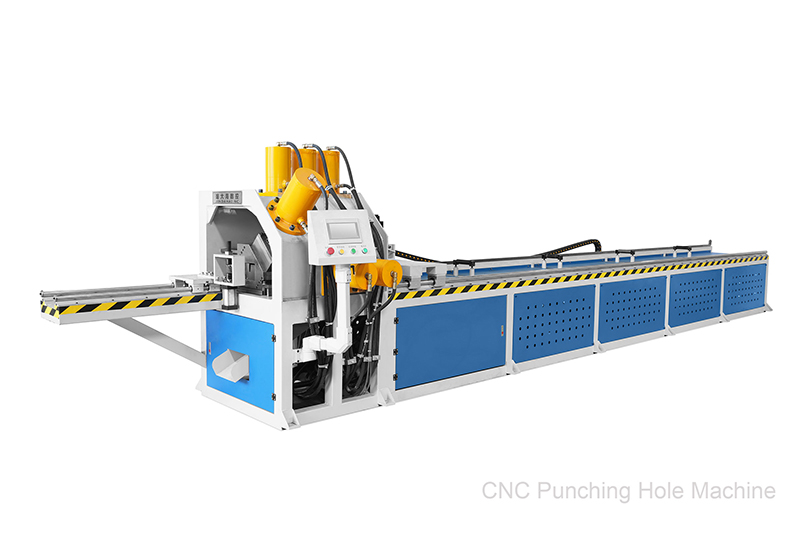
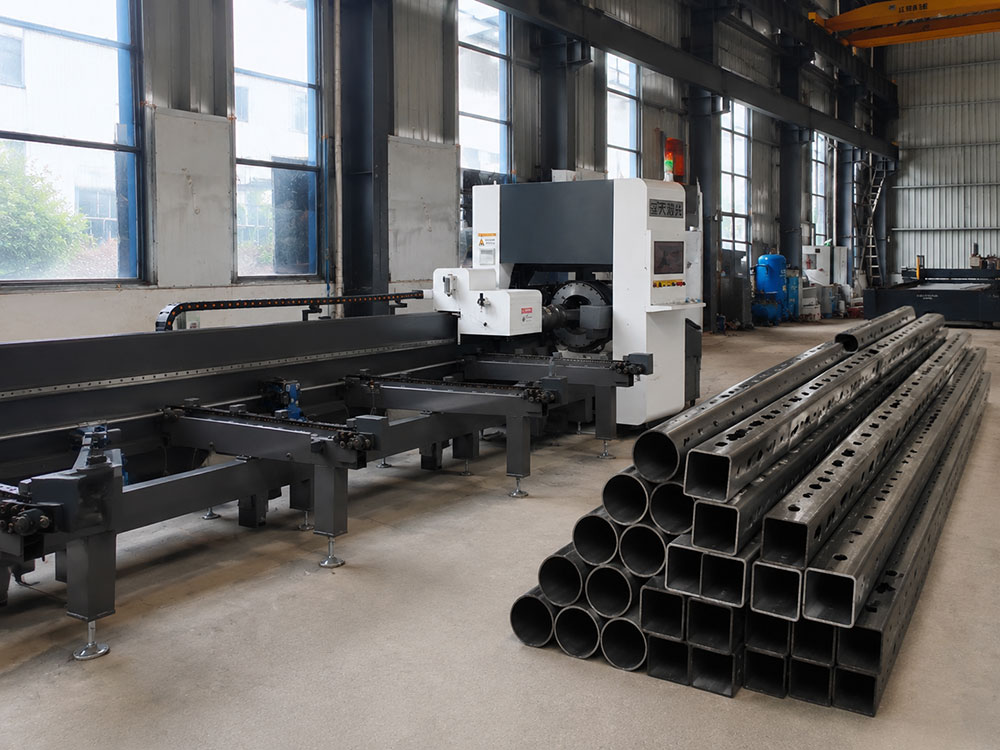
A tube laser cutting machine is a CNC-controlled system designed to process metal tubes and profiles with a focused laser beam. In practical terms, this means it can do far more than cut raw stock into shorter lengths. It can create holes, slots, contour cuts, side openings, bevels, end profiles, and other features directly on the tube according to a digital design.
That makes the machine especially valuable for fabrication work. Real industrial parts are rarely just plain cut tubes. A support part may need holes at specific positions for bolting. A frame component may need a shaped end for welding. A visible product may need cleaner geometry because the finished surface matters to the customer. A digital cutting system helps produce these features within one controlled process rather than spreading them across multiple machines and manual setups.
The system works from software. Before cutting begins, the operator or engineer sets the material type, wall thickness, profile size, and required geometry. Once the program is ready, the machine follows that path with coordinated motion. This is one reason a fiber laser tube cutting machine is associated with more stable part quality. The process depends less on repeated manual judgment and more on controlled digital execution.
Another strong advantage is how the machine handles part variation. In conventional workflows, changing a dimension or hole pattern may require extra manual layout, new fixtures, or repeated trial cuts. In a digital laser system, many adjustments can be made directly in the program. That makes the machine useful not only for high-volume repeat orders, but also for flexible production where drawings change frequently.
The result is a more integrated approach to tube fabrication. Instead of seeing cutting, hole making, and shaping as separate tasks, the factory can treat them as connected parts of one programmable manufacturing step.
What Materials and Tube Shapes It Commonly Handles
One of the reasons tube laser cutting is so widely used is that it fits the reality of modern fabrication. Most workshops do not work with only one material and one profile shape. They serve different industries and different customer requirements, so the ability to process a range of materials and profiles matters a great deal.
In many applications, the most common materials are carbon steel, stainless steel, and aluminum. Carbon steel is widely used in structural supports, machine frames, racks, and industrial assemblies. Stainless steel is important where corrosion resistance or a cleaner visual finish is required. Aluminum becomes valuable when product weight matters or when manufacturers need lighter structural parts. A machine that can work effectively with these materials is useful across a wide variety of markets.
Profile type is equally important. Round tubes and square tubes are the most common, but real production often includes rectangular tubes, oval tubes, and selected profiles as well. A company that mainly serves storage systems may rely heavily on square and rectangular tube. A factory building fitness equipment may focus more on round tubes. Another business may combine several profile types in the same production cycle.
This is why keywords such as round tube processing and square tube fabrication are meaningful both for search intent and for production logic. Buyers frequently think in terms of the tubes they already use. When they see a machine or article clearly aligned with those profile types, they can connect the technology more directly to their real work.
A broad material and profile range also helps the factory stay flexible in the market. Instead of building a separate process for every new product type, the workshop can centralize more of its tube work through one system. That makes the business easier to scale and easier to adapt when customer demand changes.
Where the Market Uses Tube Laser Cutting
Tube laser cutting is used in many industries because tube-based parts are used in many industries. The finished products may look very different, but the underlying manufacturing need is often the same: accurate, repeatable, and efficient processing of metal tubes.
Construction and project fabrication are major examples. Tubes and profiles appear in barriers, handrails, support frames, canopies, partitions, walkway systems, facade structures, and many types of building-related metalwork. These applications require dimensional stability because the parts must fit during welding and installation. This is one reason the technology is increasingly important in steel structure projects and similar fabrication environments.
Furniture is another strong market. Metal tables, chairs, shelving, bed frames, cabinets, office systems, and decorative structures all depend on well-made tube components. In furniture, cut quality affects more than mechanical strength. It also affects how neat the joints look, how smoothly the parts assemble, and how clean the final product appears after coating. That is why laser processing creates clear value in furniture tube frames.
Fitness equipment is also a natural fit for the technology. Machines and support frames often use round or shaped tubes with many holes, cut angles, and visible joints. Consistent cutting helps these products move through fabrication with fewer corrections. Other important sectors include warehouse systems, agricultural equipment, industrial racks, transport-related parts, machine structures, and custom fabricated assemblies.
What all of these applications share is a need for parts that are not only cut, but cut correctly enough to support downstream work without constant adjustment. That common requirement explains why tube laser cutting has become so relevant across such a broad market.
How the Cutting Process Works
The tube laser cutting process begins with digital preparation. The required part geometry is created in software based on tube dimensions, material type, wall thickness, and feature layout. Once this program is ready, the raw tube is loaded into the machine and secured by a clamping system.
The clamping mechanism holds the tube steady while also allowing controlled rotation when the part design requires features on different faces or angles. During the cut cycle, the cutting head moves according to the programmed path while the system controls speed, sequence, and positioning. The laser beam is focused into a very small point on the material surface. At that point, the energy is intense enough to melt or vaporize the metal. Assist gas removes the molten material and helps create a cleaner edge.
What gives the process its strength is coordination. Tube rotation, cutting-head motion, feature order, and dimensional control all work together. That is what allows the machine to produce several features on one part while preserving their relationship to one another. It is not simply a matter of cutting metal quickly. It is a matter of executing complex geometry accurately and repeatably.
Because the system is software-based, part programs can be saved and reused. Repeat jobs become easier to restart. Revised jobs become easier to modify. For many manufacturers, this balance between repeatability and flexibility is one of the strongest reasons the process makes sense.
How the Machine Fits Into Real Production
On the shop floor, the machine becomes part of a larger workflow rather than a stand-alone tool. The job usually starts with engineering preparation. Drawings are checked, dimensions are confirmed, and the correct cutting parameters are selected. Good results depend not only on the hardware, but also on how accurately the part is defined before production starts.
Once the program is ready, raw material is brought to the machine. Some workshops still use manual loading when volumes are moderate or profile types change frequently. Others improve process continuity with an automatic loading system when higher output makes repeated handling inefficient. In the right environment, loading automation can create a noticeable improvement in throughput and labor efficiency.
During cutting, the operator’s role shifts compared with traditional multi-station work. Instead of spending most of the day measuring, drilling, repositioning, and checking each feature manually, the operator supervises the system, monitors gas flow, watches cut quality, and keeps production stable. This changes workshop labor from repetitive action to controlled process oversight.
After cutting, the parts continue to downstream operations such as welding, bending, fitting, finishing, coating, or assembly. This is where many less obvious advantages of tube laser cutting become visible. If geometry is cleaner and more repeatable, weld fit-up improves. If part dimensions are more stable, assembly becomes faster. If fewer parts need manual correction, the overall workshop becomes easier to manage.
What Practical Benefits It Brings
The first major benefit is process consolidation. Traditional tube fabrication often splits the job into multiple steps performed on different machines. Laser tube cutting reduces that fragmentation by producing more of the required geometry in one coordinated cycle. Fewer transitions mean fewer opportunities for dimensional drift and less time spent moving material between stations.
A second benefit is consistency. Consistent parts improve everything downstream. Welders do not need to force mismatched pieces into place. Assemblers spend less time correcting avoidable errors. Supervisors see fewer disruptions caused by recurring dimensional variation. That kind of consistency often creates value far beyond the cutting area itself.
Labor efficiency is another important advantage. A more integrated digital process allows one operator to supervise more of the work than would be possible in a manual, multi-station workflow. Skill is still required, but it is used differently. The emphasis shifts from repeated setup and measuring to monitoring, programming, and process control.
Quality improvement is also a clear benefit. More accurate features and cleaner edges often reduce deburring, grinding, and rework. In visible products, that helps improve the final appearance. In industrial or structural products, it helps improve fit-up and overall reliability. In both cases, the benefit continues after the part leaves the machine.
Finally, the process supports flexibility. Modern factories often face mixed batches, revised drawings, and product variation. A process that depends too heavily on physical setup handles these changes slowly. Tube laser cutting adapts more easily because many of the changes happen in software, not in repeated manual reset work.
Why Precision Matters So Much
Precision in tube processing matters because the tube is almost always part of a larger product. It may connect to supports, brackets, frames, housings, or visible structures. A small error at the cutting stage can turn into a much bigger problem later. This is why precision tube cutting has such a strong effect on total production performance.
Precision affects fit-up speed, product appearance, welding stability, and the predictability of the whole workflow. In products such as furniture and fitness equipment, it also affects how refined the final result looks. In structural work, it affects how easily larger batches move through production without repeated interruption.
Precision also supports scalability. A workshop may be able to correct a few inconsistent parts manually when output is low, but that approach becomes expensive and unreliable at larger volume. Better precision from the beginning reduces the need for correction later and helps the factory build a process that can grow.
What Buyers Should Look At Carefully
One common mistake is to focus only on laser power. Power matters, but it does not define the whole performance of the system. Motion stability, clamping accuracy, software usability, maintenance convenience, and supplier support all influence how well the machine works in real production.
Buyers should also look closely at their actual products. The best machine is not automatically the most powerful or the most expensive one. It is the one that matches the real tube sizes, materials, geometry complexity, and order patterns of the workshop.
Ease of use matters as well. Even strong hardware becomes frustrating if the software is difficult or the after-sales support is weak. Long-term value depends on the total ownership experience, including training, spare parts, and technical assistance.
Conclusion
Tube laser cutting has become increasingly important because modern fabrication now requires more than basic cutting speed. Manufacturers need better repeatability, smoother workflow, easier changeovers, and stronger downstream consistency. As tube-based parts remain essential across construction, furniture, storage systems, machine structures, and many other industries, the need for a better tube-processing method continues to grow.
A laser tube cutting machine helps move manufacturing away from fragmented, labor-heavy processes and toward a more integrated digital workflow. It improves geometry control, reduces repeated handling, supports smoother assembly, and makes it easier for factories to respond to changing orders. These are practical improvements that directly affect everyday production performance.
For manufacturers that want stronger capability, more reliable output, and a more competitive production process, tube laser cutting is no longer just a technical upgrade. It is becoming a core manufacturing advantage.