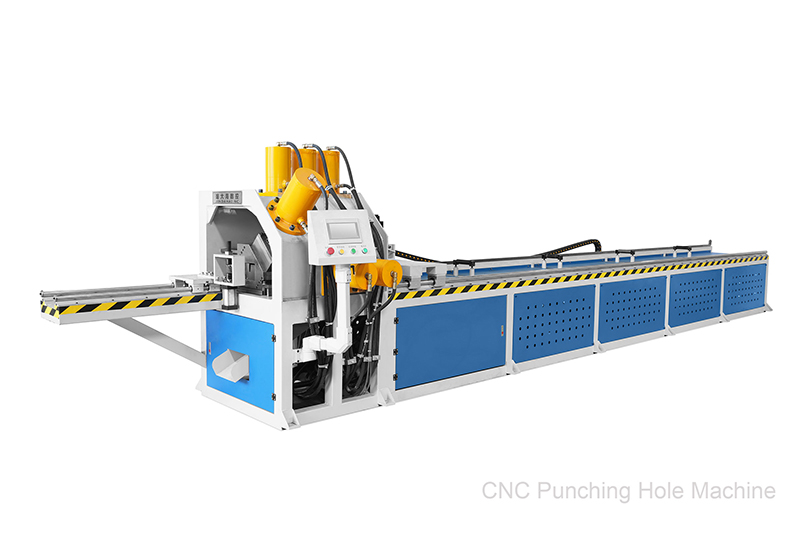
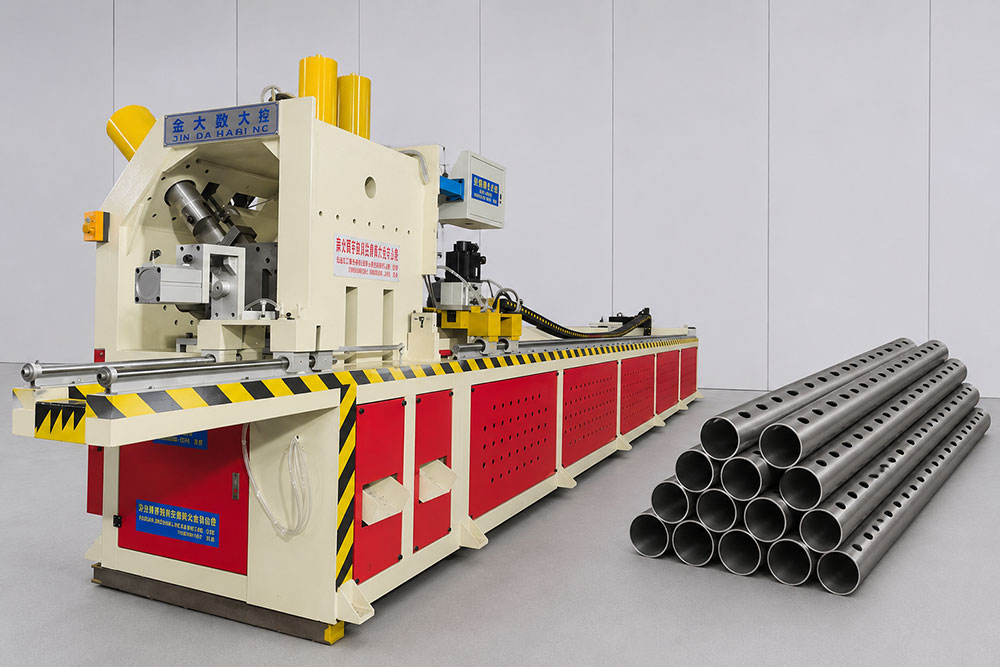
Metal fabrication has changed from a labor-heavy trade into a production system that depends on accuracy, repeatability, and speed. In the past, many workshops could rely on manual layout, drilling, and basic punching to complete daily jobs. Today, that is rarely enough. Customers expect shorter lead times, more stable quality, and products that fit together correctly without rework at the installation stage. At the same time, factories face pressure to reduce labor dependence, control material waste, and improve output without sacrificing quality. This is exactly where the CNC punching machine has become so important.
Many people think punching is only a simple step in the production process. A hole is made in the material, and the part moves forward. But anyone who has worked in a real workshop knows that punching affects much more than that single hole. It influences whether a bracket lines up during assembly, whether a support member can be bolted correctly, whether a rack system remains standardized across a batch, and whether downstream departments spend time producing parts or correcting them. A weak punching process quietly creates problems for the rest of the factory. A strong punching process, on the other hand, makes the entire workflow easier to control.
This is why CNC punching is no longer viewed as just another machine function. It is viewed as a production method. By replacing repeated manual positioning with programmed movement, the factory can control one of the most repetitive operations in fabrication more effectively. That change affects speed, quality, labor efficiency, and overall process stability. For companies processing angle steel, channel steel, flat bar, square tube, round pipe, and other profile materials, CNC punching has become one of the most practical ways to improve manufacturing performance.
This article explains CNC punching from a broader, practical perspective. It covers where the machine is used, how it works, how it should be operated, and what real value it creates for industrial production. For readers who want a clear and useful understanding of CNC punching technology, this guide provides a solid starting point.
Why Punching Is More Important Than It Looks
In many factories, the processes that attract the most attention are cutting, welding, bending, or surface finishing. These steps are visible, and they clearly shape the final product. Punching often receives less attention because it seems simple. Yet the quality of punching can determine whether those later processes run smoothly or become inefficient.
Consider a part with holes that are slightly off-position. On the surface, it may still look acceptable. But once it reaches assembly, the problem becomes clear. Bolts do not line up properly. Workers need to force parts into position. Extra drilling or grinding may be required. The same issue appears in welded supports, storage systems, installation brackets, and many other fabricated products. A small positioning error in punching can create a much larger problem later.
This is one reason repeated hole processing often becomes a hidden bottleneck in fabrication. Manual measuring takes time. Rechecking positions slows the operator down. Repeated alignment introduces variability between workers and shifts. Even skilled operators can produce slightly different results over a long day of repetitive work. These differences may seem small, but across larger production runs they affect output, planning, and consistency.
CNC punching changes that situation by turning repeated manual decisions into a stored process. Once the pattern is confirmed, the machine applies it again and again. This reduces the number of tasks that depend on repeated operator judgment. As a result, the punching stage becomes more repeatable, the process becomes easier to standardize, and the factory gains more confidence in its own output. That is why CNC punching should not be understood only as a machine that makes holes. It should be understood as a way to stabilize one of the most sensitive stages in production.
What a CNC Punching Machine Actually Does
A CNC punching machine is a machine tool that punches holes, slots, and shaped openings into metal according to programmed instructions. CNC means Computer Numerical Control, which tells us that movement and operation are guided by digital input rather than relying only on manual positioning. This technical definition is useful, but the practical meaning is even more important.
In a manual process, the worker often measures a location, aligns the material, punches or drills the hole, then repeats the same sequence for the next position. In a CNC process, the hole pattern is entered into the control system and repeated automatically. The operator still has a vital role in programming, setup, inspection, and supervision, but much of the repeated positioning work is transferred from the worker to the machine. That is where the real efficiency comes from.
Different CNC punching machines are built for different materials and workpiece forms. Some are intended for flat materials, while many industrial models are designed for angle steel, channel steel, square tube, round pipe, flat bar, or rectangular profiles. Some machines are dedicated punching systems. Others combine punching with cutting or related processing steps. The exact form varies according to production need, but the central purpose remains the same: to make repeated punching faster and more consistent.
This matters because industrial value comes from repetition, not from isolated success. A factory does not gain much from making one correct part if the next hundred parts are inconsistent. The real strength of CNC punching is that it allows a confirmed process to be repeated over time. That repeatability is what helps transform workshop operations from labor-dependent routines into more controlled production systems.
Where CNC Punching Machines Are Commonly Used
One of the strongest reasons CNC punching is so widely adopted is that many industries rely on repeated punched features. The machine is not limited to one market. It supports a broad range of fabricated metal products where consistent hole patterns are essential.
A major application area is structural support and building-related fabrication. Brackets, frames, connectors, and installation members often require exact hole positions so they can be assembled, fastened, or installed efficiently. For companies producing building support parts, punching accuracy directly affects later assembly quality and installation speed.
Warehouse and logistics equipment is another strong application area. Rack uprights, support beams, storage frames, and connection members frequently use evenly spaced holes repeated across many parts. A small difference in spacing can affect compatibility throughout the system. That is why CNC punching is highly valuable in warehouse racking systems( and similar standardized products.
The solar industry has also become an important user of punched profile components. Solar brackets, rails, and support structures often need repeated punched positions for fasteners and installation hardware. Since these components are typically produced in batches, CNC punching offers a very efficient solution. This makes solar mounting supports a clear example of where the technology creates strong practical value.
Another major field is tube and profile processing. Square tube, round pipe, rectangular sections, angle steel, and channel steel are used in machine frames, fencing, industrial supports, furniture, and custom fabricated assemblies. When content refers to square tube applications, the most helpful link is often a relevant case page, because the user can see a real processing scenario rather than only a general machine description.
In addition to these industries, CNC punching can also be used in transport components, enclosure parts, agricultural supports, equipment frames, and many other fabricated products. The specific market may change, but the core requirement remains the same: repeated hole-making with higher efficiency and more consistent positioning.
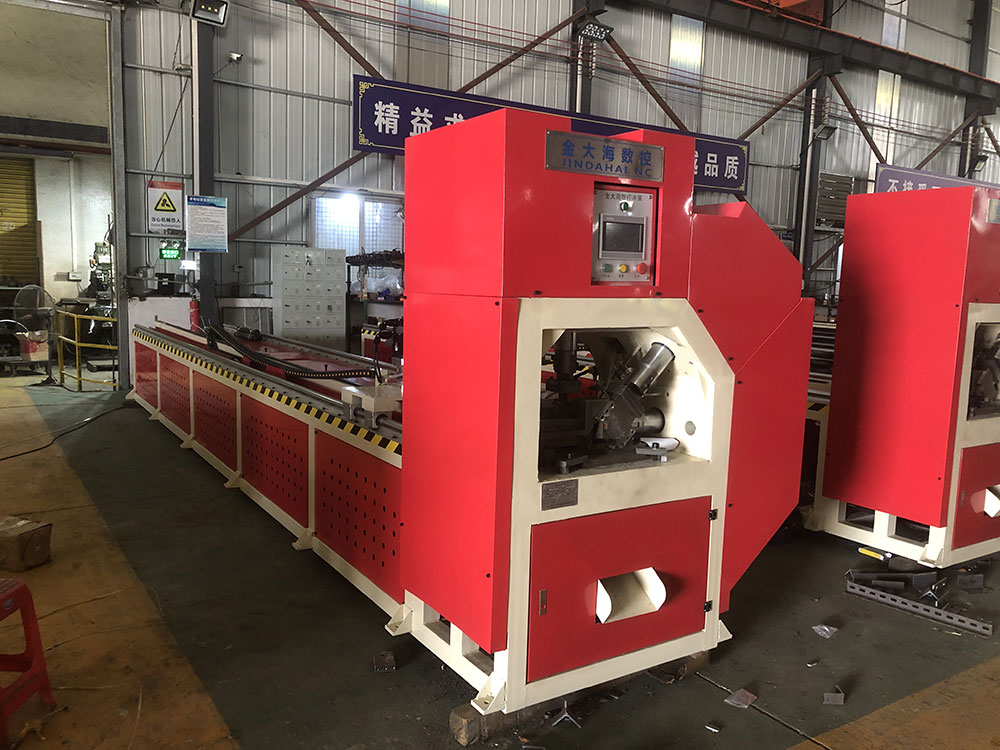
What Materials and Profiles Can Be Processed
The materials processed by a CNC punching machine depend on the machine structure, punching force, tooling arrangement, and how the material is supported during the cycle. In general, these machines are widely used on mild steel, stainless steel, aluminum, galvanized steel, and selected alloys. Thickness range varies according to the model, so factories need to match the equipment to their actual production conditions rather than relying on broad assumptions.
Profile shape is just as important as material type. Many CNC punching systems are used for angle steel, channel steel, flat bar, square tube, round pipe, and rectangular sections. Some machines are designed for heavier structural work, while others are better suited to lighter profiles or simpler applications. That is why the correct machine choice must begin with the actual products being made every day in the workshop.
Material handling also matters more than many buyers first realize. A long workpiece may need proper support along its length. A thin-walled profile may require different tooling behavior from a heavier section. If the workpiece sags, shifts, or vibrates during feeding, punching accuracy may suffer even when the machine is otherwise well designed. In real production, accuracy depends not only on force and control software, but also on the stability of the workpiece throughout the process.
Tooling is another essential part of performance. Punch and die selection affects edge quality, burr formation, wear rate, and dimensional consistency. A machine with sufficient force can still produce poor results if tooling is mismatched or worn. Factories that achieve good long-term performance usually understand that punching is not a one-part system. Machine, tooling, material, and handling all need to work together.
How the CNC Punching Workflow Operates
The operating logic of CNC punching is not complicated, but the production value becomes clearer when we look at how it works across a real batch. The first stage is job preparation. The operator reviews the drawing or production requirement and confirms the material type, profile form, hole diameter, hole spacing, quantity, and sequence. This information is then entered into the control system.
Once the program is ready, the material is loaded onto the machine. Depending on the setup, loading may be manual or supported by handling devices. For longer materials, support structures are often necessary to keep the workpiece level and stable. Stable support is important because accurate punching begins with stable positioning.
The next stage is feeding and positioning. The workpiece is moved to the programmed location. Many machines use servo-based feeding because it improves repeatability over repeated cycles. When the material reaches the correct point, the punch descends through the workpiece into the die and forms the hole. The machine then moves the material to the next position and repeats the process according to the programmed sequence.
This repeated cycle is what makes CNC punching different from manual work. The operator does not need to measure and mark every hole location one by one. The machine stores the logic and reproduces it. That saves time, reduces variation, and makes the process easier to standardize over larger production runs.
Once punching is completed, the part continues to the next stage. It may be cut, welded, bent, coated, or assembled depending on the product. This is why the true value of CNC punching should never be measured only at the punching station itself. A correctly punched part supports smoother downstream work, while an inaccurate part creates more effort for everyone after it.
How to Use a CNC Punching Machine Properly
A CNC punching machine improves performance only when it is used with discipline. Because the process is fast and repeatable, weak preparation can create repeated mistakes just as quickly as good preparation creates repeated quality. Correct operation therefore begins before the machine starts running.
The first step is careful drawing review. Hole position, spacing, orientation, material size, and all relevant job details should be checked before production begins. A small programming mistake at the start can affect every part in the batch, which is why setup accuracy is so important.
The second step is tooling selection. Punch and die choice must match the material thickness, material type, and hole shape. If tooling is wrong, the result may include burrs, rough edges, unstable hole size, or unnecessary wear. Tool condition must also be monitored. Even the right tooling loses effectiveness once wear becomes serious.
The third step is proper clamping and support. If the workpiece shifts during feeding or punching, the hole pattern will no longer match the program accurately. Long profiles especially need reliable support to prevent sagging or movement. Many accuracy issues blamed on the machine actually begin with weak material handling.
The fourth step is first-piece inspection. Before moving into full production, the operator should check a sample part carefully. Hole position, spacing, dimensions, and edge quality all need to be confirmed. This is one of the simplest and most effective ways to prevent large-scale errors.
The fifth step is monitoring during the run. CNC automation reduces repeated manual actions, but good operators still watch the process closely. Changes in sound, vibration, tool marks, or feed behavior can reveal problems before they spread through the entire batch.
Finally, maintenance must be treated as a routine production task. Cleaning, lubrication, clamp inspection, and tooling care all help protect long-term stability. A well-maintained machine supports predictable output, which is one of the most valuable assets in production planning.
What Benefits CNC Punching Brings to Production
Factories adopt CNC punching for several reasons, and speed is only one of them. One obvious advantage is improved throughput. Once the job is programmed and verified, the machine can process repeated hole patterns much faster than manual measuring and drilling. This is especially important in medium- and large-volume production.
Another key benefit is repeatability. Because the same stored coordinates are used again and again, the hole pattern remains more consistent across the batch. This helps downstream processes such as welding, assembly, and fastening because parts fit together more predictably.
Labor efficiency is also improved. Manual punching and drilling require repeated measuring, alignment, and checking. CNC punching reduces those repetitive tasks and allows operators to focus more on preparation, inspection, and control. This leads to better use of labor in the workshop.
Material waste can also be reduced. Incorrect hole positions often lead to scrap or rework. A more stable punching process helps protect first-pass quality. Over time, even small reductions in waste can make a noticeable difference in cost.
Production planning becomes easier as well. When the factory understands its cycle time and can depend on more stable output, scheduling becomes more reliable. This improves coordination across departments and helps the business communicate delivery expectations more confidently.
Most importantly, CNC punching improves the stability of the whole production line. A correctly punched component moves into later processes in better condition. That means the value of CNC punching extends beyond the punching step itself and supports overall manufacturing performance.
How CNC Punching Supports Smarter Production
Modern factories are not only trying to move faster. They are trying to become more measurable, more predictable, and easier to manage. CNC punching fits this direction because it transforms one of the most repetition-heavy tasks in metal fabrication into a programmable process.
In a smarter production environment, managers want to know how long a job should take, how stable the output will be, and whether the same result can be repeated across future orders. Manual methods make those questions harder to answer because the process depends more heavily on operator behavior. CNC punching makes them easier to answer because the process is built around stored logic.
At the same time, CNC punching still supports flexibility. A factory may not make the same exact part every day, but it may still produce many related product families with similar hole patterns. CNC programming allows those changes to be handled without rebuilding the process completely from zero each time. This balance between repeatability and adaptability is one reason the machine remains so useful.
That is why CNC punching should be seen as part of a smarter production system rather than only a single machine purchase. It helps factories create more organized, more dependable workflows without losing the ability to serve changing orders.
How to Choose the Right CNC Punching Machine
Choosing the right machine begins with understanding the real work. A factory focused on angle steel supports has different needs from one focused on square tube assemblies or lighter profile components. Material type, profile shape, thickness, hole pattern complexity, and batch size all influence the appropriate machine design.
Production rhythm matters too. A workshop that mainly handles repeated batch orders may care most about feed stability and long-run output. A workshop doing more customized work may care more about programming convenience and setup flexibility. The best machine is not always the biggest or most complex one. It is the one that matches the real workflow of the factory.
After-sales support is another major factor. Tooling availability, spare parts, training, and service response all influence long-term machine value. A machine should be evaluated by how reliably it supports daily production, not just by what appears in a brochure.
This logic also applies to website structure. Broad machine keywords are usually best linked to the main product page, while application-focused terms are usually better linked to case pages that show real-world processing use. That approach makes internal linking more helpful for both readers and search engines.
Common Mistakes Factories Should Avoid
A common mistake is underestimating the importance of the punching stage. Because the operation looks simple, some workshops assume it does not need close control. In reality, punching errors often create some of the most frustrating downstream problems.
Another mistake is skipping first-piece inspection. Even a reliable machine can produce a wrong batch if the program or setup is incorrect. Checking a sample before full production remains one of the best habits in fabrication.
A third mistake is ignoring tooling wear. Operators may focus on the machine frame while punches and dies gradually lose quality. Poor edge condition and inconsistent holes often begin with tooling, not with the machine body.
A fourth mistake is choosing equipment that does not fit the actual product mix. Buying based on general claims instead of real profile and material needs often leads to weak long-term results.
Finally, poor maintenance creates avoidable instability. Cleaning, lubrication, inspection, and tool care are not optional extras. They are part of protecting process quality.
Final Thoughts
A CNC punching machine is more than a machine that makes holes. It is a production tool that helps turn repeated work into repeatable output. In fabrication environments where profile processing and punched features are common, that change affects speed, consistency, labor use, and overall process control.
For factories that want better workflow stability and more dependable product quality, CNC punching is not just a machine upgrade. It is a production upgrade. It strengthens one of the most important early-stage processes in metal fabrication and helps the rest of the workflow run more smoothly.
As manufacturing continues to demand faster delivery, higher accuracy, and better efficiency, CNC punching machines will remain an important part of modern fabrication.