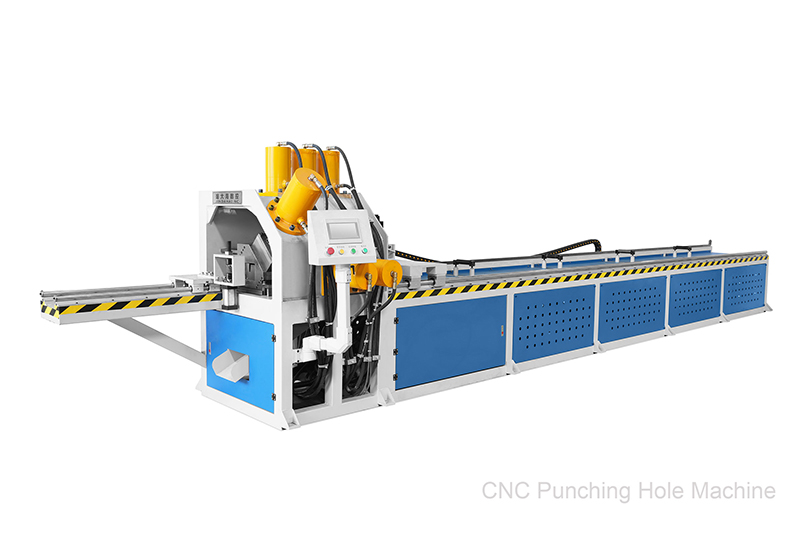
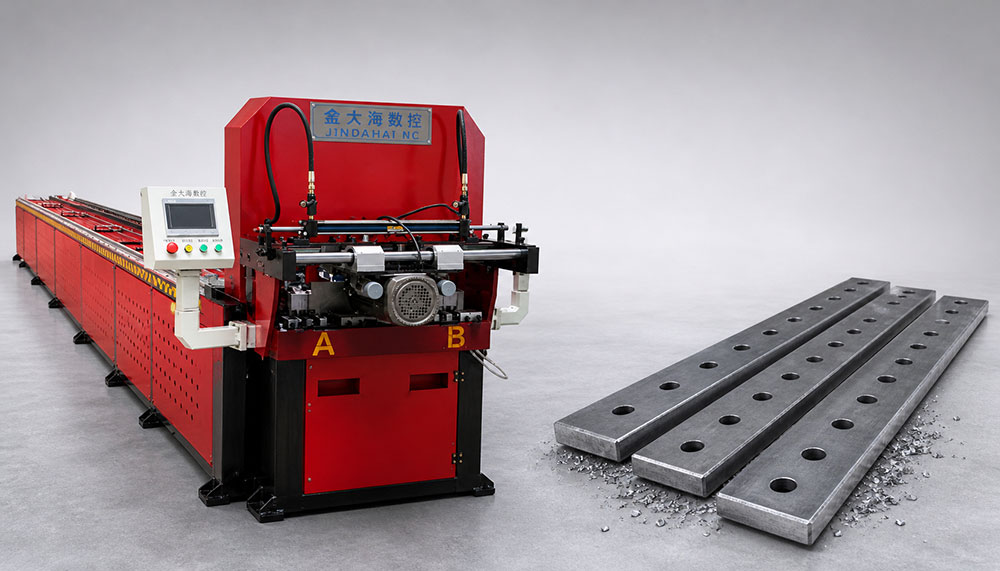
In modern manufacturing, the ability to process metal parts quickly and accurately has become more important than ever. Customers expect fast delivery, reliable quality, and products that can move directly into assembly without time-consuming adjustments. At the same time, factories need to reduce labor intensity, minimize waste, and keep production costs under control. Under these conditions, machines that improve repeatability and production efficiency are no longer optional upgrades. They are becoming a basic requirement. This is one reason why the CNC punching machine has become a key part of many metal fabrication workshops.
Punching may seem simple from the outside. A hole is formed in metal, and the workpiece moves on to the next process. Yet in actual factory production, punching has a much greater influence than people first expect. Hole position affects assembly accuracy. Repeated spacing affects whether products remain standardized from part to part. Clean and consistent punching also affects welding, fastening, coating, packaging, and final installation. If punching quality is unstable, the entire production chain becomes more difficult to manage. If punching is controlled well, the downstream process becomes faster, easier, and more predictable.
For this reason, CNC punching is not just about speed. It is about creating a more reliable production method. Instead of depending on repeated manual measuring and positioning, the machine follows programmed instructions. That changes the nature of the work. The factory spends less time repeating basic operations and more time controlling the process as a whole. This is especially useful in industries that require large numbers of repeated holes in profile materials such as square tube, round pipe, angle steel, channel steel, and flat bar.
This article explains CNC punching from a practical and educational angle. We will look at what the machine is, where it is used, how it works, how it should be operated, and what real advantages it brings to industrial manufacturing. For readers who want a clear introduction to this technology, understanding these basics is the first step.
What Makes CNC Punching Different
Many factories began with manual punching or repeated drilling because those methods were familiar and easy to start with. For small quantities or very simple parts, they can still be workable. But once production becomes more repetitive, those methods often become inefficient. Operators need to measure hole positions again and again. Material must be aligned carefully for every cycle. Human attention becomes a major part of the process, which means fatigue and small errors can gradually affect quality.
What makes CNC punching different is not simply that it uses automation. The real difference is that it turns repeated manual judgment into a repeatable digital workflow. Instead of asking the operator to re-create the same pattern over and over, the machine performs a programmed sequence. This reduces variation, improves consistency, and allows the factory to reproduce the same part standard more easily across multiple batches.
That difference matters because manufacturing is rarely judged by one successful part. A workshop may be able to make one correct part manually, but industrial production depends on making the same correct part again and again. In a competitive market, consistency often matters just as much as speed. A machine that can hold spacing, maintain alignment, and repeat a confirmed hole pattern across dozens or hundreds of pieces gives the factory a stronger foundation for stable production.
Another important difference is how CNC punching supports workflow planning. Manual methods can be harder to estimate because production speed changes according to operator skill, complexity of the layout, and how often small errors need correction. CNC punching makes the process more predictable. Once the program and setup are correct, output becomes easier to estimate, which improves scheduling and delivery planning.
This is why many manufacturers see CNC punching as more than a tool for making holes. They see it as a system for controlling one of the most repetition-heavy parts of fabrication. In that sense, CNC punching improves not only one machine station, but the overall discipline of production.
Where CNC Punching Machines Are Used
CNC punching machines are used in a wide range of industries because repeated hole-making is required in many types of metal products. One of the most common application areas is structural fabrication. Brackets, supports, connectors, and installation members often need accurate holes so they can be bolted or assembled correctly. This makes CNC punching highly useful for manufacturers producing steel support components.
Another major application area is warehouse and storage equipment. Rack uprights, shelf supports, beams, and connection members frequently use evenly spaced hole patterns repeated across large quantities of parts. In such products, small differences in spacing can cause assembly problems later. For this reason, CNC punching is widely valued in storage rack systems and other logistics-related metal products where standardization matters.
The renewable energy sector is also a strong match for CNC punching. Solar support parts often require repeated hole positions for bolts, brackets, and assembly fittings. Since these components are usually produced in standardized sizes and medium or large batches, they benefit greatly from a more automated punching process. This is why solar mounting structures are among the most practical industrial examples of CNC punching applications.
Tube and profile processing is another important field. Square tubes, round pipes, rectangular profiles, angle steel, and channels are used in many fabricated products, from industrial frames to fences, machine supports, and custom metal assemblies. In this context, article references to profile punching applications often make more sense as links to case pages, because readers can see how the machine is actually used with specific profile types.
Beyond these sectors, CNC punching may also appear in enclosure fabrication, transportation parts, agricultural structures, furniture frames, equipment supports, and many other metal processing fields. The industries vary, but the reason for choosing CNC punching is similar in each case. Factories need repeated hole patterns, reliable positioning, and a smoother production flow than manual methods can usually provide.
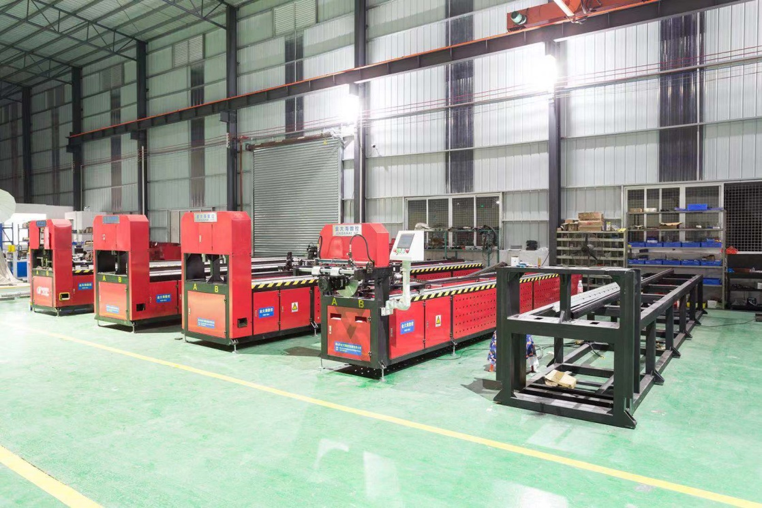
How a CNC Punching Machine Works
Although machine designs differ, the working principle of a CNC punching machine is relatively straightforward. The machine combines a control system, a feeding system, a clamping mechanism, tooling, and a structural frame strong enough to handle repeated industrial use. Together, these elements allow the machine to process metal according to programmed hole positions and sequence.
The process usually begins with job preparation. The operator reviews the drawing or production requirement, confirms the material type and dimensions, and enters the necessary hole information into the control system. This may include hole diameter, spacing, number of holes, sequence, feeding distance, and sometimes part length or orientation. In many workshops, the success of the whole job depends on this stage being done carefully.
Once the program is ready, the raw material is loaded onto the machine. Depending on the type of equipment and the production volume, loading may be manual or assisted by handling devices. For longer profiles, supports are often needed so that the workpiece remains level and stable during feeding. If the material is not held securely, punching accuracy can suffer even if the control system is correct.
The feeding system then moves the material into position. This is one of the most critical steps in the process because accurate punching depends on accurate positioning. Many CNC punching machines use servo-controlled feeding for better repeatability. After the workpiece reaches the programmed coordinate, the punch moves downward through the material into the die and forms the hole. The machine then advances to the next position and repeats the cycle automatically.
This repeated movement is where CNC punching creates real value. Instead of requiring the operator to locate and mark every hole manually, the machine applies the same logic throughout the batch. Once the setup is confirmed, the process becomes more controlled and much easier to repeat.
After punching is complete, the part usually moves to the next production stage, such as cutting, welding, bending, coating, or direct assembly. This is why the punching stage should never be judged only by whether it can create a hole. It should also be judged by whether it prepares the part correctly for everything that comes next.
How to Use a CNC Punching Machine Correctly
A CNC punching machine can improve productivity greatly, but only if it is used with the right operating discipline. Automation does not remove the need for preparation. In fact, because the machine can repeat a sequence quickly, mistakes made at the setup stage can also be repeated quickly. Good results depend on careful preparation, correct tooling, stable clamping, and regular inspection.
The first step is confirming the drawing and job requirement. Hole position, spacing, part orientation, material thickness, and quantity must all be checked before the machine begins production. A programming mistake at this stage can affect an entire batch, so operators need to treat setup seriously rather than as a minor routine task.
The second step is choosing the correct tooling. The punch and die must match the material and the required hole shape. If the tooling is not suitable, the results may include burrs, poor edge quality, abnormal wear, or inconsistent hole size. Even with the correct tooling type, wear condition matters. A worn tool can reduce quality long before the machine itself shows any sign of trouble.
The third step is securing the material properly. If a workpiece shifts during feeding or punching, hole position accuracy will be affected immediately. This is especially important when processing long tubes or profiles. Proper support and clamping are essential for keeping the material stable from the first punch to the last.
The fourth step is first-piece inspection. Before moving into full production, the operator should inspect a sample part carefully. Hole position, spacing, shape, and edge quality should all be confirmed. This step is one of the simplest and most effective ways to reduce scrap and prevent a batch of wrong parts from being produced.
The fifth step is monitoring the machine during operation. Although CNC punching reduces repeated manual involvement, the operator still needs to observe machine sound, vibration, feed behavior, and visible tool marks. Small irregularities often appear before larger problems develop.
Finally, maintenance should be treated as part of regular production practice, not as something optional. Cleaning, lubrication, clamp inspection, and tooling care all contribute to more stable results and longer machine life. A well-maintained machine supports a much more predictable workflow than one that is only repaired after problems appear.
What Benefits CNC Punching Brings to Industry
The value of CNC punching is not limited to speed. Its benefits are broader and often more important than simple cycle time alone. One of the clearest benefits is improved repeatability. Because the machine follows programmed coordinates, the same hole pattern can be reproduced much more consistently than with repeated manual measuring. This improves part compatibility and helps downstream processes run more smoothly.
Another major benefit is better labor efficiency. Manual punching or drilling requires a great deal of repeated positioning, marking, and checking. CNC punching reduces those repetitive tasks and allows operators to focus more on setup, supervision, and quality control. In a factory where labor costs matter and experienced workers are valuable, this can be a strong advantage.
Higher throughput is also important. Once the program is ready and the setup has been verified, the machine can continue punching repeated patterns with much less interruption than manual methods. This is especially useful in medium- and large-batch production where output speed directly affects delivery performance.
Material savings are another real advantage. When hole positions are more consistent, fewer parts need correction or rejection. That means less waste and less time spent on rework. Over a large number of parts, even a small reduction in scrap can make a meaningful difference to total production cost.
CNC punching also improves planning. A factory that understands its machine cycle, setup time, and output consistency can schedule work more confidently. This improves coordination between departments and reduces uncertainty around delivery.
Perhaps most importantly, CNC punching helps stabilize the entire production line. A punched component that enters the next process in the correct condition makes welding easier, assembly faster, and final quality more reliable. In that sense, CNC punching strengthens far more than one station in the workshop. It strengthens the overall manufacturing process.
How CNC Punching Compares with Traditional Methods
Traditional punching and drilling methods are not useless. They can still be suitable in low-volume work, especially where production is irregular or where budget is very limited. Manual systems may also remain useful for simple tasks where maximum speed and repeatability are not required.
However, once production moves toward repeated batches and tighter quality expectations, the limitations of traditional methods become clearer. Manual processing depends more heavily on operator concentration and experience. It usually requires more repeated measuring and more frequent corrections. It also becomes harder to standardize across different workers or shifts.
CNC punching reduces those weaknesses by shifting the process from repeated manual action to repeated programmed action. This change is more important than it may first appear. It means the same logic can be applied again and again with less variation. That is why many factories eventually move away from manual methods as their order volume grows or as customer requirements become stricter.
Another difference is how easily the process can be repeated over time. A manually produced part may be correct today, but reproducing it exactly next month can depend heavily on the same worker using the same technique. With CNC punching, a confirmed program provides a more stable base for repeat production. This matters to factories that want to maintain consistent quality across multiple orders.
How to Choose the Right CNC Punching Machine
Choosing the right machine should begin with the factory’s actual production needs. A business that mainly processes angle steel supports will not necessarily need the same type of equipment as a business focused on square tubes or lighter profile sections. Material type, shape, thickness, hole requirements, and batch size all influence what machine design is most suitable.
Production rhythm is another important factor. A workshop that runs large repeated batches may care most about feed stability, repeatability, and output efficiency. A workshop handling smaller customized jobs may give more weight to flexibility and ease of setup. The best machine is not always the biggest or most complex one. It is the one that best matches the real workflow of the factory.
Tooling, maintenance requirements, and after-sales support should also be considered. Spare parts availability, training, service response, and tool supply can all affect long-term machine value. A machine should not be judged only by its appearance or one technical number. It should be judged by how well it supports daily production over time.
The same logic also applies to how your website should present the machine. Broad machine-related terms are usually best linked to the main product page, while specific application phrases are usually better linked to case pages that show real processing scenarios. That structure makes internal links more useful for both readers and search engines.
Common Mistakes Factories Should Avoid
One common mistake is treating punching as a minor process. In reality, inaccurate hole-making can create major downstream problems. If a factory ignores punching quality because the step seems simple, it may end up paying for those errors later through rework, delay, or poor assembly performance.
Another mistake is skipping first-piece inspection. Even if the machine is reliable, the program or setup can still be wrong. Checking one sample before full production is one of the most effective quality habits any workshop can have.
A third mistake is neglecting tooling condition. Operators may focus on the machine body while forgetting that worn punches and dies can gradually reduce quality. Poor hole edges and unstable size often start with tooling wear, not with control failure.
A fourth mistake is choosing a machine that does not match the real product mix. Buying equipment based on broad claims rather than actual material shapes and order types can lead to poor fit between machine capability and daily work.
Finally, some factories underestimate the value of regular maintenance. A machine used continuously in production needs cleaning, inspection, and lubrication to remain stable. Preventive care is usually far cheaper than waiting for a problem to stop the line.
Why CNC Punching Will Remain Important
Manufacturing keeps changing, but the need for repeatability and process control is not going away. If anything, those needs are becoming stronger. Factories are expected to produce more accurately, more consistently, and with less waste. CNC punching supports all of those goals because it improves one of the most repetition-dependent steps in metal fabrication.
It also fits well with the broader direction of modern factories. Companies want production that is easier to measure, easier to repeat, and easier to manage across multiple orders. CNC punching helps create that environment by turning repeated hole-making into a programmable and more predictable process.
At the same time, the technology remains practical. It is not valuable because it sounds advanced. It is valuable because it solves everyday workshop problems in a direct way. It reduces repeated measuring, improves spacing consistency, supports faster batch output, and helps downstream processes run more smoothly.
For these reasons, CNC punching will continue to be an important part of metal fabrication. Its value comes from helping factories produce the right parts in a more controlled and efficient way, and that need is not going to disappear.
Final Thoughts
A CNC punching machine is more than a machine for making holes. It is a production tool that helps factories improve repeatability, reduce unnecessary manual effort, and support more stable manufacturing. In industries that rely on profile processing and repeated punched parts, these improvements have a direct effect on efficiency, cost control, and product quality.
For companies that want to move toward smarter production, CNC punching offers a practical and proven way to strengthen the workflow. It does not just speed up one task. It helps make the whole production system more reliable.
That is the real value of CNC punching, and that is why it remains so important in modern industrial manufacturing.