Project Story: Improving Flat Bar Processing in Indonesia
In the automotive parts manufacturing industry, production efficiency and consistency are critical for maintaining competitiveness. Components such as flat bar parts are often produced in large volumes, requiring precise hole positioning, shaped cutting, and consistent dimensions.
In Indonesia, a manufacturer specializing in automotive components faced increasing pressure to improve output while maintaining product quality. Their production involved flat bar processing with punching, shaping, and cutting operations.
This case study shows how the company upgraded its workflow by adopting a CNC flat bar punching and cutting machine, enabling multiple operations to be completed within a single production cycle.
Background: Flat Bar Components in Automotive Manufacturing
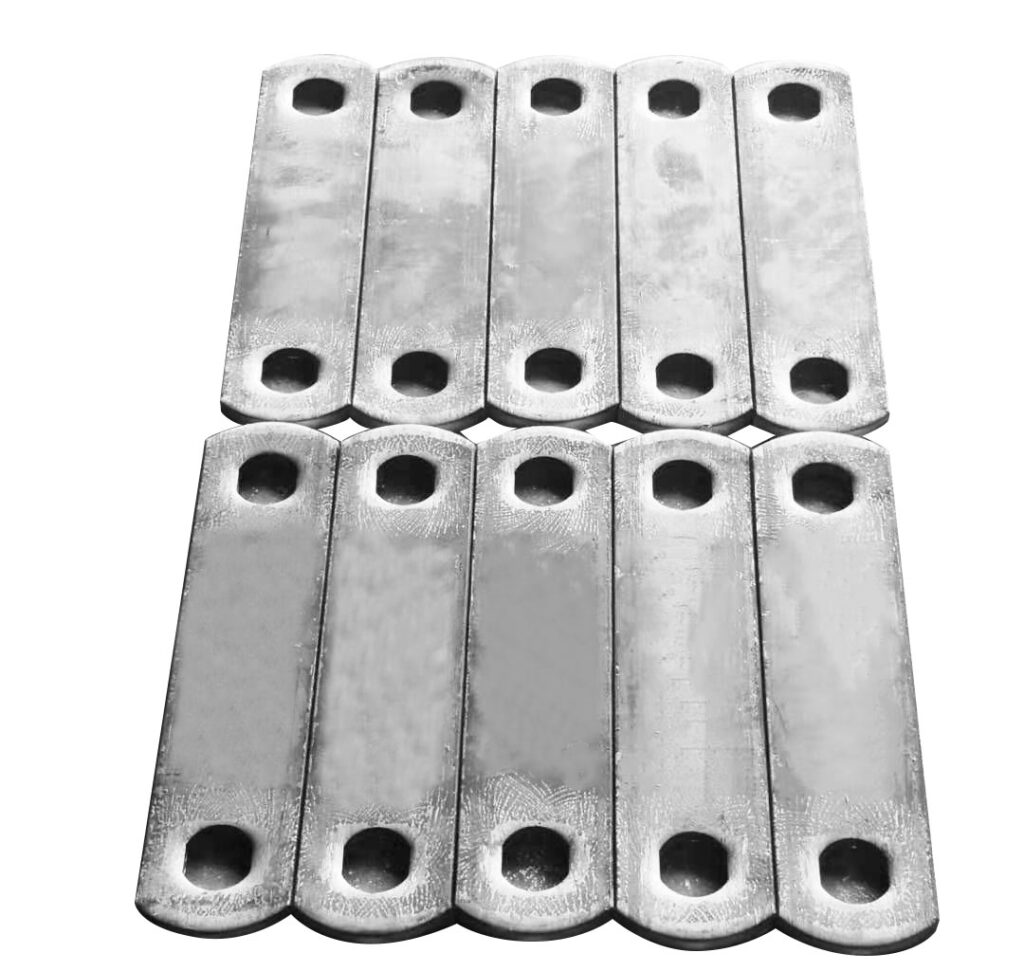
The customer produces flat bar components used in automotive assemblies. These parts typically require:
Round hole punching
Semi-circular shaping
Cutting into short-length finished parts
Because these components are used in large quantities, consistency across batches is essential.
The material is processed from long flat bars, which must be converted into uniform pieces for further assembly or integration into automotive systems.
Challenges with Traditional Processing
Before upgrading, the manufacturer relied on multi-step production methods.
Flat bars were first cut into sections, then processed for hole punching and shaping, often requiring separate machines or manual handling.
This created several operational challenges.
Production efficiency was limited due to multiple processing stages.
Manual handling increased labor costs and reduced workflow stability.
Maintaining consistent positioning for both holes and shapes was difficult.
Frequent adjustments slowed production and affected output consistency.
As demand for automotive parts increased, the existing process became inefficient and costly.
Defining the Requirements
To improve production efficiency, the customer defined several key requirements.
The system needed to integrate punching, shaping, and cutting into one workflow.
Flat bars had to be processed continuously from long material into finished components.
The machine needed to support stable positioning for consistent results.
Semi-automatic feeding was required to improve efficiency while keeping operation simple.
The goal was to achieve high-volume production with reduced labor involvement.
The Proposed Solution: Integrated Flat Bar Punching Line
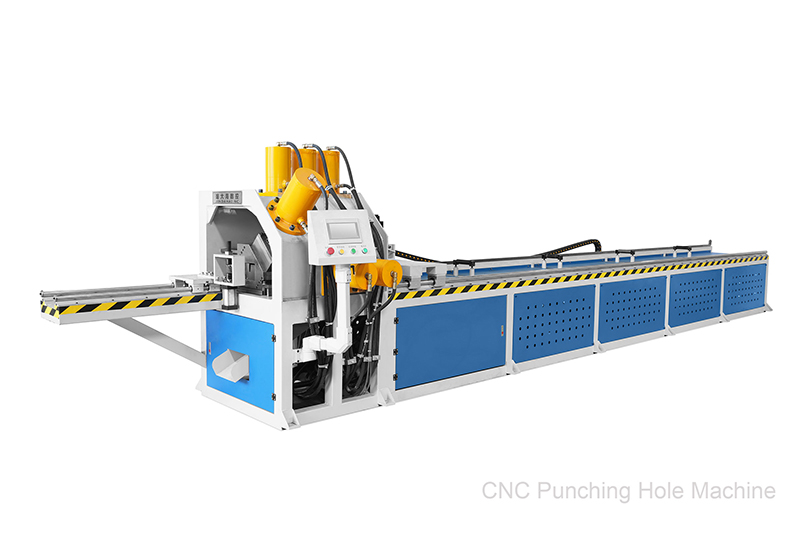
Based on these requirements, we provided a CNC punching solution for flat bar components designed for automotive part production.
The system integrates punching, shaping, and cutting functions into one machine, eliminating the need for multiple processing steps.
Instead of emphasizing detailed specifications, the configuration focuses on stability, efficiency, and continuous production capability.
Key features include:
Integrated punching and shaping system for multi-process operations
Continuous feeding structure for long flat bar materials
Cutting function for producing uniform finished parts
CNC control ensuring consistent positioning
This allows flat bars to be processed from raw material to finished components in one workflow.
Continuous Workflow for High-Volume Production
In daily production, flat bar materials are arranged on the loading system and fed into the machine automatically.
The system performs hole punching, shaping, and cutting in sequence, producing finished components in a continuous flow.
This eliminates intermediate handling and reduces production time significantly.
Designed for Automotive Production Efficiency
Automotive component manufacturing requires both precision and high output.
This solution is designed to meet those demands by:
Reducing production steps through integrated processing
Ensuring consistent hole and shape positioning
Supporting continuous operation for large batch production
By combining multiple operations into one system, the machine helps maintain stable production under high demand.
Key Benefits for the Automotive Industry
Compared with traditional processing methods, this solution offers clear advantages.
Production efficiency increases significantly due to reduced steps.
Labor costs decrease as fewer operators are required.
Consistency improves through CNC-controlled positioning.
Material utilization becomes more efficient with optimized cutting.
The system supports stable, repeatable output, which is essential for automotive part manufacturing.
Supporting Scalable Automotive Manufacturing
As automotive demand continues to grow, manufacturers must adopt more efficient production methods.
By implementing an integrated punching and cutting system, the customer established a production workflow capable of handling high-volume orders with improved stability.
This allows the manufacturer to scale production while maintaining consistent quality.
Conclusion
This project demonstrates how an automotive parts manufacturer in Indonesia improved its production process by upgrading to a more efficient system.
By adopting a CNC flat bar punching and cutting solution, the company simplified its workflow, reduced labor costs, and improved production consistency.
For manufacturers producing high-volume metal components, this approach provides a practical and scalable solution for modern production.