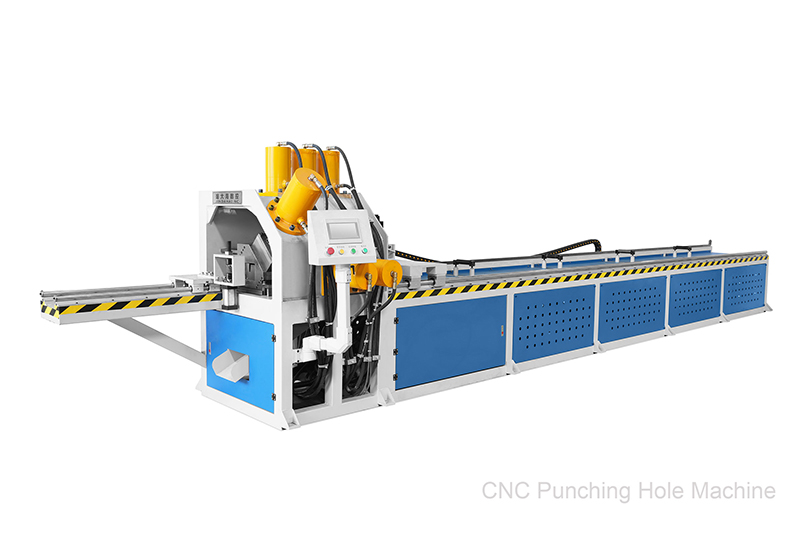
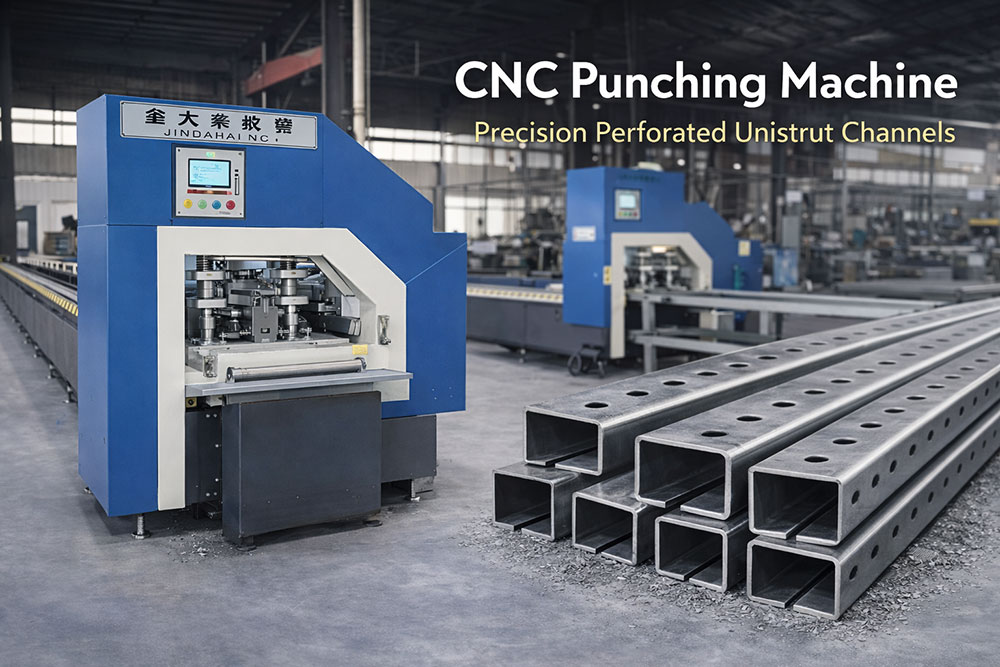
Metal fabrication has become much more demanding than it was in the past. Customers want better accuracy, shorter delivery times, and more stable quality, while manufacturers must control labor costs, reduce waste, and keep production moving even when order requirements change. Under these conditions, factories are not only looking for machines that can perform a single action. They are looking for equipment that can improve the overall production system. This is exactly why the CNC punching machine has become so important in modern fabrication.
On the surface, punching looks simple. A hole is made in a metal part and the piece moves to the next step. But in real industrial production, punching affects much more than the hole itself. It affects whether brackets can be assembled easily, whether profiles line up correctly, whether welded structures need rework, and whether downstream teams can keep their own schedules. A small positioning error at the punching stage can easily turn into a larger problem during assembly, coating, or installation. That is why factories do not look at punching as an isolated process anymore. They see it as an important part of overall manufacturing control.
This is also why more companies are shifting away from repeated manual marking and manually controlled drilling or punching for profile work. As production becomes more competitive, factories need methods that are faster, more repeatable, and easier to standardize. CNC punching supports exactly that goal. It reduces repeated manual measurement, lowers the chance of inconsistency between operators, and helps maintain a more predictable workflow across larger batches. For businesses that process angle steel, channel steel, square tube, round pipe, flat bar, and related structural materials, that improvement is not theoretical. It is visible in daily output, labor use, and product quality.
A useful way to understand CNC punching is to stop thinking of it as only a machine function. It is better to think of it as a production method. When implemented properly, it gives the factory more control over how parts are made, how repeatable they are, and how smoothly those parts move into later processes. In a time when manufacturing margins are tighter and customer expectations are higher, that kind of control matters more than ever.
Why Punching Still Matters So Much
In many workshops, cutting and welding often receive more attention because they are more visible and easier to associate with the final product. Punching, however, is one of those core operations that quietly determines whether the rest of the process will go smoothly. If hole spacing is wrong, fastening becomes difficult. If hole position is inconsistent, fitting and alignment become slower. If too much time is spent correcting punched parts, every later process loses efficiency.
This is why punching should never be treated as a minor step. In many products, the punched hole pattern is what makes assembly possible. Whether the final part is used in a support frame, a rack upright, a solar bracket, or an industrial enclosure, hole position often determines whether the part can perform its role without further modification. A weak punching process may not look serious at first, but it creates hidden cost later through rework, slow assembly, and production delays.
Traditional manual methods can still work when production quantity is very low or when the design changes constantly and no repetition exists. But most factories do not live on one-off jobs alone. They depend on repeated production. The same family of parts may be made every week or every month, sometimes in different sizes but with similar processing logic. In that environment, manual marking and repeated drilling consume too much time and introduce too much variation.
CNC punching becomes valuable because it transforms a repeated manual action into a repeatable digital process. Once the correct spacing, hole size, and sequence are entered into the machine, the process no longer depends on the operator re-measuring each position again and again. This brings stability to production. It also reduces the mental load on operators and allows supervisors to manage output with more confidence. In a smarter factory, that consistency is often more valuable than any single speed improvement.
What a CNC Punching Machine Really Does
A CNC punching machine is a metal processing machine that creates holes, slots, and other punched features according to numerical instructions entered through a control system. CNC stands for Computer Numerical Control, which means the machine follows programmed data instead of relying entirely on manual positioning. That is the technical definition, but the practical meaning is more important.
In real production, the machine allows the factory to reproduce the same hole pattern with a much higher level of consistency. The operator inputs the required position, spacing, and sequence, and the machine follows those instructions repeatedly. This reduces dependence on visual alignment, repeated hand measuring, and operator memory. The result is not just faster production. It is more stable production.
Different types of CNC punching machines are designed for different applications. Some are better suited for flat materials. Others are designed for profiles such as square tubes, round pipes, angle steel, channel steel, and flat bar. Some machines only punch, while others combine punching with cutting or additional operations. The structure may vary, but the purpose remains similar: to improve repeatability, reduce manual work, and support smoother metal fabrication.
Factories usually begin to appreciate the real value of CNC punching when they look beyond the first punched part. One good part is not enough. What matters is whether the machine can produce the same good part hundreds or thousands of times without unstable variation. This is where CNC punching proves its industrial value. It makes quality repeatable, and repeatable quality is one of the foundations of profitable manufacturing.
Where CNC Punching Machines Are Used
The use of CNC punching machines is widespread because repeated hole processing appears in many types of metal products. One of the most common application areas is structural fabrication. Brackets, support members, steel connectors, and installation components often require accurate punching so that they can be assembled quickly and securely. When factories produce structural steel supports, stable hole positioning helps ensure that later installation or bolting can be completed more smoothly.
Another major application area is the storage and logistics sector. Rack systems, shelf uprights, support beams, and connector parts often rely on evenly spaced holes repeated across many pieces. Manual processing of this kind of product is time-consuming and vulnerable to spacing errors. For manufacturers of warehouse racking components, CNC punching allows repeated patterns to be produced much more efficiently and with much better consistency.
The renewable energy industry is also a strong example. Solar support systems usually involve brackets, rails, and structural members with repeated hole positions for bolts and assembly points. These products are often produced in volume, which makes them ideal for automated punching. That is why solar mounting rails are a very suitable application for CNC punching technology.
Tube and profile processing is another broad field where CNC punching is highly useful. Square tubes, round pipes, rectangular profiles, angle steel, and channel sections are used in many fabricated products, from industrial frames to fencing systems and equipment supports. When the article discusses square tube processing, the most relevant link is often a specific case page showing that type of application rather than a broad equipment page, because the user can better understand the real production scenario.
Besides these sectors, CNC punching is also used in enclosure manufacturing, machinery frames, agricultural supports, transport accessories, display systems, and many other profile-based metal products. The industries differ, but the production need is similar: accurate holes, repeatable spacing, and better batch efficiency.
How the Workflow Looks in a Real Factory
To understand why CNC punching is so effective, it is helpful to look at the actual production workflow. In a real factory, the process usually begins with drawing review and job preparation. The operator or programmer checks the required dimensions, confirms the material type, and inputs the necessary punching information into the control system. This information may include hole size, hole count, spacing, sequence, and feeding distance.
Once the program is ready, the material is loaded onto the machine. Depending on the type of equipment and the production volume, this may be done manually or with the help of a loading system. For long profiles, support devices are often necessary to keep the material level and stable during movement. Good support is very important because even a precise machine can lose accuracy if the workpiece sags or shifts.
After loading, the feeding system moves the material to the correct punching position. This step is critical. Accurate punching begins with accurate positioning. Many CNC machines use servo-controlled feeding because it allows stable, repeatable movement across multiple hole positions. When the material reaches the correct point, the punch descends and forms the hole through the die. The process then repeats automatically according to the programmed sequence.
The key advantage here is not only that the machine can form a hole. It is that the machine can form the same hole pattern repeatedly across many parts without requiring the operator to start from zero each time. That is what makes CNC punching suitable for real industrial use. It supports batch consistency, reduces setup repetition, and helps maintain production rhythm from one part to the next.
After punching, the part usually moves to the next stage. Depending on the factory’s workflow, that may include cutting, welding, bending, coating, or direct assembly. Because of this, the punching stage should always be evaluated not only by its own speed, but also by how well it supports the next processes. In many cases, the value of CNC punching becomes most visible when downstream teams spend less time correcting parts and more time moving product forward.
What Materials and Shapes Can Be Processed
The range of processable material depends on machine design, punch force, tooling configuration, and the structure of the workpiece. In general, CNC punching machines are widely used on common industrial metals such as mild steel, stainless steel, aluminum, galvanized steel, and some alloy materials. Thickness range varies, so factories need to select a machine that matches their real production needs instead of relying only on general product descriptions.
Shape matters just as much as material. Many CNC punching machines are used for square tube, round pipe, rectangular tube, angle steel, channel steel, and flat bar. Some are optimized for certain profile families, while others are more versatile. This is why machine selection should be based on the actual parts produced in the workshop. A machine designed for lighter tube profiles is not automatically the right choice for heavier structural material. On the other hand, a heavy-duty machine may be unnecessary for lighter repetitive work if the factory’s main products do not require that level of capacity.
Tooling is also a major part of the process. Even if the machine has sufficient power, poor punch-and-die selection can reduce hole quality, cause burrs, increase wear, and make the process less stable. Factories that achieve consistently good punching results usually pay close attention to tooling quality, material condition, and machine setup together. In other words, they do not treat the machine as a standalone solution. They treat punching as a system.
How to Use a CNC Punching Machine Properly
A CNC punching machine can improve efficiency significantly, but only when it is used properly. Automation does not remove the need for preparation and process discipline. In fact, because CNC equipment can produce many parts quickly, correct setup becomes even more important.
The first step is careful review of the drawing and job requirement. The operator should confirm hole type, part orientation, spacing, quantity, and material dimensions before production starts. A small programming mistake can quickly affect an entire batch, so accuracy at this stage is critical.
The second step is correct tooling selection. The punch and die need to match the material thickness, hole shape, and material type. If the tooling is not appropriate, the result may include poor edge quality, burr formation, abnormal wear, or dimensional inconsistency. Tool condition must also be checked regularly. Worn tooling can reduce quality even if the programming is correct.
The third step is material clamping and support. If the workpiece shifts during operation, the punched holes will no longer match the program accurately. Long tubes and profiles often need additional support to maintain feeding stability throughout the cycle. Many positioning issues come not from the control system itself, but from unstable material handling.
The fourth step is first-piece inspection. Before running the full batch, the operator should check a sample part carefully. Hole position, spacing, edge quality, and overall dimensional correctness should all be verified. This simple practice prevents large-scale mistakes and should always be part of standard operating procedure.
The fifth step is monitoring during production. Although the machine automates the punching sequence, the operator still needs to observe sound, vibration, tooling marks, and feed behavior. If something unusual appears, correction should happen early rather than after many parts are completed.
Finally, maintenance matters. Cleaning, lubrication, clamp inspection, and tooling care all contribute to long-term machine stability. A well-maintained machine not only lasts longer, but also produces more reliable results in daily use.
What Benefits CNC Punching Brings to Industrial Production
Factories invest in CNC punching because the benefits go beyond the machine itself. The first and most obvious advantage is higher productivity. Once the program is ready, repeated hole patterns can be processed much faster than through manual marking and drilling. This is especially important in medium- and large-volume orders where cycle time directly affects delivery performance.
The second advantage is repeatability. Because the machine follows programmed coordinates rather than repeated human judgment, the same hole pattern can be reproduced more consistently across an entire batch. This improves downstream compatibility in assembly, bolting, welding, and fitting.
The third advantage is better labor efficiency. Manual punching and repeated drilling require a lot of measuring, positioning, and handling. CNC punching reduces those repetitive tasks and allows operators to focus more on setup, inspection, and process control. That means labor is used more effectively.
The fourth advantage is lower waste. Incorrect hole positions often turn usable material into scrap or force extra rework. By improving consistency, CNC punching reduces this type of loss. Over time, these savings can become significant.
The fifth advantage is stronger production planning. A more repeatable process makes output easier to estimate, which helps production managers schedule more reliably. In competitive industries, this predictability is extremely valuable because it supports better communication with customers and better control over internal workflow.
The sixth advantage is overall process stability. A part that comes out of the punching stage correctly is much easier to move through the rest of the production line. In that sense, CNC punching is not only a fast process. It is a stabilizing process.
Why Smarter Factories Prefer Programmable Production
One of the defining features of a smarter factory is not simply owning more machines. It is owning machines that help the whole system become more controlled and repeatable. CNC punching fits that idea well. It takes a process that was once highly dependent on repeated operator action and turns it into a more standardized production step.
This matters because manufacturing is becoming more data-driven and more performance-focused. Companies need to know how long a process will take, how stable the quality will be, and how reliably the next batch can be produced. CNC punching helps answer those questions more clearly than manual methods do. It gives the factory a stronger base for standardization.
At the same time, programmable punching also supports flexibility. A factory may not always produce the same exact part, but it may still produce many similar products with repeated hole patterns. CNC programming allows the production logic to be adjusted without redesigning the entire workflow from the beginning each time. This is one reason the technology remains relevant not only for large factories, but also for growing manufacturers that need both efficiency and adaptability.
How to Think About Machine Selection
Choosing the right CNC punching machine should begin with the product, not with the brochure. Factories need to look closely at the materials they use, the profiles they process, the hole types they need, and the production quantities they handle most often. A company working mainly with angle steel supports has different needs from a company focused on square tubes or light profile parts.
Production rhythm also matters. A workshop making repeated batch orders may care more about speed and feeding stability, while a workshop serving more custom jobs may focus more on setup flexibility and ease of operation. The best machine is the one that fits the actual production logic of the factory.
After-sales support is another important factor. Tooling supply, training, spare parts, and service response often have a major impact on long-term machine value. A machine is not only purchased for installation day. It is purchased to support daily production over time.
For website structure, this same logic also helps. Broad equipment words should usually link to the main product page, while more specific industry or application words should link to relevant case pages. This makes internal links more useful for both visitors and search engines, and it keeps your content structure clear.
Final Thoughts
Factories choose CNC punching because it solves practical production problems. It improves repeatability, reduces dependence on repeated manual effort, supports faster throughput, and makes downstream work easier to control. In industries where profile processing and repeated hole patterns are common, these improvements have a direct effect on productivity and profitability.
For manufacturers that want a more stable workflow, better part consistency, and stronger control over daily output, CNC punching is not just an equipment upgrade. It is a process upgrade. It helps move the factory toward a smarter and more reliable production system.
As market demands continue to rise, more businesses will need manufacturing methods that deliver both speed and consistency. That is exactly why CNC punching remains such an important part of modern metal fabrication.