A Smarter Way to Produce Prefabricated Component Molds
As China’s prefabricated construction industry continues to expand, manufacturers of precast component molds are facing increasing pressure to improve production speed while maintaining strict dimensional accuracy.
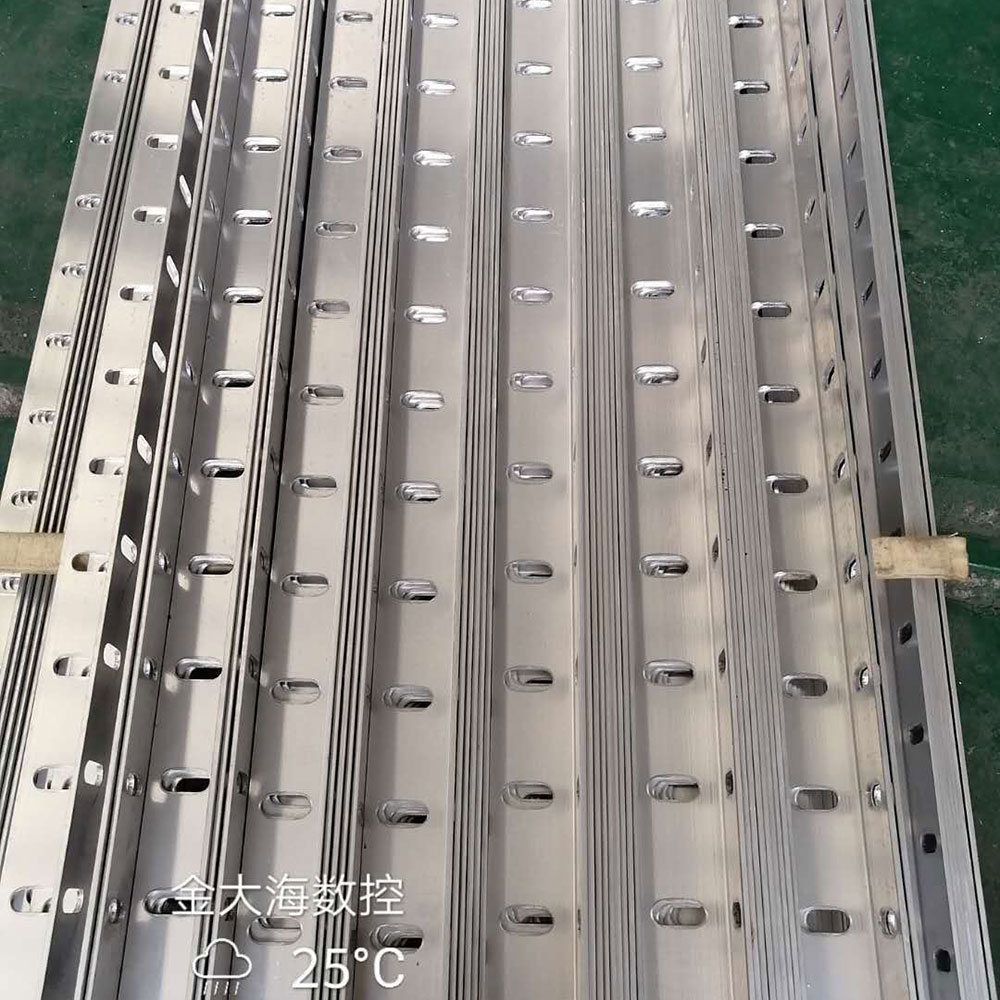
One manufacturer producing mold-related aluminum components for prefabricated construction projects encountered a major challenge during daily production. Their factory mainly processed 60×60 angle aluminum used in precast mold systems and structural assembly applications.
The products required embossing marks, notch punching, and cutting operations on long aluminum profiles. However, traditional punching methods caused deformation problems, especially during the embossing process. Once deformation appeared, the products often failed dimensional inspection standards and could not be used directly in assembly systems.
To solve these issues, the customer decided to upgrade to a customized CNC aluminum punching and cutting machine designed specifically for high-efficiency aluminum profile processing.
Why Traditional Processing Became a Problem
Before the upgrade, the factory relied mainly on conventional punching equipment and manual handling.
Although the existing process could complete basic punching operations, several production problems gradually became more serious as order volume increased.
The aluminum angle profiles were easily deformed during embossing.
Manual positioning reduced production consistency.
Punching and cutting required multiple separate operations.
Material handling between processes increased labor intensity.
Different workers produced inconsistent processing quality.
For prefabricated construction mold manufacturers, dimensional consistency is extremely important. Even small deformation issues can affect mold assembly accuracy and final installation quality.
The customer needed a more stable production process that could improve both efficiency and product qualification rates.
Defining the Production Requirements
After analyzing the production workflow, the customer established several key requirements for the new equipment.
The machine needed to support automated processing for long aluminum profiles.
The embossing process had to maintain profile shape without deformation.
Notch punching and cutting needed to be integrated into one workflow.
The production line needed stable feeding and positioning accuracy.
The customer also wanted a more efficient processing method capable of reducing labor dependency.
Because production volume was increasing, the machine also needed to support continuous industrial operation with stable repeatability.
The Proposed CNC Processing Solution
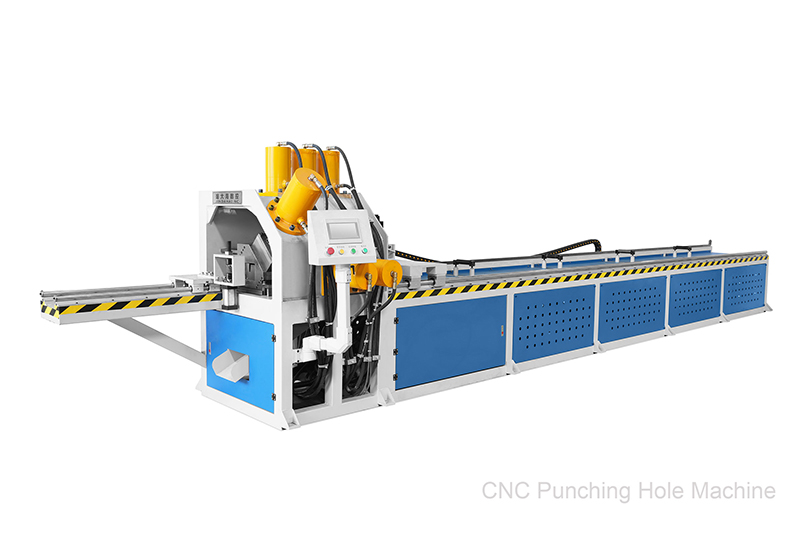
Based on the customer’s production requirements, we designed a customized aluminum profile punching solution for prefabricated construction mold manufacturing.
Instead of focusing on overly complicated machine specifications, the solution focused on stable operation, efficient workflow, and reduced deformation during aluminum processing.
The production system included:
Integrated embossing, punching, and cutting functions
Automatic feeding workflow for long aluminum profiles
Dual-station processing structure for higher efficiency
Servo-controlled positioning system
Heavy-duty machine structure for stable production
Flexible tooling support for aluminum profile processing
The tooling system was specially designed for the customer’s aluminum angle products, allowing embossing and notch processing to be completed with improved consistency.
Automated Workflow for Aluminum Mold Components
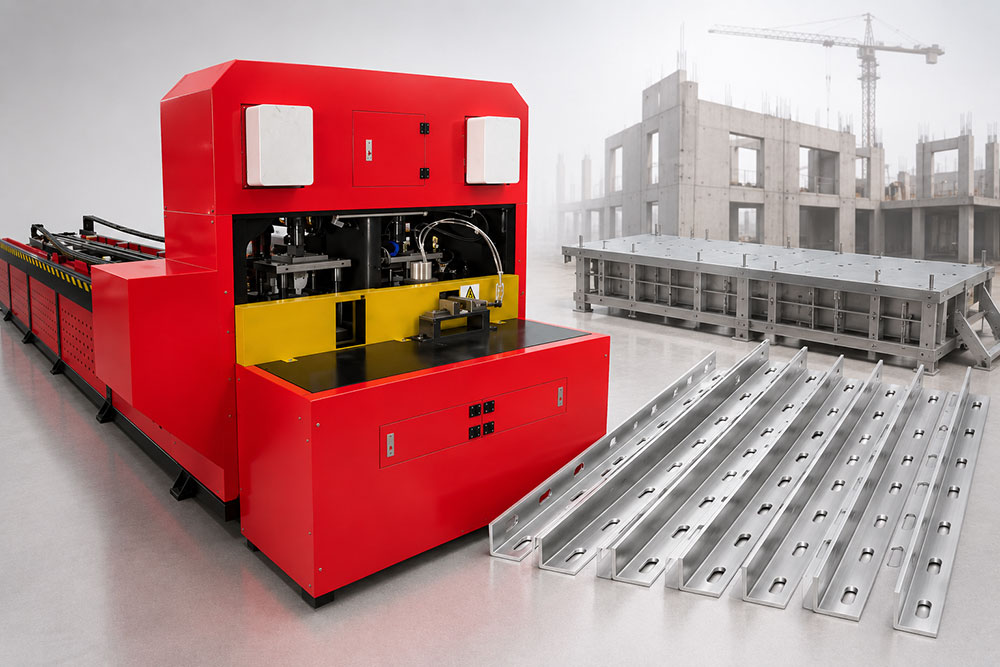
In daily production, long aluminum profiles are placed onto the feeding area in batches.
The machine automatically feeds the material into the processing stations according to the programmed layout.
The first processing station completes the embossing operation while maintaining the shape stability of the aluminum profile. The second station completes notch punching and cutting operations within the same workflow.
Because the operations are integrated into one production line, the customer no longer needs repeated manual positioning or material transfer between multiple machines.
Finished products are discharged automatically after processing, helping improve workshop organization and processing continuity.
Compared with traditional manual punching operations, the CNC workflow significantly improves processing stability and reduces production interruptions.
Why CNC Automation Matters in Prefabricated Construction
The prefabricated construction industry depends heavily on standardized production and dimensional consistency.
When mold components and aluminum profiles are processed manually, production accuracy can vary between operators, especially during large-volume production.
By upgrading to CNC aluminum profile processing equipment, the customer improved several important production areas.
Embossing operations became more stable without profile deformation.
Punching and cutting were completed within one workflow.
Material handling requirements were reduced.
Manual positioning work decreased significantly.
Production consistency improved during batch processing.
The integrated workflow also reduced dependence on highly experienced operators, making production management easier.
For manufacturers producing precast mold components, stable processing quality directly affects assembly precision and installation efficiency at construction sites.
Improving Production Efficiency and Labor Management
One of the biggest advantages of the upgraded system was labor optimization.
Traditional processing methods often required multiple workers for loading, positioning, punching, transferring, and cutting materials. The CNC production line simplified many of these operations into one automated workflow.
As a result, the customer achieved several operational improvements:
Reduced labor intensity
Lower production interruption rates
Improved product consistency
Faster production cycles
Reduced material deformation risk
More organized production workflow
Improved operator safety
Because the machine supports continuous automated processing, production efficiency became more predictable and easier to manage during larger project orders.
For prefabricated construction manufacturers, this type of automation also helps improve delivery stability and long-term production scalability.
Supporting Long-Term Manufacturing Growth
As the prefabricated construction market continues growing, manufacturers increasingly need equipment capable of supporting higher production standards.
The customized CNC punching and cutting system provides a more stable production foundation for aluminum mold component manufacturing.
Its flexible tooling structure also allows the customer to adapt to future product changes more efficiently without rebuilding the entire production process.
For factories producing aluminum mold accessories, structural profiles, and prefabricated construction components, CNC automation creates a more scalable and competitive manufacturing model.
Conclusion
This project demonstrates how a prefabricated construction component manufacturer in China improved production quality and efficiency through a customized CNC punching and cutting solution.
By integrating embossing, punching, and cutting into one automated workflow, the customer reduced deformation problems, improved production consistency, and optimized labor usage.
For manufacturers producing aluminum mold components and prefabricated construction accessories, CNC automation provides a practical solution for improving productivity, reducing operating costs, and supporting long-term industrial production.