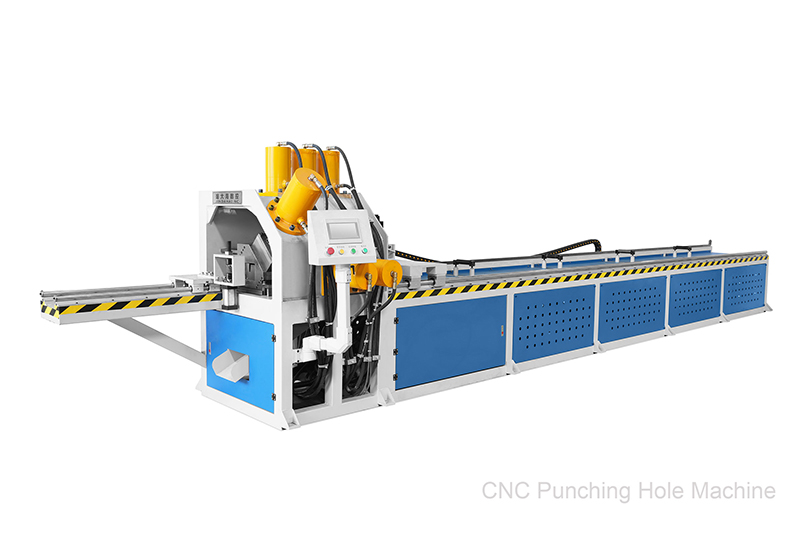
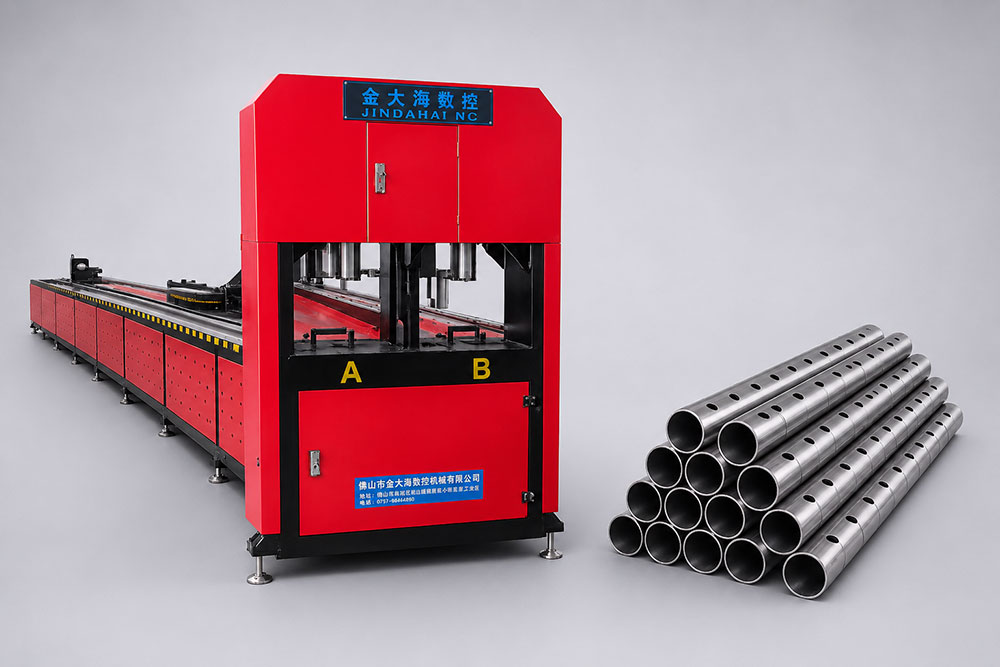
Manufacturing today is built on speed, consistency, and control. Factories are no longer judged only by whether they can finish a part. They are judged by whether they can finish that part accurately, repeatedly, and efficiently across many orders. For this reason, more metal fabrication businesses are paying close attention to the equipment that influences daily workflow, labor use, and downstream quality. Among those machines, the CNC punching machine has become one of the most practical and widely used solutions.
At first glance, punching may look like a simple operation. A hole is made, the material is moved, and the process continues. But inside a real production environment, punching is much more important than it first appears. Hole location affects assembly. Hole spacing affects whether parts remain standardized. Hole quality affects whether a component moves smoothly into welding, fastening, coating, or installation. When the punching stage is inaccurate, later production steps slow down. When the punching stage is stable, the rest of the workflow becomes easier to control.
That is why CNC punching has become such an important topic in modern fabrication. It is not only about replacing manual work. It is about changing how repeated work is performed. Instead of asking operators to measure and position every hole manually, a CNC system stores the hole pattern and repeats it according to a program. This reduces repetitive effort, improves consistency, and supports higher output across repeated production runs.
For factories working with angle steel, channel steel, flat bar, square tube, round pipe, rectangular tube, and similar profile materials, CNC punching provides a way to strengthen both quality and productivity at the same time. It is used in many industries, from structural fabrication and warehouse storage systems to solar support production and custom profile processing. Understanding how it works, where it is used, and how it should be operated helps manufacturers make better decisions about both equipment and process planning.
This article offers a practical introduction to CNC punching machines. It explains the market uses of the equipment, how it functions, how it should be used correctly, and what advantages it brings to industrial production. For companies that are evaluating automation or trying to improve fabrication efficiency, this guide provides a clear starting point.
Why CNC Punching Matters in Modern Fabrication
Many production problems do not begin where people first notice them. A welding team may complain that a part does not align properly. An assembly team may find that bolts do not fit easily. A project manager may see production delays without immediately knowing where the issue began. In many cases, the root cause can be traced back to one simple problem: the punched hole pattern is inconsistent.
This is why punching matters so much. It is one of those early-stage processes that affects everything that follows. If the hole is in the wrong location, later operations become harder. If spacing varies from part to part, product standardization becomes weaker. If hole quality is poor, rework increases. The effects of weak punching are often much larger than the punching step itself.
Traditional manual punching or drilling can still be useful in very small workshops or for irregular one-off jobs. But once a factory begins handling repeated parts, the disadvantages of manual repetition start to become obvious. Operators spend more time measuring. Positioning depends more heavily on concentration and experience. Different shifts may work slightly differently. Production becomes harder to predict because a large part of the process depends on human repetition rather than programmed control.
A CNC punching machine improves this situation by turning repetition into a controlled system. After the correct data is entered, the machine follows the same punching logic repeatedly. The operator still matters, but the operator no longer has to rebuild the same hole pattern manually for each new workpiece. This makes the process easier to standardize and easier to scale.
Factories also care about punching because customers care about finished fit and finish. A customer may never ask how the hole was made, but they will notice whether parts align easily, assemble smoothly, and maintain consistent quality from one order to the next. That is one reason why punching has become more important as manufacturing expectations have risen. The better the control at this stage, the easier it is for the entire factory to perform well.
What a CNC Punching Machine Is
A CNC punching machine is a metal processing machine that punches holes, slots, and shaped openings into a workpiece according to programmed instructions. CNC stands for Computer Numerical Control, which means the machine moves and operates based on digital data rather than relying entirely on manual positioning and repeated hand measurement.
In a manual process, an operator often needs to mark each position, align the material carefully, and repeat similar actions over and over. In a CNC process, the operator prepares the required data once, confirms the setup, and allows the machine to repeat the punching sequence automatically. This is the essential difference. CNC punching replaces repeated manual positioning with programmed repeatability.
The exact structure of the machine can vary. Some models are designed for flat material. Others are meant for profile materials such as square tubes, round pipes, angle steel, channel steel, and flat bar. Some systems focus only on punching. Others may combine punching with cutting or similar operations in one production line. But the central purpose remains the same: to improve the accuracy and efficiency of repeated hole processing.
This machine is especially valuable in production environments where the same hole pattern must appear over many parts. A factory does not gain much by making one perfect sample if batch quality remains unstable. The real advantage comes from being able to reproduce the same result consistently over time. This is where CNC punching becomes more than a machine function. It becomes a method for controlling production quality.
Another important point is that CNC punching machines are not all used in the same way. The right machine depends on material type, profile shape, thickness, required hole pattern, and production volume. That is why understanding the basics is important. Once the role of the machine is clear, it becomes easier to judge what type of system is suitable for a particular workshop or product range.
Where CNC Punching Machines Are Used
One reason CNC punching is so common is that many industries depend on repeated hole processing. The machine is not limited to one product type or one market. It can support many different manufacturing applications wherever profiles or structural components require accurate and repeated punching.
A major application area is structural fabrication. Brackets, support members, connectors, installation parts, and related components often require exact hole positions so that they can be bolted or assembled without correction. Manufacturers producing structural steel frames often rely on punching quality because it directly affects the ease of downstream assembly and installation.
Another common area is storage and logistics equipment. Rack uprights, shelf supports, beams, and storage-related connectors usually contain evenly spaced holes repeated across large numbers of parts. These products require a high level of standardization because even small differences in hole spacing can affect compatibility. For this reason, CNC punching is highly relevant in warehouse rack production.
The solar energy sector is also a strong fit for CNC punching. Solar brackets, support rails, and installation members typically require repeated holes for bolts, fasteners, and structural connections. Since many of these parts are produced in batches and follow repeated patterns, automated punching is highly efficient. This makes solar support structures one of the clearest examples of where CNC punching creates value.
Profile and tube fabrication is another broad field. Square tube, round pipe, rectangular sections, angle steel, and channels are used in machine frames, fencing, industrial supports, furniture structures, and custom fabricated parts. In content terms, phrases such as square tube processing are usually best linked to an application case page, because they show readers a more specific and realistic processing scenario.
Beyond these examples, CNC punching can be used in enclosures, agricultural supports, transport accessories, industrial fixtures, and many other types of fabricated metal parts. The industries may differ, but the manufacturing need remains similar. Factories need fast, repeatable, and accurate hole processing that can support consistent production output.
What Materials Can Be Processed
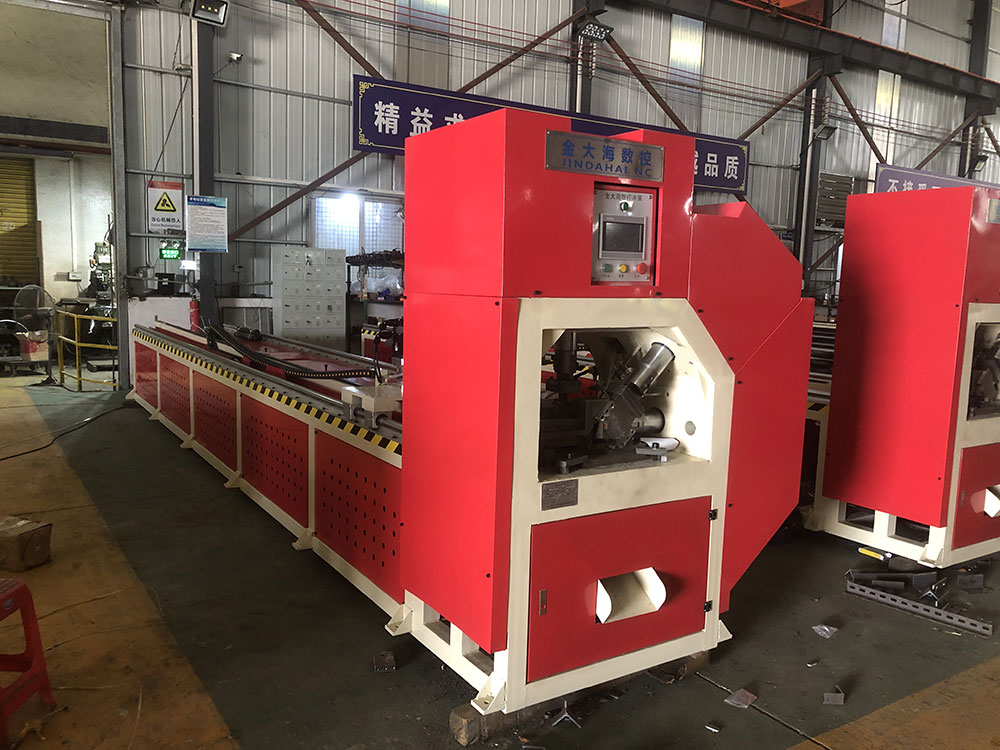
The exact processing capability of a CNC punching machine depends on machine structure, punching force, tooling design, and material handling system. In general, these machines are commonly used on mild steel, stainless steel, aluminum, galvanized steel, and certain alloy materials. The thickness range depends on the specific model and the kind of work it is designed to perform.
Shape matters just as much as material. Many CNC punching machines are used for angle steel, channel steel, flat bar, square tube, round pipe, and rectangular tube. Some machines are optimized for heavier structural profiles, while others are intended for lighter or more specialized profile work. That is why one machine is not automatically right for every factory. The right match depends on the real products being processed every day.
Longer workpieces introduce another important factor: feeding stability. A machine may be technically strong enough to punch the material, but if the profile is not supported correctly during movement, hole accuracy may still suffer. This is especially relevant in longer tubes and structural profiles where sagging or shifting can affect positioning.
Tooling is also a major part of the process. Even a powerful machine can produce poor results if the punch and die are not matched properly to the material and hole type. Bad tooling selection may lead to burrs, rough edges, abnormal wear, or inconsistent hole dimensions. That is why good punching results depend on more than machine power alone. Machine design, material support, tooling choice, and operator practice all work together.
Factories that achieve stable results usually understand this clearly. They do not treat punching as a simple one-step action. They treat it as a system. Material, tooling, clamping, feeding, and programming all influence the final quality. The better those elements are matched, the better the output will be.
How a CNC Punching Machine Works
The operating logic of a CNC punching machine is not difficult to understand, but its production value becomes much clearer when the full workflow is considered. The process usually begins with preparation. The operator reviews the drawing or production requirement, confirms the material dimensions and profile type, and identifies the hole size, spacing, quantity, and sequence needed for the part.
This information is then entered into the machine control system. Depending on the machine, the interface may be simple or more advanced, but the principle is the same. The control system stores the punching pattern so the machine can reproduce it accurately during operation.
After programming, the material is loaded onto the machine. In some workshops this is done manually. In others, loading support or automated handling is used. For long profiles or heavier pieces, external supports may be necessary to keep the workpiece level and stable. Stable handling is essential because accurate hole placement depends on stable feeding.
The next step is feeding and positioning. The machine moves the workpiece to the programmed punching location. Many systems use servo-controlled feeding to improve positioning repeatability. Once the material reaches the correct point, the punch descends into the die and forms the required hole. The workpiece is then moved to the next position, and the cycle repeats according to the program.
This repeated cycle is where the machine creates its value. Manual methods can make holes, but they require repeated positioning effort. CNC punching stores that positioning logic so it does not need to be recreated by hand each time. This saves labor, improves consistency, and helps maintain a more stable production pace over large batches.
After punching is complete, the component usually moves into a downstream process such as cutting, welding, bending, coating, or assembly. This is why CNC punching should not be judged only by the punching station itself. It should also be judged by how well it prepares the part for what comes next. A part with correct hole positions moves through the rest of the workshop more smoothly than one that needs correction.
How to Use a CNC Punching Machine Correctly
Even the best equipment cannot produce stable results if it is used carelessly. CNC punching improves efficiency, but it also requires good operating discipline. In fact, because the process is faster and more repeatable, setup errors can affect many parts quickly if they are not caught early.
The first step is careful drawing confirmation. Operators should verify hole size, spacing, sequence, orientation, and material dimensions before the job begins. A small programming error at this stage can affect the whole batch, so preparation should never be rushed.
The second step is correct tooling selection. The punch and die must match the material thickness, material type, and required hole shape. Incorrect tooling can reduce edge quality, increase burr formation, or shorten tool life. Tool condition must also be monitored, because worn tooling may gradually reduce hole consistency even when the machine itself appears stable.
The third step is proper clamping and material support. If the workpiece shifts during feeding or punching, hole location accuracy will be affected immediately. This is especially important when processing long tubes or profiles. Many positioning issues are caused by unstable handling rather than by the control system itself.
The fourth step is first-piece inspection. Before full production begins, a sample part should be checked carefully. Hole position, spacing, size, and edge quality all need to be verified. This is one of the simplest and most effective ways to avoid large-scale scrap.
The fifth step is observation during operation. CNC punching reduces repeated manual input, but operators still need to monitor sound, vibration, feed behavior, and tool marks. Small problems often show early warning signs. Paying attention during the run can prevent much bigger problems later.
Finally, regular maintenance should be treated as part of normal production. Cleaning, lubrication, clamp inspection, and tooling care all help protect long-term stability. A well-maintained machine gives more predictable results and supports better production planning over time.
What Benefits CNC Punching Brings
Factories invest in CNC punching because it improves several important areas of production at once. One of the most visible benefits is higher throughput. Once the program is ready and the setup is confirmed, the machine can process repeated hole patterns much faster than manual marking and drilling. This is especially useful for medium- and large-volume production where cycle time matters directly.
Another important benefit is repeatability. Because the machine follows stored coordinates instead of repeated human measuring, the same hole pattern can be reproduced more consistently across a batch. This helps later stages such as welding and assembly because parts fit together more predictably.
Labor efficiency is another major advantage. Manual punching usually requires repeated alignment, measuring, and checking. CNC punching reduces those repetitive tasks, allowing operators to focus more on supervision, inspection, and setup control. In a workshop where labor cost and operator skill matter, this can make a significant difference.
Reduced waste is also a major benefit. Incorrect hole positions often lead to scrap or rework. A more stable process helps lower those losses. Over time, even a moderate improvement in material yield can create meaningful savings.
CNC punching also improves production planning. When output is more predictable, scheduling becomes easier. Supervisors can estimate lead time more accurately, and downstream departments can work with greater confidence.
Perhaps most importantly, CNC punching improves process stability across the whole line. A part that leaves the punching stage in the correct condition is easier to weld, cut, coat, and assemble. In this way, punching quality supports the performance of the entire workshop.
How CNC Punching Supports Better Manufacturing Systems
Modern factories are not only trying to move faster. They are trying to become more controlled and more measurable. They want production systems that can be repeated, analyzed, and improved over time. CNC punching supports that direction because it takes one of the most repetitive workshop processes and turns it into a programmable system.
This matters because management increasingly wants clearer answers to practical questions. How long should the job take? How stable will the output be? Can the same result be repeated next month? Manual methods make those questions harder to answer because the outcome depends more heavily on individual operator actions. CNC punching makes them easier to answer because the process is built around stored logic.
At the same time, CNC punching still leaves room for flexibility. Many factories do not make only one product. They make related product families with different sizes or variations. Even so, those products often share similar punching logic. A CNC system can adapt by changing the program without forcing the entire production method to be rebuilt from zero.
This balance between repeatability and flexibility is one reason CNC punching remains so relevant. It supports smarter manufacturing without becoming impractical for workshops that still need to handle different order types.
How to Choose the Right CNC Punching Machine
Choosing the right machine begins with understanding the products being made. A factory focused on angle steel supports has different needs from one focused on square tubes or lighter profile work. Material form, thickness, hole pattern complexity, and batch size all influence what kind of machine is the right fit.
Production rhythm matters as well. A business handling repeated batch work may care most about feeding stability and output efficiency. A workshop with more custom jobs may care more about setup flexibility and ease of programming. The best machine is not necessarily the largest or most complex one. It is the one that suits the actual production logic of the factory.
Service support is another important factor. Tooling supply, spare parts, training, and after-sales response all affect long-term value. A machine should not be judged only by its brochure. It should be judged by how reliably it supports daily use over time.
This same logic also applies to website content structure. Broad machine keywords are usually best linked to the core product page, while specific application phrases are better linked to relevant case pages. This makes internal links more useful for users and also keeps your content structure more logical.
Common Mistakes to Avoid
A common mistake is thinking that punching is a simple step that does not require much control. In reality, punching errors often create problems that become visible only later in the workflow. By the time the issue is noticed, time and material may already have been lost.
Another mistake is skipping the first-piece check. Even with a stable machine, wrong input or weak setup can produce a whole batch of incorrect parts. One sample check before batch production is one of the most valuable quality habits a factory can have.
A third mistake is overlooking tooling wear. Worn punches and dies may gradually reduce hole quality, even when the machine frame and control system remain stable. Poor hole edges and inconsistent dimensions often begin with tooling issues.
A fourth mistake is choosing equipment that does not match the actual product mix. Buying based only on general claims rather than real material and profile requirements can create a poor fit between the machine and the daily work.
Finally, poor maintenance creates avoidable instability. Cleaning, lubrication, inspection, and tool care are not extra tasks. They are part of protecting production quality.
Final Thoughts
A CNC punching machine is more than a machine for making holes. It is a production tool that helps manufacturers improve repeatability, reduce unnecessary manual effort, and create a more stable workflow. In industries where profile processing and repeated hole patterns are common, these improvements directly affect quality, efficiency, and cost control.
For factories that want stronger process control and better production consistency, CNC punching is not just a machine upgrade. It is a workflow upgrade. It helps turn repeated work into repeatable results, and that is one of the most valuable improvements a fabrication business can make.
As manufacturing continues to demand better accuracy, faster delivery, and stronger efficiency, CNC punching machines will remain an important part of modern metal fabrication.