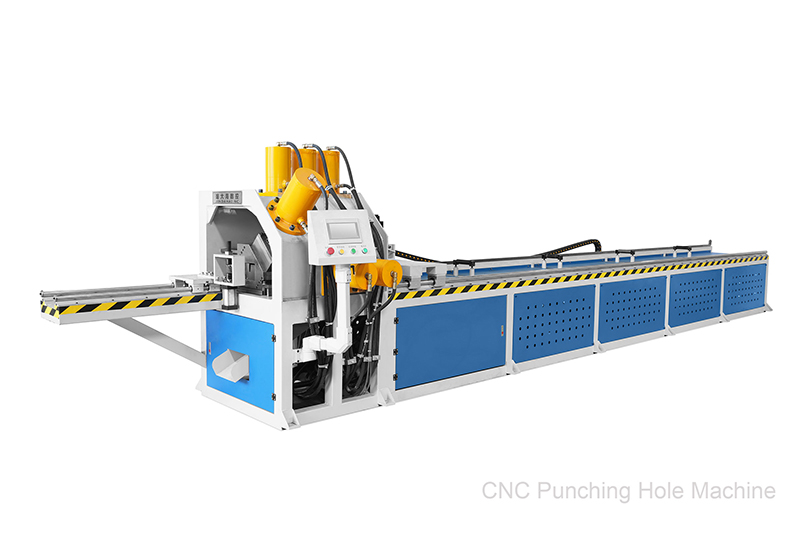
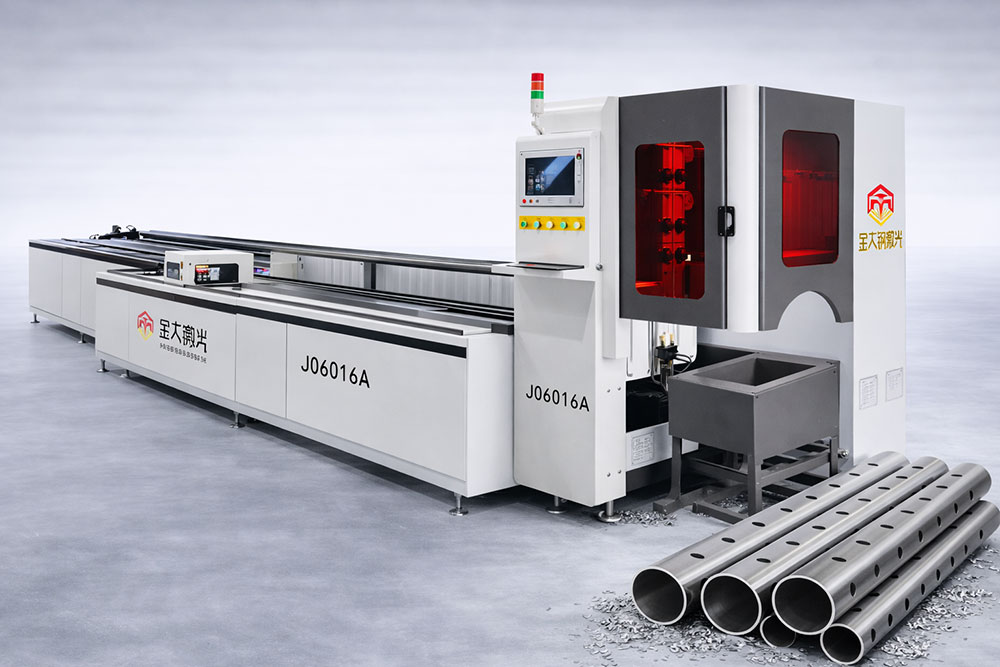
For many metalworking businesses, tube processing is where production speed and production difficulty meet. Tubes are used in frames, supports, furniture, racks, fitness equipment, machinery parts, railings, and many other fabricated products. They look simple from the outside, but once manufacturers need repeatable hole positions, angled ends, precise lengths, or complex joining shapes, the work becomes more demanding. Traditional processing methods can still do the job, but they often need several machines, more labor, more handling time, and more room for small errors to appear.
This is why the laser tube cutting machine has become a major topic in modern fabrication. It offers manufacturers a way to process tube materials with better control, fewer steps, and greater flexibility. Instead of treating tube cutting as just one isolated operation, companies now see it as part of a smarter and more connected workflow. The machine is not only about cutting faster. It is also about making downstream work easier, reducing waste, and helping the factory respond more quickly to different order requirements.
A few years ago, some buyers still viewed tube laser cutting as something mainly for large factories with large budgets. That view is changing. More manufacturers now understand that the value of the machine comes from how it affects the whole production system. If a workshop struggles with repeated measuring, setup delays, hole-position inconsistency, or slow order changes, then laser tube cutting can solve real operational problems. In that sense, it is less about buying an advanced machine and more about removing old bottlenecks from production.
This article explains laser tube cutting from a practical and educational angle. It looks at where the machine is used, how it works in everyday factory conditions, what kinds of materials and profiles it can process, and what advantages it brings to industrial manufacturing. It also explores why the market for tube laser equipment continues to grow and why this technology is becoming an important choice for companies that want better productivity and stronger process control.
What Is Laser Tube Cutting?
Laser tube cutting is a CNC-based metal fabrication process that uses a focused laser beam to cut tubes and profiles according to a programmed design. Instead of depending on manual measuring, repeated setup, or separate hole-making operations, the machine follows a digital cutting path that has already been defined in software. This allows manufacturers to produce a wide range of part geometries with more stable results.
In practical terms, the process can do much more than basic length cutting. A tube laser system can create holes, slots, open contours, miter cuts, notches, shaped ends, and other details directly on the material. That makes it very different from a simple saw-based approach. In a traditional workshop, one machine may cut the length, another may drill the holes, and another may prepare the joining shape. Laser processing brings a lot of that work into one controlled step.
Most of today’s systems are based on fiber laser technology, which is why the term fiber laser appears so often in product descriptions and technical discussions. This technology is widely used because it offers strong cutting performance, stable energy output, and relatively efficient operation. It has helped make laser tube cutting more practical for real industrial use, not just for showcase applications.
Another important point is consistency. Because the process is controlled digitally, the same part can be repeated over and over with far less variation than in a highly manual system. For factories where tube accuracy affects welding, assembly, appearance, or final fit, that consistency is extremely valuable. Even if each individual part looks simple, small dimensional drift can create large cumulative problems later in production.
What Materials and Shapes Can the Machine Handle?
A major reason the technology is attractive is that it is not limited to one narrow production task. A well-matched tube laser system can support a wide working range, which is important for workshops serving multiple customers or multiple industries. Most commonly, these machines are used for carbon steel, stainless steel, and aluminum tube materials. These materials cover a very large share of industrial and commercial fabrication work.
In terms of shape, round tube and square tube are the most common categories, but the market demand does not stop there. Many manufacturers also need to process rectangular tube, oval tube, and some profile-based materials depending on the product type. This flexibility matters because real production is often mixed. A single factory may build racks for one customer, railings for another, and machine frames for a third. A system that handles different profiles more easily gives that factory a stronger competitive position.
This is why topic phrases such as round tube production and square tube applications are useful from both an industrial and an SEO perspective. They represent real-world fabrication needs. Manufacturers do not buy tube equipment because of a technical phrase alone. They buy it because they need to process a specific kind of product, in a specific kind of material, at a specific level of quality.
The ability to handle different shapes also reduces the need to split work across separate equipment types. When the same machine can switch from one profile family to another with software and setup adjustments, production planning becomes easier. That is especially helpful in factories that need both repeat production and customized output. Flexibility is not only a convenience. It is often a business advantage.
Where Does the Market Use It Most?
Tube laser cutting has spread across many sectors because tube-based structures are used almost everywhere in fabrication. The machine is not tied to one single industry. Instead, it serves any production environment where metal tubes must be processed accurately and efficiently.
Construction is one important example. Structural frames, supports, handrails, guardrails, curtain wall parts, canopies, walkways, and many architectural components rely on tube and profile materials. When these parts need better fitting accuracy, more stable hole placement, or faster production flow, laser cutting becomes a very attractive option. This is particularly true in construction framing parts, where consistent geometry helps both welding and installation.
Furniture manufacturing is another major field. Metal tubes are used in tables, chairs, beds, shelving systems, cabinets, workstations, and decorative frameworks. In these products, appearance matters as much as structural performance. Cleaner cuts and more repeatable joints help improve both product quality and production efficiency. That is why many workshops involved in furniture tube processing pay close attention to tube-cutting technology.
Fitness equipment also makes heavy use of tube materials. Gym machines, training frames, benches, and support arms often involve multiple holes, angled cuts, and clean visible joints. Laser processing supports these design needs well because it handles precision and repeatability better than highly manual methods. The same general logic applies to transportation parts, agricultural equipment, warehouse storage systems, display structures, industrial machine guards, and custom fabricated products.
What all of these sectors share is the need for controlled and efficient tube processing. Even when the final products look very different, the manufacturing requirements are often similar: accurate geometry, faster workflow, less manual correction, and more reliable repeatability. That common need is why laser tube cutting continues to gain ground in so many markets.
How Does the Process Work?
The core idea is straightforward, but the system behind it is highly coordinated. A laser tube machine usually combines a laser source, a cutting head, a chuck or clamping system, a motion-control structure, and software that translates drawings into cutting instructions. The result is a process in which the material moves, rotates, and is cut according to a planned digital path.
The raw tube is first loaded into the machine and secured in place. The clamping system keeps the material stable while also allowing controlled rotation when needed. The cutting head then follows the programmed route while the machine coordinates movement, speed, and cut timing. The laser concentrates energy into a very small point, which melts or vaporizes the material in the selected area. Assist gas helps remove molten material and forms the final cut edge.
This description sounds simple, but the value comes from precision and synchronization. The machine must coordinate tube rotation, head movement, position correction, cut sequence, and part geometry continuously. That is how it creates repeatable holes, openings, end cuts, and shaped sections without the inconsistencies that often appear in heavily manual workflows.
Software is also central to the process. Engineers or operators define the tube size, wall thickness, material type, and feature geometry in advance. Programs can be saved, adjusted, and reused. This reduces repeated setup work and allows quicker response to product changes. For factories with frequent revisions or multiple part varieties, the digital side of the process is often one of the biggest advantages.
How Is It Used on the Shop Floor?
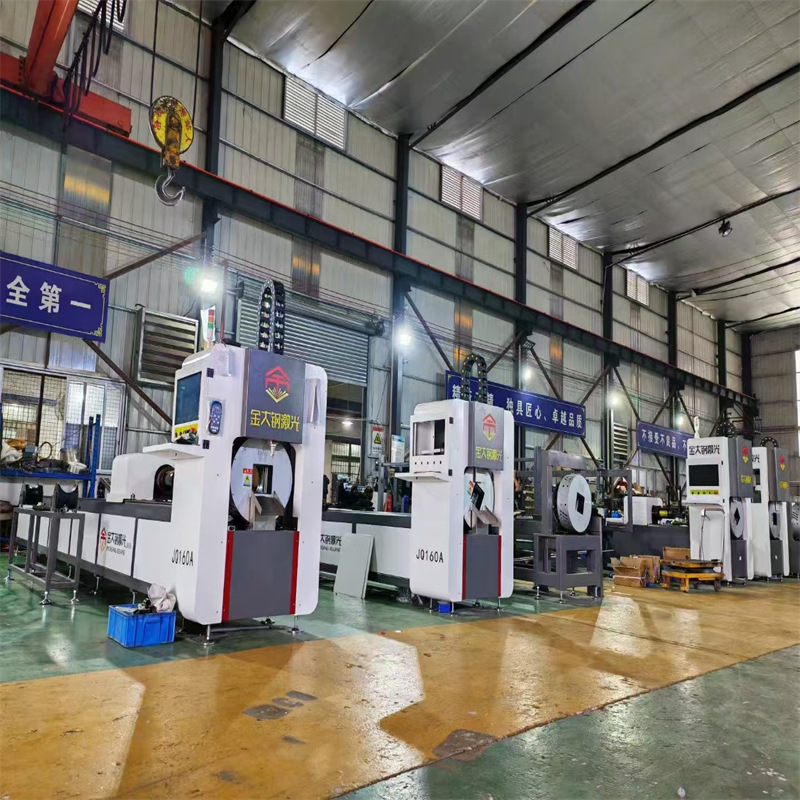
In daily factory operation, laser tube cutting is not a stand-alone event. It is part of a broader workflow that starts with design and ends with assembly or shipment. The actual benefits of the machine become much clearer when we look at how it fits into production from beginning to end.
The first step is usually engineering or program preparation. A drawing is imported or created, the tube specifications are confirmed, and the cutting path is selected or generated. Once the correct settings are ready, the raw material is loaded into the machine. Some businesses still use manual loading for moderate production, while others prefer systems with more automation when order volume is higher.
A useful step forward for some factories is the automatic loading system. This is not always necessary for every buyer, but it can significantly improve material handling efficiency in the right production environment. When output targets are high or labor time is especially valuable, loading automation can make the whole process more stable and less dependent on repeated manual handling.
During cutting, the operator is no longer measuring every feature or guiding each cut by hand. Instead, the operator monitors machine condition, part output, gas flow, material feeding, and overall process stability. This changes the nature of the job. Production shifts away from repeated manual action and toward supervised, controlled automation. That helps reduce fatigue, improve repeatability, and support a more organized workshop rhythm.
After cutting, the parts continue to welding, fitting, finishing, painting, or final assembly. Because the geometry is more stable, downstream work becomes easier. This is one of the biggest hidden benefits of the technology. A machine that improves the quality of cut parts often improves several later stages at the same time. A better cut does not only help the cutting department. It helps the whole line.
What Advantages Does It Bring to Manufacturing?
The advantages of tube laser cutting are easier to understand when we connect them to real production problems. Manufacturers rarely invest in equipment because it sounds advanced. They invest because it solves issues that cost time, money, or quality every day.
One major advantage is process integration. Traditional tube work often includes sawing, measuring, drilling, slotting, and trimming as separate operations. Each step creates its own delay and its own chance for error. Laser cutting reduces the number of separate handling stages, which saves time and makes the workflow cleaner.
Another important advantage is repeatability. In fabrication, the same part may be produced hundreds or thousands of times. If hole positions drift, or cut angles shift, or length varies from batch to batch, those small differences can create bigger problems in welding and assembly. Tube laser systems help reduce this variability because they follow a digital path rather than relying heavily on repeated manual positioning.
Labor efficiency is another reason many factories value the technology. Instead of using several workers across separate machines for different operations, a more integrated cutting process allows one operator to supervise a larger share of the work. This does not remove the need for skill, but it changes where the skill is applied. The emphasis moves toward process control and less toward repetitive handling.
Flexibility is also a major selling point. Manufacturers today often deal with smaller batch sizes, multiple product styles, and faster design changes. In that kind of environment, equipment that depends too much on fixtures or repeated re-setup becomes less attractive. Laser tube cutting adapts more easily because program changes usually happen in software. That means quicker job transitions and lower disruption.
Finally, the process supports better part quality. Cleaner cuts, more consistent openings, and more stable dimensions help reduce deburring, grinding, and manual correction later on. This can improve both production speed and the visual standard of the final product. In industries where appearance matters, that benefit is especially important.
Why Does It Improve Industrial Efficiency?
Industrial efficiency is not only about how fast a machine runs. It is about how smoothly the entire workflow operates from raw material to finished product. A process can look fast at one station and still be inefficient overall if it creates extra work later. Tube laser cutting helps industrial efficiency because it reduces friction across the whole production chain.
For example, when parts come out more accurately, welders spend less time forcing components into position. Assemblers spend less time checking and correcting mismatch. Supervisors spend less time dealing with avoidable inconsistencies. Inspection becomes easier because there are fewer variations to manage. These are all real labor savings, even if they do not always appear first in the cutting speed figure.
Material usage can also improve. A better digital process often allows more organized nesting, more thoughtful sequence planning, and better control over remnant use. Not every factory will save the same amount, but over time, better planning and more consistent cutting can reduce waste in meaningful ways.
Efficiency also improves because the machine supports faster response to customer changes. In a traditional workflow, a small design revision may require manual recalculation, new setup logic, and extra trial work. In a digital tube-cutting process, many of those changes can be handled more directly through the program. This makes the business more responsive, which is increasingly important in competitive fabrication markets.
Why Is Precision So Important?
Precision matters because tube components rarely exist alone. They usually connect to other parts, other surfaces, or other processes. A small error in one hole position, end angle, or cut length may not look serious at first, but once the part enters welding or assembly, the problem becomes harder and more expensive to fix.
This is why precision tube cutting matters so much in industrial production. Precision affects fit-up quality, assembly speed, final appearance, and customer satisfaction. In products with visible metal structures, poor precision can also affect how professional the final item looks. A joint gap, uneven alignment, or awkward angle can reduce the perceived quality of the whole product.
Precision also supports scale. A factory may be able to correct a few bad parts by hand when order volume is low, but that becomes much harder when volume increases. Better precision from the beginning helps create a more scalable workflow because the system depends less on correction and more on stable repetition.
What Mistakes Do Buyers Often Make?
One common mistake is focusing only on laser power when comparing equipment. Power matters, but it is not the whole story. Real performance depends on how the machine system works as a whole, including software usability, motion stability, clamping accuracy, support quality, and suitability for the buyer’s actual product mix.
Another mistake is assuming the machine alone will solve every production issue. The best results come when the factory also thinks about loading, unloading, operator training, material consistency, and downstream workflow. Equipment is powerful, but it works best when the process around it is also organized well.
Some buyers also underestimate how mixed their actual production is. They may think in terms of one ideal product, but daily work often includes several part families, several materials, and several customer expectations. A realistic purchase decision should match the complexity of real orders, not only the simplicity of a sales example.
How Can a Factory Use It Better?
Factories that use tube laser cutting well usually have one thing in common: they think beyond the machine itself. They look at the full production route and ask how the equipment will improve the flow from design to finished part. That is the right approach.
A good factory will choose programs carefully, train operators properly, maintain the system regularly, and connect the machine logically with welding or assembly. It will also review which products benefit most from laser processing and where accuracy or repeatability has the strongest downstream value. When the machine is used as part of a complete production strategy, the return tends to be much stronger.
This is also why educational blog content about laser tube cutting can be useful for your website. Buyers are often not just comparing prices. They are trying to understand how a process change will affect their actual manufacturing environment. A strong article helps them see the machine not only as equipment, but as a practical solution to everyday production problems.
Conclusion
Laser tube cutting is becoming more important because manufacturing itself is changing. Factories are expected to be faster, cleaner, more precise, and more flexible than before. Tube-based products remain common across construction, furniture, equipment, racks, transport parts, and many other markets, so the need for better tube processing continues to grow.
A laser tube cutting machine helps manufacturers move away from multi-step, labor-heavy workflows and toward a more connected digital process. It improves repeatability, reduces unnecessary handling, supports quicker changes, and makes downstream work easier. Those are practical advantages, not theoretical ones.
For businesses that want stronger fabrication capability, better consistency, and a more efficient workflow, laser tube cutting is not just a modern trend. It is an increasingly practical production tool. As industrial expectations continue to rise, the ability to process tubes accurately and efficiently will remain a key advantage for competitive manufacturers.