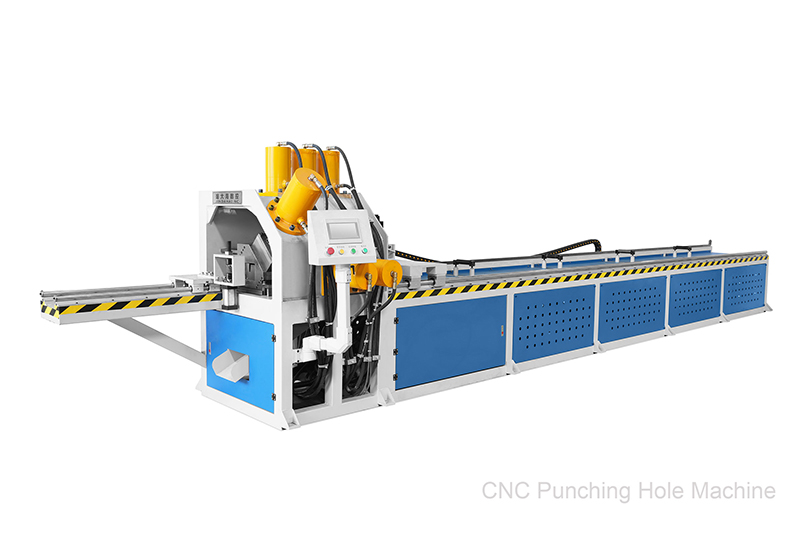
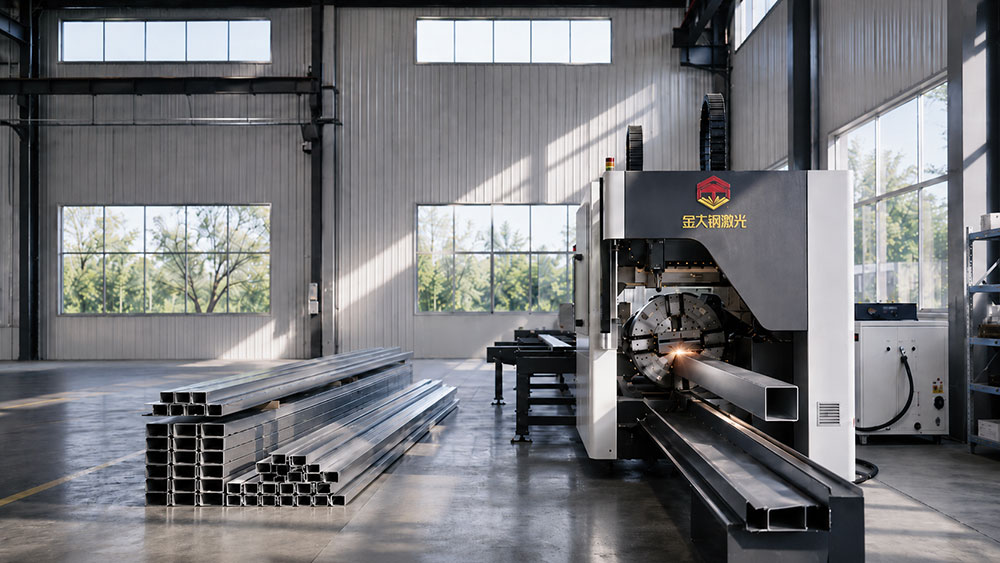
Metal tubes are used in many industries, from construction and furniture to automotive parts, agricultural equipment, fitness machines, guardrails, steel structures, and machinery frames. In the past, many factories processed tubes by using sawing machines, drilling machines, punching machines, milling machines, and manual grinding. These methods can work, but they often require several separate steps, more workers, and repeated positioning. When production volume increases, the traditional method may become slow, inconsistent, and difficult to manage.
This is why the laser tube cutting machine has become an important piece of equipment in modern metal fabrication. It combines cutting, hole making, profile cutting, angle cutting, and complex shape processing into one automated system. Instead of moving the tube from one machine to another, the operator can load the material, import the drawing, set the cutting parameters, and let the machine finish the work with high precision.
A laser tube cutting machine is not only used for cutting tubes into short pieces. It can also cut round holes, square holes, slots, fish-mouth joints, bevel openings, irregular shapes, and connection structures on different tube profiles. For many factories, this changes the entire production process. It helps reduce manual work, improve accuracy, save material, and make tube processing more flexible.
What Is a Laser Tube Cutting Machine?
A laser tube cutting machine is a CNC-controlled cutting system designed specifically for metal tubes and pipes. It uses a high-energy laser beam to melt or vaporize the metal surface, while auxiliary gas blows away the molten material to create a clean cutting edge. The whole process is controlled by computer software, which means the machine can cut according to digital drawings with stable accuracy.
Unlike a flat sheet laser cutting machine, a tube laser system is built to hold and rotate long metal tubes. Most machines are equipped with front and rear chucks. These chucks clamp the tube, rotate it, and move it forward according to the cutting program. The laser cutting head stays in position or moves according to the machine structure, while the tube is rotated and fed automatically.
A fiber tube laser cutter is now one of the most common types in the market because fiber laser technology offers high cutting efficiency, lower maintenance needs, and good performance on carbon steel, stainless steel, aluminum, galvanized steel, brass, and other metal materials. Compared with older cutting methods, fiber laser cutting is faster, cleaner, and easier to automate.
The main purpose of this machine is to help factories process tube materials more efficiently. It is especially useful when the product requires many holes, different cutting angles, accurate joint structures, or repeated batch production.
Common Tube Shapes It Can Process
One major advantage of tube laser cutting is its wide processing range. Many people think the machine is only used for round pipes, but in real production, it can handle many tube profiles.
Common materials and shapes include round tubes, square tubes, rectangular tubes, oval tubes, angle steel, channel steel, flat tubes, D-shaped tubes, and some special-shaped profiles. Depending on the machine model and chuck design, some machines can also process open profiles such as angle iron and U-channel.
This makes the pipe laser cutting machine suitable for many industries where tube structures are widely used. For example, a furniture factory may use square tubes and round tubes for tables, chairs, shelves, and frames. A construction equipment factory may use rectangular tubes for guardrails, scaffolding parts, and support structures. A fitness equipment manufacturer may need curved tube joints, round holes, and accurate connection positions. A machinery factory may need heavy tubes for frames, brackets, and protective structures.
Because tube profiles are different from flat sheets, accuracy is not only about cutting length. The machine must also control rotation angle, feeding position, chuck clamping, cutting path, and tube deformation. This is why a dedicated tube laser cutter is more suitable than a general cutting machine when the main material is tube or pipe.
Where Laser Tube Cutting Machines Are Used
Laser tube cutting machines are used in a wide range of industrial production. Their value becomes more obvious when a factory needs to process many tubes with different hole patterns, lengths, and connection designs.
In the construction industry, they are used for scaffolding systems, guardrails, steel supports, climbing frames, aluminum guide rails, handrails, and structural tube parts. These products often require repeated holes, accurate cutting lengths, and stable batch production. A laser tube cutting system can help make the process cleaner and more consistent.
In the furniture industry, metal tubes are used for office furniture, outdoor furniture, storage racks, display shelves, bed frames, and chair frames. Laser cutting allows designers to create more attractive shapes and stronger connection structures. Because the cuts are accurate, welding and assembly can also become easier.
In the automotive and motorcycle industries, tube parts are used for frames, exhaust systems, brackets, protective bars, and customized accessories. Accuracy is very important because small errors can affect assembly. A CNC tube cutting machine helps reduce these errors and supports more complex part designs.
In agricultural machinery, tubes are used for frames, guards, supports, trailers, and equipment structures. These products often need strong materials and reliable cutting quality. Laser cutting helps manufacturers produce parts faster while keeping the connection positions accurate.
In fitness equipment production, tube processing is especially important. Many fitness machines use round, oval, and rectangular tubes. The parts usually require smooth cutting edges, accurate holes, and clean joint structures. Laser tube cutting can reduce grinding work and improve the appearance of finished products.
Other common application areas include medical equipment frames, logistics racks, metal doors and windows, lighting poles, warehouse shelving, playground equipment, solar mounting systems, stainless steel railings, and customized metal products.
How the Machine Works in Production
The basic workflow of a laser tube cutting machine is easier to understand than many people expect. First, the production team prepares the digital drawing. This drawing may come from CAD software or other design systems. The operator imports the file into the machine software and checks the cutting path, material size, tube shape, cutting sequence, and processing parameters.
Next, the tube is loaded onto the machine. Some machines use manual loading, while higher-level systems may use automatic loading devices. For long tubes, especially 6-meter or 9-meter materials, a loading support system is important because it helps keep the tube stable during feeding.
After the tube is clamped by the chuck, the machine measures or positions the material. The control system then begins cutting according to the program. The tube rotates and moves forward while the laser head cuts holes, slots, notches, bevels, or full cuts. When one part is finished, the machine continues to process the next part according to the nesting plan.
The finished parts are unloaded manually or automatically, depending on the machine configuration. Some machines also have automatic collection systems, which help separate finished parts from waste material.
For operators, the most important daily tasks are loading material correctly, choosing the right cutting parameters, checking the nozzle and lens condition, ensuring gas pressure is stable, and confirming that the cutting file matches the actual tube specification. With proper training, the machine is not difficult to operate. However, stable production still depends on good material preparation, correct programming, and regular maintenance.
What Problems Does It Solve?
The biggest problem solved by laser tube cutting is production complexity. In traditional tube processing, a single part may require several machines. For example, a worker may first cut the tube to length with a sawing machine, then drill holes, then mill special openings, then grind the edges, and finally move the part to welding or assembly. Each step takes time. Each transfer creates a chance for positioning error.
A laser tube cutting machine combines many of these steps. It can cut the tube length and process holes or shapes in one setup. This helps reduce repeated positioning and makes the final part more consistent.
Another important problem is labor dependence. Manual cutting and drilling require experienced workers. If the worker is tired or the batch is large, quality may become unstable. Laser cutting is controlled by software, so the same program can be repeated many times with consistent results.
Material waste is also reduced. With nesting software, the machine can arrange parts more efficiently on one tube. Some machines also support short tailing design, which means less leftover material at the end of the tube. For factories processing expensive materials such as stainless steel or aluminum, material saving can be very valuable.
The machine also helps improve the appearance of the product. Laser cutting edges are usually cleaner than traditional mechanical cutting. In many cases, less grinding or secondary processing is needed. This is useful for products where the surface quality matters, such as furniture, railings, display racks, and stainless steel products.
Key Benefits for Industrial Production
The first benefit is higher efficiency. A laser tube cutting machine can process holes, cuts, and complex shapes quickly. When the production design is suitable, it can replace several traditional machines and reduce the total processing time.
The second benefit is better accuracy. Since the machine follows a digital program, the cutting position is more stable. This is especially important for holes that need to align during assembly or welding. Accurate tube cutting can reduce fitting problems and improve production flow.
The third benefit is flexible production. Modern factories often receive orders with different sizes, shapes, and batch quantities. Traditional molds or manual tools may not be flexible enough. Laser cutting allows the factory to change drawings and process different parts without making special molds for every design. This is useful for both batch production and customized orders.
The fourth benefit is cleaner processing. Laser cutting is a non-contact process, so there is less mechanical force on the tube compared with punching or sawing. This can reduce deformation for some materials and profiles. It also reduces the need for tool replacement in many cutting tasks.
The fifth benefit is improved safety. Traditional tube cutting often involves manual measuring, manual drilling, blade cutting, and grinding. These steps can create safety risks. With a tube laser cutter, the operator can stay farther away from the cutting area, and the process is more enclosed and controlled.
The sixth benefit is lower long-term production cost. Although the machine investment may be higher than simple traditional equipment, it can save labor, reduce material waste, shorten production time, and improve product consistency. For factories with stable tube processing demand, these advantages can become important over time.
Semi-Automatic and Automatic Systems
Not all laser tube cutting machines are the same. Some machines are designed for small and medium factories, while others are built for high-volume industrial production.
A semi-automatic machine usually requires manual loading and unloading. It may be more affordable and easier to install. This type is suitable for factories that have regular tube cutting needs but do not require full automation. It is also a practical choice for companies that want to improve production without making a very large first investment.
An automatic laser tube cutting system may include automatic loading, automatic feeding, automatic unloading, nesting software, and sometimes even connection with a production management system. This type is more suitable for factories with large daily output, repeated product sizes, and stronger demand for labor saving.
When choosing between semi-automatic and automatic systems, the factory should consider material length, tube weight, daily production quantity, product variety, workshop space, labor cost, and budget. A high-end automatic system is not always necessary for every factory. The right machine should match the real production situation.
For distributors and factory buyers, this is also an important point. Many customers do not only ask for the lowest price. They want a machine that fits their material, their production capacity, and their future business plan. A practical machine recommendation can help the customer avoid overbuying or buying a machine that is too small for their needs.
Materials Suitable for Laser Tube Cutting
A laser tube cutting machine can process many metal materials, but the cutting result depends on laser power, material thickness, gas type, machine structure, and parameter settings.
Carbon steel is one of the most common materials. It is widely used in construction, machinery, racks, frames, and industrial structures. Fiber laser cutting can process carbon steel efficiently, especially when oxygen is used as auxiliary gas.
Stainless steel is also very common, especially for railings, furniture, medical equipment, food equipment, and decorative structures. Nitrogen is often used to help achieve cleaner cutting edges and reduce oxidation.
Aluminum tubes are used in lightweight structures, ladders, display systems, automotive parts, and some construction applications. Aluminum requires suitable laser power and stable cutting parameters because it reflects light more than carbon steel.
Galvanized tubes are widely used in fencing, racks, guardrails, and outdoor products. Laser cutting can process galvanized tubes, but the machine settings and exhaust system should be properly managed because zinc coating can create fumes during cutting.
Brass and copper can also be processed by some fiber laser systems, but they require more careful machine configuration due to their reflective properties. Buyers should confirm material type and thickness before choosing the machine.
In real production, material quality also matters. Tubes with large bending, twisting, uneven thickness, or poor surface quality may affect cutting accuracy. Good machines can compensate for some variation, but stable material supply is still important for consistent results.
How It Improves Assembly and Welding
One of the most valuable advantages of laser tube cutting is that it can improve the next production steps. Cutting is not an isolated process. If the tube parts are inaccurate, welding and assembly become difficult. Workers may need to adjust parts manually, enlarge holes, grind edges, or force parts into position. This wastes time and may reduce product quality.
With accurate tube cutting, parts can fit together more smoothly. Fish-mouth cuts, slots, and positioning holes can be designed directly in the drawing. This helps workers assemble parts faster and reduces the need for manual measuring. For welded structures, better fit-up can also improve welding quality.
For example, in furniture production, accurate tube joints can make the frame look cleaner and more professional. In machinery frames, accurate holes and cuts can help ensure that bolts, brackets, and covers are installed correctly. In fitness equipment, smooth joint structures can improve both strength and appearance.
This is one reason why many factories see laser tube cutting as more than a cutting process. It is a way to improve the whole production chain.
What Buyers Should Consider Before Purchasing
Before buying a laser tube cutting machine, a factory should clearly understand its own production needs. The first question is material type. Carbon steel, stainless steel, aluminum, and galvanized steel may require different power levels and gas choices.
The second question is tube size. Buyers should confirm the maximum tube diameter, square tube size, rectangular tube size, and material length they need to process. A machine that is too small will limit future orders, while a machine that is too large may increase unnecessary cost.
The third question is wall thickness. Thin tubes and thick tubes require different cutting power and machine stability. If the buyer often processes heavy tubes, the machine body, chuck strength, support system, and cutting power must be suitable.
The fourth question is production volume. A workshop that cuts a few tubes per day may not need a full automatic loading system. A factory processing hundreds or thousands of tube parts per day should consider automation more seriously.
The fifth question is product complexity. If the buyer only needs straight cutting, a simpler system may be enough. If they need many holes, bevel cuts, joint shapes, and irregular openings, software function and cutting accuracy become more important.
The sixth question is after-sales support. Laser tube cutting equipment includes mechanical parts, optical parts, electrical control, software, gas system, cooling system, and dust extraction. Good technical support can help the customer solve problems faster and keep production stable.
For companies comparing different metal tube processing solutions, it is better to evaluate total production value instead of only looking at machine price. A cheaper machine may not be the best choice if it cannot meet daily production requirements or if support is weak.
Practical Use in Small and Medium Factories
Laser tube cutting is not only for large industrial groups. Many small and medium factories are also adopting this technology because market competition is becoming stronger. Customers now expect faster delivery, better appearance, and more customized designs. Traditional manual processing may not be enough.
For a small furniture factory, a laser tube cutting machine can help produce different product styles without making many molds. For a local metal fabrication workshop, it can accept more customized orders from construction, decoration, and machinery customers. For a medium-sized equipment manufacturer, it can reduce dependence on outsourced tube cutting suppliers and keep production schedule under better control.
The machine also helps factories improve their image. When customers visit the workshop and see CNC laser cutting equipment, they may feel more confident about production capability. For export-oriented manufacturers, modern equipment can support better quality control and stronger customer trust.
Of course, the investment should be planned carefully. A factory should calculate monthly tube processing volume, labor cost, outsourcing cost, material waste, order growth potential, and expected payback period. If the machine can solve real production bottlenecks, it can become a strong long-term investment.
Why It Supports Modern Manufacturing Trends
Manufacturing is moving toward automation, digital control, flexible production, and faster delivery. Laser tube cutting fits these trends very well.
First, it is digital. Production starts from a drawing file, and the machine follows the program. This makes it easier to manage repeat orders and reduce human error.
Second, it is flexible. Factories can change product designs quickly. This is important when customers request different sizes, hole positions, or connection shapes.
Third, it supports lean production. By reducing unnecessary steps, repeated handling, and material waste, the machine helps factories make production more efficient.
Fourth, it supports better product design. Engineers can design tube structures that are difficult or expensive to make with traditional methods. This can help companies create stronger, lighter, and more attractive products.
Fifth, it helps factories respond to labor challenges. In many regions, skilled workers are becoming harder to find. Automated cutting equipment can reduce dependence on manual experience and make production easier to standardize.
These trends explain why laser tube cutting is becoming more common in metal fabrication workshops around the world.
Maintenance and Daily Operation Tips
To keep the machine working well, regular maintenance is important. Operators should check the cutting lens, protective lens, nozzle, gas pressure, water chiller, lubrication system, dust removal system, and chuck condition.
The protective lens should be kept clean because contamination can affect cutting quality and damage optical parts. The nozzle should match the material and thickness. Gas pressure should be stable, especially when cutting stainless steel or thick materials. The water chiller should maintain proper temperature to protect the laser source.
The chuck and support rollers should also be inspected regularly. Since tube cutting involves rotation and feeding, stable clamping is very important. If the chuck is not accurate or the support system is not adjusted correctly, the cutting position may be affected.
Software files should be checked before production. Wrong tube size, wrong drawing scale, or incorrect cutting sequence may cause waste. Operators should also run a test cut when processing a new material or new product design.
Good maintenance does not only protect the machine. It also protects production quality. A well-maintained machine can cut more consistently, reduce downtime, and extend equipment service life.
Future Development of Tube Laser Cutting
The future of laser tube cutting will likely move toward higher automation, smarter software, better material recognition, and easier operation. Automatic loading and unloading systems will become more common, especially in factories with large production volume.
Software will also become more important. Better nesting, automatic path optimization, tube seam detection, collision avoidance, and production data management can help factories improve efficiency. Some systems may connect with ERP or MES platforms, allowing production managers to track orders, materials, and machine status more clearly.
Another trend is wider application in customized manufacturing. As customers request more personalized products, factories need equipment that can change designs quickly. Laser tube cutting supports this because it does not depend heavily on fixed molds.
Machine structure will also continue improving. Stronger chucks, better support systems, higher cutting accuracy, and more stable performance on heavy tubes will help expand the application range.
For many manufacturers, tube laser cutting will become a standard process, just like sheet metal laser cutting has already become common in many factories.
Conclusion
A laser tube cutting machine is not simply a faster cutting tool. It is a modern production solution that helps factories process metal tubes with higher accuracy, better flexibility, and lower dependence on manual work. It can cut different tube shapes, make holes and slots, create complex joint structures, and support both small-batch customization and large-scale production.
For industries such as construction, furniture, automotive parts, fitness equipment, agricultural machinery, metal racks, railings, and machinery frames, tube laser cutting can bring clear production value. It reduces repeated processing steps, improves part consistency, saves material, supports cleaner assembly, and helps factories respond faster to customer needs.
When choosing a machine, buyers should consider tube size, material type, thickness, production volume, automation level, software function, and after-sales support. The best machine is not always the most expensive one. It is the one that matches real production needs and creates long-term value.
As manufacturing continues to move toward automation and flexible production, laser tube cutting will play an even greater role in metal fabrication. For factories that want to improve efficiency, reduce labor pressure, and produce higher-quality tube products, this technology is becoming a practical and competitive choice.