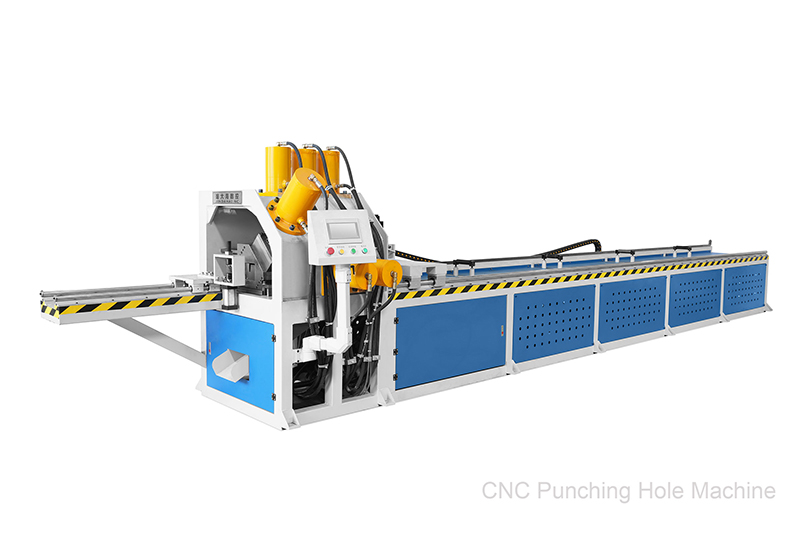
Metal tube processing is an important part of modern manufacturing. Tubes and pipes are used in furniture, construction, automotive parts, machinery frames, fitness equipment, agricultural machines, guardrails, shelves, trailers, and many other products. In many factories, tube processing used to depend on several separate steps, such as sawing, drilling, punching, milling, grinding, and manual measuring. This traditional method can still work, but it often requires more labor, more workshop space, and more time.
As industrial production becomes faster and more flexible, many manufacturers are looking for equipment that can reduce manual work and improve production accuracy. This is one reason why the laser tube cutting machine has become more common in metal fabrication workshops. It can cut tubes, make holes, process slots, create special shapes, and prepare parts for welding or assembly in one production process.
For many factories, tube laser cutting is not just a cutting method. It is a way to simplify production. Instead of moving a tube from one machine to another, the operator can load the material, import a drawing, set the cutting parameters, and allow the machine to complete the part automatically. This helps improve efficiency, reduce errors, and make production easier to manage.
What Is a Laser Tube Cutting Machine?
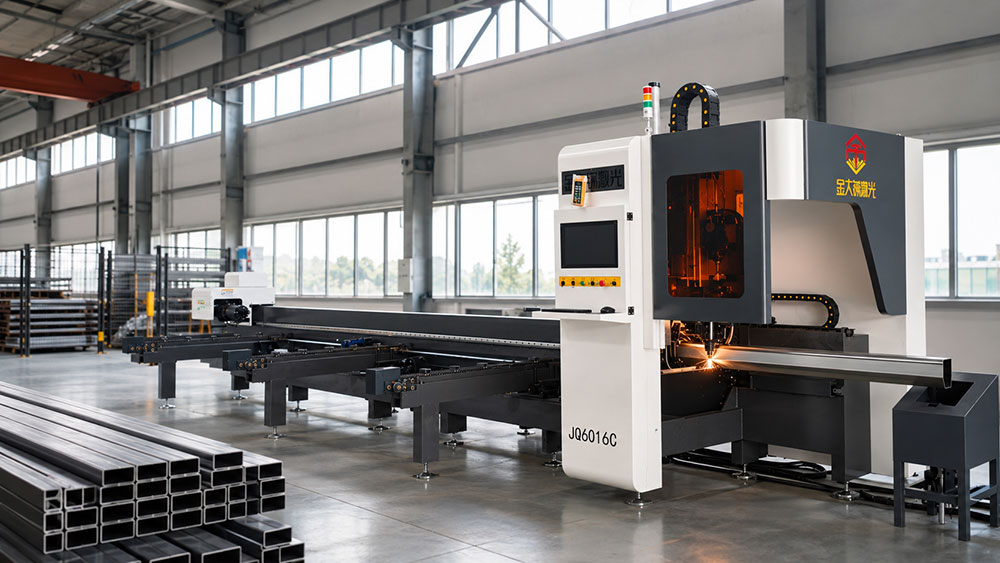
A laser tube cutting machine is a CNC-controlled machine used to cut metal tubes and pipes with a high-energy laser beam. The laser beam focuses on the surface of the metal and melts the cutting area. At the same time, auxiliary gas removes the molten material and helps create a clean cutting edge. The machine follows a digital cutting program, so the cutting path, hole position, tube length, and processing shape can be controlled accurately.
Different from a flat sheet laser cutting machine, a tube laser cutting machine is designed to hold long tube materials. It usually uses front and rear chucks to clamp and rotate the tube. During cutting, the tube can move forward, rotate, and stop at different angles according to the programmed drawing. This allows the laser cutting head to process different sides of the tube.
The machine can process round tubes, square tubes, rectangular tubes, oval tubes, and some special-shaped profiles. Depending on the machine structure and chuck design, some models can also process open profiles such as angle steel and channel steel. This makes it useful for many factories that work with different metal profiles every day.
Why Tube Laser Cutting Is Becoming Popular
One major reason is that manufacturers need faster production. Traditional tube processing may require several workers and several machines. For example, one worker may cut the tube to length, another may drill holes, and another may grind or adjust the edges before welding. Every step takes time, and every transfer between machines may create positioning errors.
A fiber tube laser cutter can combine several of these steps into one process. It can cut the tube to the required length and also process holes, slots, angles, notches, and joint shapes. This means fewer machines are needed for the same part, and fewer workers are required to complete the process.
Another reason is flexibility. In many industries, customers now ask for smaller batches, different sizes, and customized designs. Traditional molds or fixed tools are not always suitable for this type of production. Laser cutting is controlled by software, so changing the product design is usually much easier. The factory can adjust the drawing and produce a new tube part without making a new mold.
Quality is also an important reason. Laser cutting can create more accurate and cleaner cuts than many traditional methods. Better accuracy helps improve welding, assembly, and product appearance. For factories that want to improve both production speed and product quality, tube laser cutting becomes a practical solution.
Main Applications in the Market
The application range of laser tube cutting is very wide because metal tubes are used in many industries. In the construction industry, tube parts are used for scaffolding systems, climbing frames, guardrails, handrails, steel structures, support frames, and building accessories. These parts often require repeated holes, accurate cutting lengths, and strong connection structures. A pipe laser cutting machine can help manufacturers process these parts more efficiently.
In furniture manufacturing, metal tubes are used for tables, chairs, beds, shelves, office furniture, outdoor furniture, and display racks. Product appearance is important in this industry, so clean cutting edges and accurate joints can improve the final product. Laser cutting also allows designers to create more attractive structures and connection methods.
In the automotive and motorcycle industries, tube parts are used for frames, brackets, exhaust systems, protection bars, and customized accessories. These parts require high consistency because they need to fit with other components. Laser tube cutting helps reduce dimensional errors and supports more complex part designs.
Fitness equipment is another common application area. Many fitness machines use round, oval, and rectangular tubes. The parts usually need smooth edges, accurate holes, and strong welded joints. Tube laser cutting can reduce manual grinding and make assembly easier.
Agricultural machinery, logistics equipment, warehouse racks, metal doors and windows, solar mounting systems, trailers, and machinery frames also use many tube parts. For these industries, the value of laser tube cutting is not only speed, but also the ability to process different product designs with stable quality.
What Materials Can Be Processed?
Laser tube cutting machines can process many types of metal materials. Carbon steel is one of the most common materials because it is widely used in construction, machinery, shelving, frames, and industrial structures. When cutting carbon steel, oxygen is often used as auxiliary gas to improve cutting efficiency.
Stainless steel is also common, especially in furniture, railings, food equipment, medical equipment, decoration, and outdoor products. Nitrogen is often used for stainless steel cutting because it can help reduce oxidation and create cleaner edges. For products where appearance is important, this can be very useful.
Aluminum tubes are used in lightweight structures, ladders, display systems, transportation parts, and some construction products. Aluminum is more reflective than carbon steel, so it requires suitable machine configuration and stable cutting parameters. A good laser tube cutting system can process aluminum tubes with good accuracy when the settings are correct.
Galvanized steel tubes are widely used in fences, guardrails, greenhouse frames, racks, and outdoor structures. Laser cutting can process galvanized tubes, but the workshop should pay attention to fumes and dust removal because the zinc coating may produce smoke during cutting.
Some machines can also process brass, copper, and other metal materials, but these materials need more careful parameter settings. Before purchasing equipment, buyers should confirm the material type, tube size, wall thickness, and required cutting quality.
How the Machine Works
The working process starts with the design drawing. Usually, the part drawing is created in CAD software or another design program. The operator imports the drawing into the machine software, checks the cutting path, confirms the tube size, and sets the cutting parameters. These parameters may include laser power, cutting speed, gas pressure, focus position, and piercing method.
After the drawing is ready, the tube is loaded onto the machine. Some machines use manual loading, while higher-level machines can use automatic loading systems. The tube is clamped by the chuck, and the machine begins to feed and rotate the material according to the program. The cutting head then cuts holes, slots, notches, bevels, and final part lengths.
During production, the CNC system controls the movement of the tube and the cutting head. The tube can rotate to different angles so the laser can process different sides. This is very important for square tubes, rectangular tubes, and products with holes on multiple surfaces.
When the cutting is finished, the parts are unloaded manually or automatically. Some machines have collection systems for finished parts and waste material. This makes the production area cleaner and easier to manage.
For operators, daily operation usually includes checking the material size, confirming the drawing, adjusting cutting parameters, loading tubes correctly, and monitoring cutting quality. With proper training, the operation is not difficult, but stable production still depends on good preparation and regular maintenance.
Convenience for Industrial Production
The most obvious convenience is process integration. A laser tube cutting machine can replace several traditional processes in many applications. For example, a part that used to require sawing, drilling, milling, and grinding may now be completed on one machine. This reduces the number of operations and makes production easier to organize.
Another convenience is lower labor dependence. Manual measuring, marking, drilling, and cutting require experienced workers. If the factory receives large orders, workers may become tired, and quality may become unstable. With CNC tube laser cutting, the machine follows the same program repeatedly, which helps improve consistency.
Laser tube cutting also makes customized production easier. If a customer changes the hole position or tube length, the factory can usually modify the digital drawing instead of making a new tool. This is very useful for workshops that handle many different orders.
Material utilization can also improve. Nesting software can arrange parts on the tube more efficiently and reduce waste. Some machines are designed to reduce tail material, which is especially valuable when processing stainless steel, aluminum, or other higher-cost materials.
The machine also helps improve workshop management. Since many processes are completed in one place, there is less movement of semi-finished parts. This can reduce confusion, save space, and make production planning more accurate.
Benefits for Welding and Assembly
Tube cutting quality directly affects the next production steps. If tube parts are not accurate, welding and assembly become more difficult. Workers may need to adjust the parts manually, grind the edges, enlarge holes, or use extra fixtures to make the parts fit. This increases labor cost and may affect the final product quality.
Laser tube cutting can create accurate holes, slots, and joint shapes. For welded structures, this helps parts fit together more smoothly. For bolted structures, accurate hole positions help reduce assembly problems. For products with visible frames, clean cutting edges can also improve the appearance.
For example, in a furniture factory, accurate tube joints can make the finished frame look more refined. In a fitness equipment factory, smooth tube connections can improve both strength and visual quality. In a machinery frame factory, accurate cutting can reduce assembly errors and improve production speed.
This is why many manufacturers view laser tube cutting as a production improvement tool, not just a cutting machine. It helps improve the whole workflow from raw material to finished product.
Semi-Automatic and Automatic Options
Laser tube cutting machines come in different automation levels. A semi-automatic machine usually requires manual loading and unloading. It is often more affordable and suitable for small or medium factories. If the production volume is not extremely high, this type of machine can still bring clear improvements in speed and accuracy.
An automatic tube laser cutting machine may include automatic loading, automatic feeding, automatic unloading, and more advanced software functions. It is suitable for factories with large production volume, repeated tube sizes, and stronger labor-saving requirements. Although the initial investment is higher, the long-term production efficiency can also be much better.
The choice between semi-automatic and automatic systems should depend on real production needs. A small workshop does not always need the highest automation level. A large factory, however, may lose efficiency if the machine still depends too much on manual loading. Buyers should consider material length, tube weight, daily output, product variety, workshop space, and labor cost before choosing the machine.
The best choice is not always the most expensive one. It is the machine that matches the factory’s production situation and future growth plan.
How to Choose the Right Machine
Before buying a laser tube cutting machine, the buyer should first confirm the tube shapes they need to process. Round tubes, square tubes, rectangular tubes, and open profiles may require different chuck designs and support systems. If the factory processes many different profiles, the machine should be flexible enough.
The second factor is tube size. Buyers should check the maximum tube diameter, square tube size, rectangular tube size, and tube length. Many factories use 6-meter tubes, but some may need to process longer materials. If the machine length is not suitable, production will be limited.
The third factor is wall thickness. Thin tubes and thick tubes require different laser power and machine stability. For heavy-duty production, the machine body, chuck strength, support system, and laser power are all important.
The fourth factor is cutting requirement. Some factories only need straight cutting and simple holes. Others need complex slots, angled cuts, fish-mouth joints, bevel openings, and multiple holes on different sides. The more complex the part is, the more important the software and machine accuracy become.
The fifth factor is after-sales service. A laser tube cutting machine includes the laser source, cutting head, chucks, control system, software, water chiller, gas system, dust removal system, and electrical components. Reliable technical support helps reduce downtime and keeps production stable.
For buyers comparing different metal tube cutting solution options, it is better to consider total production value instead of only comparing machine price. A lower-priced machine may not be cost-effective if it cannot meet daily production requirements.
Common Mistakes When Using Tube Laser Cutting
One common mistake is choosing a machine only by price. Price is important, but it should not be the only factor. If the machine cannot process the required tube size or thickness, the factory may need to replace it later. This can create more cost in the long run.
Another mistake is ignoring material quality. Tubes with serious bending, twisting, uneven thickness, or poor surface quality may affect cutting accuracy. Even a good machine needs stable material to achieve consistent results.
Some factories also underestimate the importance of software. Good software can improve nesting, reduce waste, optimize cutting paths, and make operation easier. Poor software can make production less efficient, even if the machine structure is acceptable.
Maintenance is another area that is often ignored. The protective lens, nozzle, chuck, support rollers, water chiller, gas system, and dust removal system should be checked regularly. If maintenance is poor, cutting quality may become unstable and machine downtime may increase.
Training is also important. Operators should understand basic cutting parameters, material differences, safety rules, and daily inspection methods. A well-trained operator can help the factory get better performance from the machine.
Value for Small and Medium Manufacturers
Laser tube cutting is not only suitable for large factories. Small and medium manufacturers can also benefit from this technology, especially when they want to improve product quality or accept more customized orders.
For a small metal fabrication workshop, a laser tube cutting machine can expand business opportunities. The workshop can process tube parts for furniture companies, construction contractors, machinery manufacturers, and local custom projects. This can help the business move beyond simple cutting work and offer higher-value processing services.
For a medium-sized manufacturer, the machine can reduce dependence on outsourcing. If tube parts are processed by outside suppliers, delivery time and quality may be harder to control. Bringing tube cutting in-house can help the factory manage production schedules more effectively.
For export-oriented manufacturers, modern cutting equipment can also improve customer confidence. When overseas buyers see that the factory uses CNC laser processing equipment, they may feel more confident about quality control and delivery capability.
Of course, investment should be based on real demand. The factory should calculate current tube processing volume, labor cost, outsourcing cost, material waste, expected order growth, and payback period. If tube processing is a regular part of production, the machine can become a valuable long-term asset.
Safety and Workshop Environment
Laser tube cutting can also improve workshop safety when used correctly. Traditional tube processing often includes manual cutting, drilling, grinding, and repeated handling of heavy materials. These steps may create safety risks, especially when workers need to operate blades, drills, or grinders for long periods.
With laser cutting, more work is controlled by the machine. The operator can stay farther from the cutting area, and many systems include protective covers, warning systems, and safety controls. This does not mean safety can be ignored, but it does reduce many risks related to manual cutting and drilling.
The workshop should still pay attention to ventilation and dust removal. Cutting metal tubes can produce fumes and small particles, especially when processing galvanized steel or coated materials. A proper exhaust and filtration system helps create a cleaner working environment.
Operators should also wear suitable protective equipment and follow machine safety rules. Only trained workers should operate the equipment. Regular inspection of electrical systems, gas systems, and cooling systems is also important for safe production.
Future Trends in Tube Laser Cutting
Tube laser cutting technology will continue to develop toward higher automation, smarter software, and easier operation. Automatic loading and unloading systems are becoming more popular because many factories want to reduce labor and increase production stability.
Software will play a larger role in future production. Better nesting, automatic path optimization, collision avoidance, tube seam detection, and production data tracking can help factories improve efficiency. Some machines may also connect with production management systems so managers can track orders, materials, and machine status more clearly.
Another trend is more flexible customization. Customers in many industries want products with different sizes, special shapes, and faster delivery. Laser tube cutting supports this trend because it allows quick changes through digital drawings.
Machine structure will also continue to improve. Stronger chucks, better support systems, higher precision, and more stable cutting performance will help expand the machine’s application range. For heavy tubes and complex profiles, these improvements are especially important.
As more factories upgrade their production methods, laser tube cutting will become a standard process in many metalworking industries.
Conclusion
A laser tube cutting machine is more than a piece of cutting equipment. It is a modern production tool that helps manufacturers process metal tubes faster, more accurately, and with less manual work. It can cut tube lengths, make holes, create slots, process angles, and prepare complex connection structures in one automated process.
Its applications cover construction, furniture, automotive parts, fitness equipment, agricultural machinery, warehouse racks, railings, trailers, and many other industries. For factories that process tube materials regularly, this machine can improve efficiency, reduce labor dependence, save material, improve welding and assembly, and support customized production.
Before purchasing a machine, buyers should carefully evaluate material type, tube size, wall thickness, cutting complexity, automation level, software function, and after-sales support. The right machine should match real production needs and create long-term value.
As industrial manufacturing continues to move toward automation, digital production, and flexible order management, tube laser cutting will become increasingly important. For factories that want to improve competitiveness and deliver better tube products, this technology offers a practical and powerful solution.