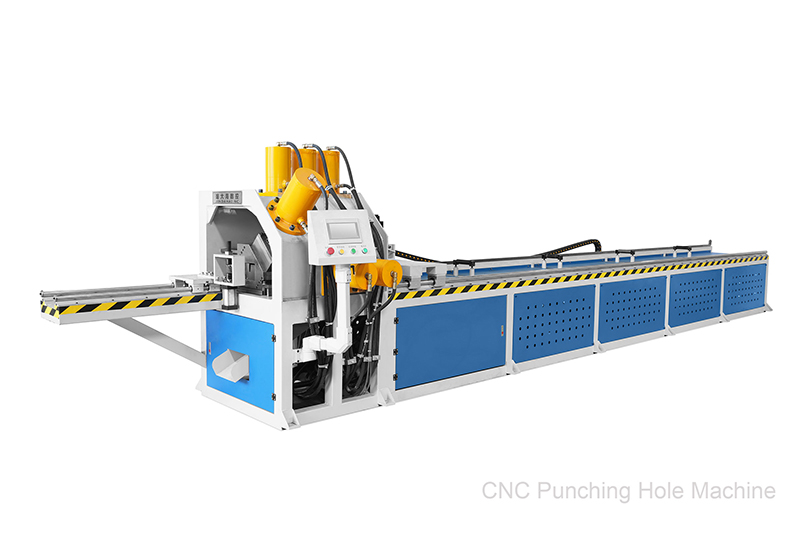
In today’s fabrication industry, tube processing is no longer a minor step hidden in the background of production. For many manufacturers, it is one of the most important stages in the entire workflow because it affects speed, fit-up quality, labor use, and final product consistency at the same time. A tube may look simple in raw form, but once it enters actual production, it often needs accurate length cutting, hole positioning, end shaping, slotting, bevel preparation, or contour cutting before it can move on to welding or assembly. If any of those details are unstable, the problem usually continues into later stages of production.
This is one reason why the laser tube cutting machine has become increasingly important across many parts of the market. Manufacturers are under pressure to deliver more parts in less time, while also reducing labor intensity and keeping dimensional quality under control. Traditional processing methods can still work for some products, but when product structures become more complex and customers expect cleaner, faster, and more flexible production, older workflows often begin to show clear limits.
The shift toward laser tube processing is not just about replacing one machine with another. It is part of a larger change in how fabrication companies think about efficiency. Instead of separating tube work into several manual steps, more factories now want a process that can create multiple features in one coordinated operation. This makes the workflow easier to manage and helps reduce the small inconsistencies that often appear when the same part is moved from one station to another.
Another reason the topic matters is that tube-based products are used in so many industries. Construction systems, warehouse racks, metal furniture, fitness equipment, transportation components, machine frames, handrails, commercial display systems, and agricultural equipment all use tubes and profiles in different ways. Some products require heavy-duty structure, while others also demand clean visual appearance. In both cases, better cutting quality and better repeatability create clear value.
For buyers, engineers, and factory managers, understanding tube laser cutting is useful because the technology affects more than just the cutting stage. It influences how smoothly later operations run, how much manual correction is needed, and how quickly the workshop can respond when orders change. This article explains tube laser cutting as a practical manufacturing process. It looks at where it is used, how it works, how factories apply it in everyday production, and why it has become such an important tool in modern metal fabrication.
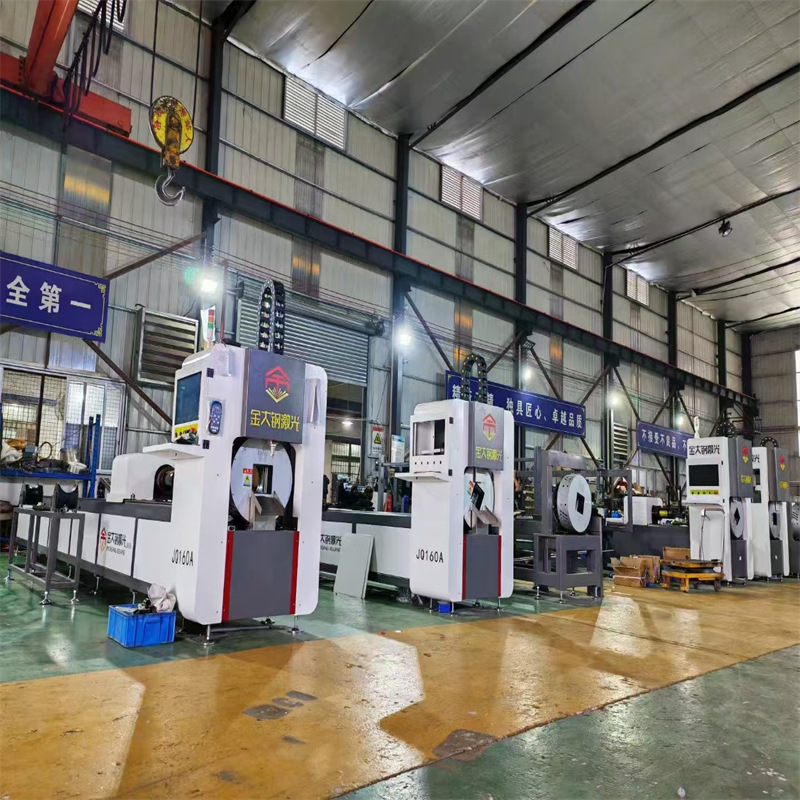
Why Tube Processing Becomes Difficult in Real Production
From the outside, a tube may seem easier to process than a flat sheet or a complex casting. In reality, tube work becomes demanding very quickly once the part needs multiple dimensions and multiple reference points. The moment a tube needs holes on different faces, an angled end, a slot near one edge, or a joining shape that must fit another component, the production logic becomes much more challenging. It is no longer enough to cut the tube to a rough length and move on.
Traditional processing often handles this through separate steps. A saw may cut the raw tube. A drill may create holes. Another station may notch the end. Then the part may be checked manually, corrected by hand, and only after that passed to welding or assembly. This method is workable, but it creates repeated handling, repeated measuring, and repeated chances for deviation. Even when each machine is accurate by itself, the total process can still drift if the part is repositioned several times.
This becomes especially problematic in high-mix production. Many modern workshops do not make only one standard product for months at a time. They switch between customer types, product sizes, and structure designs much more often. When production is mixed, a workflow that depends heavily on repeated manual setup becomes harder to scale and harder to stabilize. That is why many manufacturers now look for a more integrated process.
Tube laser cutting offers a different approach. Instead of building the part feature by feature through separate stations, the geometry is defined digitally first. The machine then executes that geometry with coordinated motion and controlled cutting. This reduces the number of transfers and helps protect dimensional consistency throughout the job. The value is not only in speed. It is also in how much process uncertainty the factory can remove.
What a Laser Tube Cutting Machine Does
A laser tube cutting machine is a CNC-controlled system designed to process metal tubes and profiles with a focused laser beam. Unlike a simple cut-off machine, it is built to handle more than straight cuts. Depending on the part design, the machine can create holes, side openings, slots, contours, notches, end cuts, and other shaped features in one coordinated process. That is what makes it useful for real fabrication work, where finished parts rarely consist of only one simple cut.
The machine works from a digital program. Operators or engineers enter the material type, tube size, wall thickness, and geometry requirements in software, and the system then follows that plan during cutting. Because the logic is digital rather than manual, the same part can be repeated much more consistently. This matters because most tube parts are not end products by themselves. They must fit into a welded frame, a support assembly, or a visible finished structure. When one part drifts out of tolerance, the problem usually becomes harder and more expensive to fix later.
Most current systems use fiber laser technology, which is why the term fiber laser tube cutting solution appears frequently in product content and technical discussions. Fiber-based systems are widely used because they provide strong cutting performance, practical maintenance, and good suitability for metal processing. For most factories exploring this field today, fiber technology is the mainstream direction.
Another important characteristic is production flexibility. Once the program exists, the machine can run repeated parts efficiently, but it can also adjust faster when order details change. This is one of the strongest reasons the technology has expanded across different industries. A machine that supports both repeatability and changeover speed fits the reality of modern fabrication much better than a process that depends too heavily on fixed tooling and manual layout.
Materials and Profile Types Commonly Processed
One of the biggest advantages of tube laser cutting is that it is not limited to one narrow material or one narrow product type. Most fabrication businesses work with several materials and several shapes, sometimes within the same week. A practical production tool must therefore be able to support a broad enough range of daily work to justify its place in the workshop.
In many applications, the machine is used for carbon steel, stainless steel, and aluminum. These materials appear in a very large share of fabricated products, from heavy structural supports to lighter decorative frames. Depending on the machine configuration, some businesses also work with additional profiles, but these three material families are at the center of most real-world tube cutting demand.
In terms of shape, round tubes and square tubes are the most common. However, rectangular tubes, oval tubes, and selected profiles may also be processed where the machine design supports them. This matters because actual customer demand is often broader than one product catalog suggests. A manufacturer may serve storage equipment, railing structures, welded frames, and decorative items at the same time. The ability to switch between profile families without rebuilding the whole process is a major operational advantage.
That is why topics such as round tube cutting applications and square tube fabrication cases are meaningful. They describe real product directions that buyers already understand. A customer usually thinks in terms of what they need to make, not in terms of one abstract machine category. When the machine clearly supports the materials and profiles used in their own shop, the value becomes much easier to see.
A wider processing range also supports business growth. When a factory can handle more tube types with the same core system, it becomes easier to accept new orders and serve different industries without building a completely separate process around each product group.
Where the Technology Is Used
The market for tube laser cutting is broad because tube-based components are used across a wide range of industries. In some cases, tubes provide the main structure of a product. In others, they also contribute to appearance and design. In both cases, the process needs to be reliable enough to support efficient fabrication and consistent results.
Construction and building-related fabrication are important application areas. Tubes and profiles are widely used in support structures, railings, facades, partitions, walkways, canopy frames, and fabricated architectural components. These products often need stable geometry because installation and welding depend on parts fitting correctly. For that reason, laser processing has become increasingly valuable in architectural steel fabrication and other project-based structural work.
Furniture is another key sector. Metal tubes are used in bed frames, shelving systems, tables, chairs, cabinets, workstations, and decorative frames. In furniture, appearance matters as much as strength. Cleaner edge quality and better joining accuracy can influence coating results, assembly neatness, and final product image. This is why tube laser cutting has become more relevant in furniture frame production and related consumer-facing products.
Fitness equipment is also a strong example. Gym machines, benches, support arms, and training structures often use round or shaped tubes with multiple openings and angled cuts. Laser processing supports these products well because it handles repeated geometry more consistently than highly manual workflows. Other important markets include warehouse systems, industrial racks, agricultural equipment, machine structures, transport-related parts, and custom fabricated metal products.
These sectors may look very different from one another, but they share a common manufacturing need: a process that handles tubes accurately, efficiently, and flexibly. That shared requirement explains why tube laser cutting has moved from a specialized option to a much more widely adopted production method.
How the Process Works
The process begins with software preparation. The required geometry is defined in a digital program, including tube size, wall thickness, material type, and feature positions. Once the program is ready, the raw tube is loaded into the machine and held in place by a clamping system. That clamping mechanism also allows controlled rotation when the part design requires different faces or different orientations to be cut.
During processing, the cutting head moves according to the programmed path while the laser beam is focused onto a very small point on the material. At that point, the energy becomes high enough to melt or vaporize the metal. Assist gas helps remove the molten material and contributes to the quality of the cut edge. Meanwhile, the system coordinates movement, rotation, speed, and cut order as one controlled sequence.
What makes this valuable is not only the laser beam itself, but the synchronization of the entire machine. Tube movement, head travel, geometry sequence, and timing all have to work together. This is what allows the machine to create repeated holes, side openings, end cuts, and contours with strong consistency. The process is therefore best understood not as one isolated cutting action, but as a complete digitally controlled manufacturing method.
Because the job is software-driven, programs can be saved and reused. That means repeat orders become easier to restart, and revised orders can often be updated without rebuilding the whole process physically. For factories dealing with both stable products and changing customer requests, this digital flexibility is one of the strongest benefits of the technology.
How the Machine Fits Into Daily Production
In a real workshop, tube laser cutting is part of a wider production chain. The workflow usually starts with engineering preparation, where drawings are checked and programs are created or adjusted. Once the geometry is ready, the factory brings raw material to the machine, selects the correct settings, and begins production.
Material handling can vary depending on output level. Some workshops still use manual loading, especially where batches are moderate and profile variation is high. Others add automated loading to improve continuity and reduce repeated labor. In a higher-throughput environment, better loading flow can make a noticeable difference to total productivity.
Once the cutting cycle begins, the operator’s role changes compared with traditional tube processing. The operator is no longer measuring every feature or manually guiding every station. Instead, the operator supervises the system, monitors gas flow, checks output quality, and keeps material flow stable. This shifts the labor model of the workshop away from repeated manual handling and toward process management.
After cutting, the parts continue to downstream operations such as welding, fitting, finishing, bending, coating, or final assembly. This is where many of the hidden gains appear. If part geometry is more stable, weld fit-up improves. If openings and lengths are more consistent, assembly becomes faster. If fewer parts need manual correction, the overall workflow becomes smoother. In this way, the machine improves not only the cutting stage, but also the stages that follow it.
Benefits for Industrial Production
The main advantage of tube laser cutting is that it reduces process fragmentation. Traditional tube work often splits geometry creation into several steps, with several tools and several reference points. Every extra step increases handling time and increases the opportunity for dimensional drift. Laser processing brings more of that work into one coordinated sequence, which makes the overall process cleaner and more manageable.
A second benefit is consistency. Factories value consistency because it influences everything after cutting. When hole positions, slot locations, and cut angles remain stable, later operations become easier. Welders do not need to force mismatched parts together, assemblers spend less time correcting problems, and supervisors see fewer avoidable interruptions. Stable upstream quality creates smoother downstream work.
Labor efficiency is another strong benefit. A more integrated digital process allows one operator to supervise more of the cutting logic than would be possible in a multi-station manual workflow. Skill is still important, but it is used in a different way. The focus shifts from repeated measuring and repositioning to programming, monitoring, and quality control. This can make the workshop more efficient and easier to manage.
The technology also improves flexibility. Modern fabrication rarely consists only of large, unchanging production runs. Mixed orders, revised drawings, and semi-custom jobs are now common. A process that depends heavily on physical setup and repeated manual layout responds poorly to that environment. Tube laser cutting works better because most changes happen through the program, not through rebuilding the workflow from the beginning.
Finally, there is a quality advantage. Cleaner cuts and better dimensional control often reduce grinding, deburring, and rework. In visible products, that improves appearance. In structural or industrial products, it improves fit and reliability. In both cases, the benefit goes well beyond the cutting point itself.
Why Precision Is So Important
Precision matters because tube parts are almost always part of something larger. They connect to frames, join with fittings, align with other supports, or serve as visible structural elements. A small error in one hole or one cut angle may seem minor in isolation, but once the part enters welding or assembly, that small error can become a much larger production problem.
That is why precision tube processing matters so much in manufacturing. Precision affects product appearance, fit-up speed, labor cost, and the stability of the entire workflow. In furniture, display structures, and fitness equipment, it also affects how polished the final product looks. In industrial products, it affects how easily large batches can move through production without repeated interruption.
Precision becomes even more valuable as output grows. A workshop can sometimes correct a few bad parts manually when volume is low, but that approach becomes expensive and unstable when production increases. A more precise cutting process helps build a more scalable factory workflow.
What Buyers Should Evaluate
A common mistake is to look only at laser power. While power is important, it does not define the full performance of the machine in daily production. Motion stability, clamping quality, software usability, maintenance convenience, and supplier support all influence how the system performs over time. A machine that looks impressive on paper may still be the wrong fit if it does not suit the buyer’s actual products and workflow.
Buyers should also think carefully about application fit. The best machine is not necessarily the largest or most powerful one. It is the one that matches the real tube sizes, materials, profile complexity, and order variation of the factory. This is why reviewing case pages and real production examples can be just as useful as reading a technical specification.
Ease of use matters as well. Even a capable machine becomes difficult to manage if the software is too complicated or if after-sales support is weak. Long-term value depends on the whole production experience, including operator training, spare parts, and technical assistance.
Conclusion
Tube laser cutting has become increasingly important because modern fabrication demands more than simple cutting speed. Manufacturers need better consistency, less repeated handling, faster response to order changes, and stronger control over downstream production. As tube-based products continue to play a central role across construction, furniture, storage systems, industrial equipment, and many other sectors, the need for a better tube-processing method continues to grow.
A laser tube cutting machine helps manufacturers move from a fragmented, labor-heavy workflow to a more integrated digital process. It supports cleaner geometry, better repeatability, smoother assembly, and more efficient production flow. These are practical improvements that directly affect day-to-day factory performance.
For companies that want stronger fabrication capability, better production stability, and a more competitive manufacturing process, tube laser cutting is no longer just a premium option. It is increasingly becoming an essential production tool.