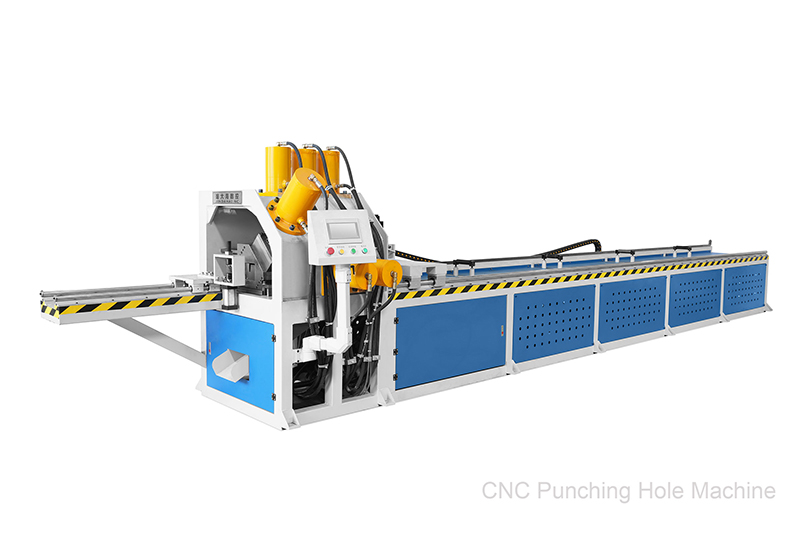
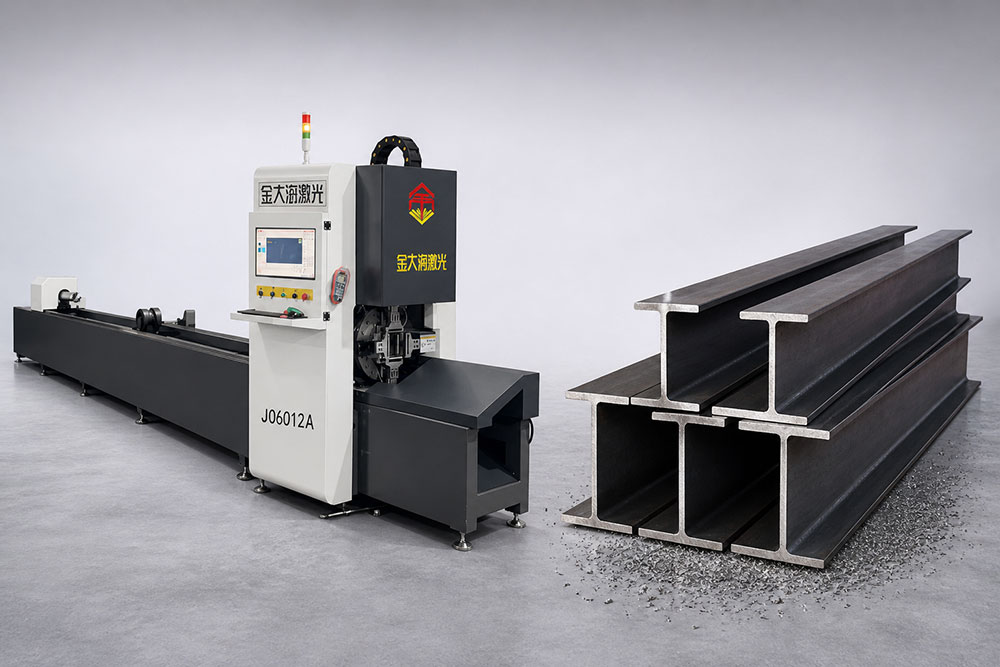
In metal fabrication, tube processing often looks easier than it really is. A tube appears to be a simple product form, but once it enters real industrial production, the work quickly becomes more complex. The tube may need to be cut to an exact length, opened with holes in specific positions, shaped at one or both ends, matched with another tube, or prepared for welding and assembly. If the dimensions shift even slightly, later operations become slower and more expensive. This is one reason why tube processing plays such an important role in production efficiency.
For many years, manufacturers depended on a combination of saw cutting, drilling, punching, manual layout, and repeated measuring to finish tube parts. These methods still exist and can still be useful in some situations, but they also create limitations. The more production steps involved, the more handling time the factory needs. The more hand-operated stages there are, the more difficult it becomes to maintain the same standard across every part. When a factory begins handling tighter tolerances, faster delivery schedules, or more varied customer requests, these older workflows often start to show their weaknesses.
That is where the laser tube cutting machine becomes important. It gives manufacturers a more integrated way to process tubes and profiles with digital control instead of repeated manual correction. Rather than relying on several separate machines to complete one part, the factory can often use one coordinated system to finish much of the required geometry in a single workflow. This does not only improve cutting. It also affects labor use, workshop organization, delivery reliability, and downstream assembly quality.
Another reason the topic matters is that market demand is changing. Buyers in construction, furniture, automotive supply, fitness equipment, warehouse systems, agricultural machinery, and custom metal fabrication increasingly want parts that are cleaner, more precise, and easier to assemble. They also want shorter lead times and more flexibility in dimensions or design. As those demands grow, tube laser cutting becomes more relevant, because it is one of the technologies that helps manufacturers keep quality stable while production expectations rise.
This article explains tube laser cutting as a practical industrial solution rather than just a machine category. It covers what the process is, where it is used, what kinds of materials and tube shapes it handles, how it works on the shop floor, and why it can improve industrial production. The goal is to give readers a useful overview of how this technology fits into real fabrication work.
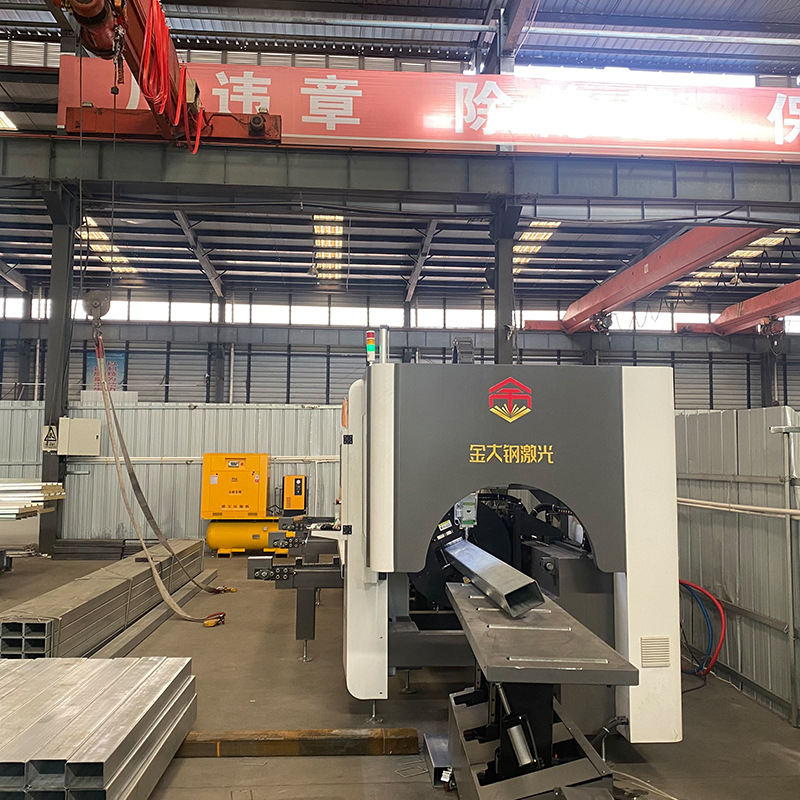
Tube Processing Has Changed From Mechanical to Digital
One of the biggest changes in modern fabrication is that many tasks that were once handled mechanically are now handled digitally. In the past, if a factory needed a different hole pattern, a different length, or a different cut angle, the process often depended on manual repositioning, new fixtures, or repeated measurement. The problem with that approach is not only that it takes more time. The larger problem is that every repeated adjustment introduces more chances for human variation.
Tube laser cutting changes this logic. Instead of building the part step by step through separate manual actions, the manufacturer defines the geometry in software first. The machine then follows that digital instruction with coordinated motion and controlled cutting. This means the process is no longer centered on repeated setup at every station. It becomes centered on program accuracy and stable machine execution.
This digital shift matters because today’s manufacturers rarely produce only one simple product in long, unchanging batches. Many factories handle mixed jobs, revised drawings, and customer-specific changes. The ability to move from one part type to another with less setup disruption is a major advantage. This is one reason why modern factories increasingly view tube cutting not as a small operation inside production, but as a core process that can influence the performance of the entire workshop.
What a Tube Laser Cutting Machine Actually Does
A tube laser cutting machine is designed to cut metal tubes and profiles with a concentrated laser beam under CNC control. In practical production terms, this means it can do far more than straight cutting. Depending on the job, the machine can create holes, slots, shaped ends, side openings, contour cuts, miter cuts, and other geometries directly on the material. That is what makes it so useful for fabrication businesses that need more than basic length preparation.
The process is especially valuable because it allows the machine to combine several types of work in a more unified sequence. Instead of cutting the tube first, then moving it to another station for drilling, and then checking alignment again later, the system can often perform multiple operations through one digitally controlled path. For the factory, this reduces handling and makes the workflow easier to standardize.
Many systems on the market today are based on fiber laser technology, so the phrase fiber laser tube cutting machine is common in industrial content. Fiber-based systems are widely preferred because they offer practical cutting capability, stable performance, and efficient operation for many metalworking applications. For buyers looking at current market options, fiber laser technology is now one of the main standards in this field.
Another key feature is repeatability. Because the system follows a digital program, the same part can be produced again and again with less variation than in a process that depends heavily on manual measuring or manual hole positioning. This matters because tube parts rarely stay isolated. They go on to welding, fitting, coating, and final assembly. Small deviations at the cutting stage can become large inefficiencies later.
Common Materials and Tube Shapes
A practical cutting solution must be flexible enough for real workshop conditions. Most fabrication businesses do not handle only one material, and many do not process only one profile shape. That is why one of the strong advantages of tube laser cutting is its broad application range.
In many factories, the most common materials are carbon steel, stainless steel, and aluminum. These materials appear in structural products, decorative fabricated products, machine components, commercial furniture, warehouse systems, and many other metal applications. The ability to process different materials efficiently helps the manufacturer serve more markets without changing the entire production method.
In terms of shape, round tubes and square tubes are the most common categories, but they are not the only ones. Many production environments also involve rectangular tubes, oval tubes, and sometimes other profiles depending on the machine design and product focus. This flexibility is important because a factory’s real workload is often broader than its main product line suggests. A workshop may make display frames one month, architectural supports the next, and customized welded structures after that.
That is why phrases such as round tube cutting applications and square tube processing solutions are highly relevant. They reflect actual customer needs and real fabrication scenarios. Buyers usually think in terms of their own products, not only in terms of machine terminology. When a manufacturer sees that a machine can handle the materials and shapes they use every day, the value becomes much easier to understand.
The ability to cover multiple shapes also reduces dependence on fragmented production planning. Instead of splitting work between several different pieces of equipment, the factory can centralize more of its tube-cutting logic. That improves control, simplifies scheduling, and helps the business adapt more easily when orders change.
Where the Market Uses Tube Laser Cutting
Tube laser cutting is used in many industries because tube-based components are used in many industries. The final products may look completely different, but the fabrication logic behind them often points to the same need: accurate and efficient tube processing.
In construction and architectural metalwork, tubes are widely used in support frames, rails, guards, decorative structures, facade elements, and canopy systems. These products often require stable dimensions because the parts must fit correctly during welding and installation. For this reason, laser processing is especially useful in architectural steel fabrication and similar applications where dimensional control affects both quality and labor efficiency.
In furniture manufacturing, metal tubes are common in tables, chairs, shelving systems, beds, cabinets, display frames, and office furniture. These products need good structural performance, but they also need good appearance. Cleaner cut quality and more stable fit-up help improve both assembly speed and the look of the finished item. This is why the technology is valuable in furniture frame manufacturing and other consumer-facing product lines.
Fitness equipment is another strong application area. Gym machines, supports, training stations, and benches often use round or shaped tubes with multiple openings, angled cuts, and visible joints. A process that improves repeatability and reduces manual correction helps these products move through production more smoothly. Other important sectors include warehouse systems, storage racks, agricultural equipment, industrial frames, transport-related components, and custom fabricated assemblies.
What all of these sectors share is not the same finished product, but the same underlying manufacturing need: a way to process tubes with better precision, more stable output, and greater efficiency. That is why the technology continues to spread across different parts of the market.
How the Cutting Process Works
The cutting process depends on coordination between software, movement, and laser energy. First, the raw tube is loaded into the machine and clamped securely in place. The clamping system holds the material while allowing controlled rotation when required by the part geometry. The cutting head then moves according to the programmed path while the machine manages sequence, speed, and position.
The laser beam is focused into a very small point on the tube surface. At that point, the energy becomes intense enough to melt or vaporize the material in the required area. Assist gas helps remove molten material and supports the final cut quality. While this principle sounds straightforward, the real value comes from how precisely the system coordinates all movement. Tube rotation, head travel, cut order, and dimensional control must work together throughout the whole program.
The software side is equally important. Engineers or operators define the tube diameter or profile size, wall thickness, material type, and required geometry before cutting begins. The program can then be stored, modified, and reused. This makes the process especially useful for both repeated production and customized production. When an order returns, setup is faster. When the geometry changes, revision is easier than in a workflow that depends heavily on physical tools or repeated manual layout.
That digital structure is one reason why tube laser cutting is increasingly valued by manufacturers who want a production method that is both controlled and flexible.
How the Machine Is Used in Daily Production
In actual factory work, the machine becomes part of a broader process, not a separate isolated station. The workflow usually begins with engineering preparation. A drawing is created or imported, the key dimensions are confirmed, and the correct process settings are selected. This step is important because material type, wall thickness, hole design, and part complexity all influence the cutting result.
After the program is ready, the material is brought to the machine. Some workshops still rely on manual loading, especially when product quantity is moderate or tube variation is high. Others improve efficiency by adding automated loading when output targets are higher and manual handling becomes a bottleneck. In the right environment, loading automation can significantly improve continuity and reduce repeated labor.
Once production begins, the operator’s role is different from that of a worker using saws and manual drilling equipment. The operator is no longer guiding every cut or marking every hole by hand. Instead, the operator supervises machine condition, gas flow, material feeding, cut quality, and output consistency. This changes labor structure on the shop floor. More work shifts toward process supervision and less toward repeated manual activity.
After cutting, the parts move into welding, fitting, finishing, assembly, or other downstream stages. This is where many of the hidden benefits become visible. If the tube geometry is more stable, later stages become smoother. Parts align more easily, correction work decreases, and production flow improves. In many cases, the value of tube laser cutting is felt just as strongly after cutting as during cutting itself.
How It Helps Industrial Production
The value of tube laser cutting becomes clearer when connected to real production problems. Factories do not invest in new equipment only because it sounds modern. They invest because it helps solve bottlenecks that cost time, labor, or quality.
One major benefit is process consolidation. Traditional tube work may involve measuring, sawing, drilling, slotting, trimming, and repeated repositioning. Each stage takes time and introduces a chance for dimensional drift. Laser cutting reduces this fragmentation by bringing more of the required geometry into one coordinated process. That makes the workflow cleaner and easier to manage.
Another benefit is consistency. If openings, lengths, and cut angles remain stable from one part to the next, downstream operations become much easier to control. Welders do not need to force mismatched components into place. Assemblers spend less time correcting avoidable errors. Supervisors see fewer interruptions caused by dimensional instability. This kind of consistency is one of the biggest reasons manufacturers value digital cutting systems.
There is also a strong labor benefit. Instead of depending on several people across several manual stations, the workshop can often shift more of the process into one supervised system. Skill is still important, but it is applied differently. More attention goes to programming, control, and monitoring, and less to repetitive positioning or repeated correction. That change can make the workshop both more efficient and more manageable.
Quality improvement is another important advantage. Cleaner cuts and more stable geometry often reduce grinding, deburring, and rework. In visible products, this supports a better final appearance. In structural products, it helps improve assembly reliability. In both cases, the benefit reaches far beyond the cutting point itself.
Why Precision Matters More Than Many Buyers Expect
Precision in tube cutting is not only about making the part look good on its own. It matters because most tube components are used inside a larger structure. A small deviation in one hole position, one end angle, or one slot can create major problems in fit-up or welding. The further the part moves through production, the more expensive that correction becomes.
This is why precision tube processing matters so much in fabrication. Precision affects assembly speed, product appearance, labor cost, and final product reliability. In furniture and fitness equipment, it also affects how clean and professional the finished item looks. In structural products, it affects whether batches can move through production smoothly without repeated delay.
Precision also becomes more important as production scale increases. A few manual adjustments may be manageable in a very small batch, but the same strategy becomes costly and unstable when output grows. Better precision from the beginning creates a more scalable workflow. That is one reason why modern factories increasingly place so much value on digitally controlled cutting.
What Buyers Should Think About Before Choosing a Machine
One common mistake is focusing only on laser power. Power is important, but it is not the whole story. Real production performance also depends on motion stability, clamping quality, software usability, maintenance convenience, and the supplier’s support capability. A machine that looks strong in marketing material may still be the wrong fit if it does not match the buyer’s actual production needs.
Another important factor is application fit. Buyers should think about the tube sizes, materials, profile complexity, and order variation they deal with most often. The best machine is not always the biggest or most powerful. It is the one that works best for the actual job structure of the factory.
Ease of use also matters. Even a capable system can become frustrating if the software is difficult to manage or if after-sales support is weak. Long-term value depends on the whole ownership experience, including training, spare parts, and technical response. Buyers who think about the full process usually make better decisions than buyers who focus only on one or two visible specifications.
Conclusion
Tube laser cutting matters because modern fabrication demands more than simple cutting speed. Factories need better consistency, smoother workflow, higher flexibility, and stronger quality control. Tube-based products remain important across construction, furniture, equipment, storage systems, transport parts, and many other sectors, so the need for better tube processing continues to grow.
A laser tube cutting machine helps manufacturers shift from a fragmented, labor-heavy workflow to a more integrated digital process. It supports more stable geometry, less repeated handling, faster response to design changes, and smoother downstream production. These are practical advantages that improve everyday factory performance.
For manufacturers that want stronger fabrication capability, more reliable output, and a more efficient workshop, tube laser cutting is no longer just a high-end option. It is increasingly becoming a practical tool for staying competitive in modern industry.